In June, we looked at the prospect of El Niño returning in 2026 and what it could mean for summer heat, homes and climate-ready design.
At that stage, El Niño was still developing. The World Meteorological Organisation reported a high likelihood of El Niño conditions emerging during the summer, but there was considerable uncertainty about how quickly the event would strengthen and whether it would ultimately be moderate or strong. We also explained that El Niño does not automatically produce a hot UK summer because our weather remains heavily influenced by the Atlantic Ocean, the jet stream and regional pressure patterns.
The picture has since changed significantly.
In its update of 13 August 2026, the US National Oceanic and Atmospheric Administration, or NOAA, reported that El Niño was strengthening and placed the probability of a very strong event during autumn and winter 2026/27 at more than 90%. It also estimated a 69% chance that the event could reach a historic level during the October to December period on its relative ocean-temperature index, potentially exceeding previous events in the record, which began in 1950.
That is why terms such as “Super El Niño” are now appearing in the press.
But what does this description actually mean? More importantly for UK households, could it bring a stormier autumn, a colder winter or a difficult heating season?
What is a Super El Niño?
Super El Niño is best understood as media shorthand for an exceptionally strong El Niño rather than a completely different type of weather phenomenon.
El Niño occurs when the central and eastern tropical Pacific Ocean becomes unusually warm, and the atmosphere above it responds. Changes in tropical rainfall, winds and air pressure can then influence weather patterns much farther away.
A particularly strong event can create a more powerful disturbance in the global climate system. However, that does not mean every effect becomes proportionally stronger, nor does it provide a simple forecast for one particular country.
The figures reported in different headlines can also vary because forecasters may be referring to different regions of the Pacific, different temperature indices, weekly readings or three-month averages. The most important development is not one isolated temperature figure. It is that several forecasts now point towards an unusually powerful and potentially historic event. NOAA nevertheless stresses that even during a very strong El Niño, its usual weather impacts are more likely, but certainly not guaranteed.
How is this different from the El Niño we discussed in June?
The underlying climate phenomenon is the same, but three things have changed since our June article. El Niño is no longer simply a developing possibility. In June, there was strong confidence that El Niño would form, but its eventual intensity remained uncertain. It is now established and strengthening, and the probability of it becoming very strong has increased substantially. The forecast peak is moving closer.
El Niño events commonly reach their greatest strength towards the end of the calendar year. The developing event is therefore becoming more relevant to UK autumn and winter weather, rather than only to the discussion about summer heat that featured in our earlier article.
The potential global influence is greater.
A stronger event is more likely to create recognisable changes in global circulation and rainfall patterns. However, the UK remains a long way from the tropical Pacific. The effect reaches us indirectly through changes in large-scale atmospheric circulation, which then interact with the North Atlantic, the jet stream, European pressure systems and other sources of natural variability. Consequently, a Super El Niño does not guarantee one particular kind of British winter.
What could Super El Niño mean for UK autumn weather?
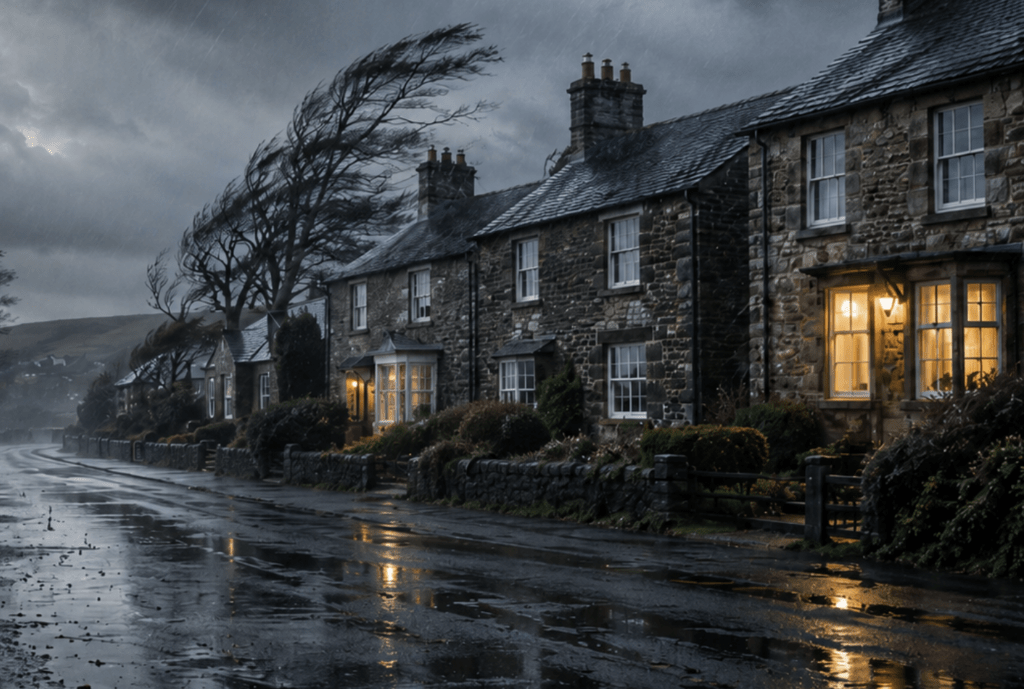
The clearest signal currently being discussed for the UK concerns autumn rainfall and storminess. Recent reporting on Met Office seasonal forecasts has highlighted an increased possibility of a wetter and stormier autumn across north-west Europe, including the UK. The signal may be particularly relevant around November, although seasonal forecasting cannot identify the precise route or timing of individual storms several months in advance.
For the UK, this could mean a greater likelihood of periods featuring:
1. Frequent Atlantic weather systems
2. Heavy or prolonged rainfall
3. Strong winds and wind-driven rain
4. Rapid changes between relatively mild and noticeably colder conditions
5. Localised flooding and travel disruption
This should not be interpreted as a forecast for uninterrupted rain. Autumn could still contain calm, dry or unseasonably warm intervals. Seasonal forecasts describe how probabilities change across the season as a whole; they do not tell us what the weather will be doing in a particular area on a particular date.
From a home-heating perspective, a wet and changeable autumn can create an uneven start to the heating season. Households may move between mild days when little heating is required and chilly, windy evenings when a room suddenly feels uncomfortable.
That variability makes responsive heating and effective controls particularly valuable.
Will Super El Niño give the UK a colder winter?
This is the question most households will ask, but there is no reliable one-word answer. The Met Office states that El Niño can be one factor that increases the risk of colder winter conditions in the UK. However, it is only one influence among many. Conditions in the North Atlantic, the position of the jet stream, atmospheric blocking, the polar vortex and shorter-term weather patterns can all alter the outcome.
In practical terms, winter 2026/27 could include more than one type of weather:
1. Mild, wet and windy spells may occur when Atlantic air and low-pressure systems dominate.
2. Colder intervals may develop when high pressure blocks the usual Atlantic flow and allows colder air to reach the UK from the north or east.
These patterns are not mutually exclusive. A winter that is relatively mild when averaged across three months can still contain a disruptive week of frost, ice or snow. Equally, a colder-than-average winter can still include mild and very wet periods.
El Niño alone cannot tell us how much snow will fall in the UK, where it will fall or whether Christmas will be white. Those details depend on the shorter-range atmospheric situation and only become predictable much closer to the event. The sensible conclusion, therefore, is not that a severe winter is certain. It is that households should prepare for greater variability, including wet and windy weather, sudden cold spells and potentially sharp changes in heating demand.
Why wet and windy weather can make a home feel colder
The thermometer does not tell the whole story when it comes to comfort. Strong wind can force cold external air through gaps around windows, doors, suspended floors, loft hatches and service openings. At the same time, warm indoor air escapes. This air leakage can make rooms feel draughty and increase the amount of heat required to maintain a comfortable temperature.
Prolonged wet weather can also contribute to moisture problems. When windows remain closed, wet clothes are dried indoors, and normal activities such as cooking and showering add water vapour, condensation can form on colder surfaces.

Draught-proofing unwanted gaps can reduce heat loss and help a home stay warmer while using less energy. However, draught-proofing must not mean sealing every source of airflow. Controlled ventilation remains essential for managing moisture and maintaining healthy indoor air, and permanent ventilation required for fires, stoves or flued appliances must never be obstructed.
A climate-ready home therefore needs both:
1. Protection from uncontrolled draughts and heat loss
2. Correct, purposeful ventilation to control moisture and support safe appliance operation
What could this mean for household heating demand?
A very strong El Niño does not necessarily mean that every UK household will use more energy over the winter as a whole. If Atlantic weather brings lengthy mild periods, average heating demand could be moderated. However, averages can be misleading. A changeable autumn and winter may produce short, intense periods of demand. Heating could be largely unnecessary on a mild afternoon but important only a few hours later when wind, rain and falling temperatures make the home feel colder.
This makes three considerations particularly important.
1. Fast response – Households may value heating that can be activated quickly without unnecessarily heating every room.
2. Effective zoning – A living room or home office may need warmth even when the remainder of the property does not. Heating occupied rooms appropriately can provide comfort without automatically raising temperatures throughout the whole home.
3. Reliable background heating – Local room heating should be considered alongside the property’s main heating system. During sustained cold weather, the whole home may still require adequate background warmth to maintain comfort and help protect the building fabric and pipework.
The right solution depends on the property’s size and construction, its insulation and ventilation, the room’s heat loss, and the occupants’ lifestyle. Do not use a dramatic seasonal headline as the basis for selecting or sizing a heating appliance!
Electric fires and stoves: responsive warmth for changeable weather
An electric fire can be particularly useful during the autumn shoulder season, when the whole central-heating system may not need to be running but an occupied room would benefit from a temporary source of warmth.
Modern electric fires can provide:
1. Rapid, controllable local heat
2. Thermostatic operation on applicable models
3. Timer and scheduling functions
4. A flame effect that can often be used independently of the heater
5. Flexible installation options, including media-wall designs
Our iRange i220 Deep Electric Fire:

The independent flame effect is useful during milder weather, when homeowners want the atmosphere of a fire without adding unnecessary heat. During a chilly evening, the heater can provide responsive zonal warmth.
An electric fire should not automatically be regarded as a replacement for a properly designed whole-house heating system. Its role and running costs depend on how it is used, the electricity tariff, and the room’s thermal performance.
Gas fires and stoves: controllable flame heat
Gas fires and stoves can provide rapid, controllable warmth together with a realistic flame effect. Different appliance and installation formats can suit properties with or without a traditional chimney, subject to the product specification and the correct flue arrangement.
Select the appliance for the room and install it in accordance with all relevant requirements. Ventilation, servicing, flue condition and carbon-monoxide protection should form part of winter preparation.

A gas appliance should never be oversized simply because a severe winter may be on the cards. Excessive heat output can make a room uncomfortable and may encourage inefficient stop-start use. Correct specification is more useful than maximum output.
Wood-burning stoves: fuel quality and preparation matter
A correctly specified wood-burning stove can provide sustained local warmth and create a strong focal point in a living space. Our wood-burning stoves meet and exceed Ecodesign requirements and are clearSkies certified.
However, appliance performance depends heavily on the fuel.
Our Purevision 8kW Inset Wood-Burning Stove:

Logs containing too much moisture waste energy because a significant proportion of the fire’s heat is used to evaporate water. This reduces firebox temperature, lowers heat output, and can contribute to increased smoke, soot, and deposits.
Firewood should generally have a moisture content of 20% or less, while the appliance instructions should always take priority. A moisture meter provides a straightforward way of checking split logs before use.
For a potentially wet autumn:
1. Arrange fuel supplies before the coldest weather arrives
2. Store logs off the ground
3. Protect the top of the store from rain
4. Keep the sides ventilated rather than completely wrapping the wood
5. Recheck moisture after prolonged wet conditions
6. Have the chimney swept at the appropriate interval
7. Inspect door seals, firebricks and controls
8. Test smoke and carbon monoxide alarms
9. These steps support cleaner combustion, useful heat output and safe operation
Seven ways to prepare your home for autumn and winter 2026/27
1. Check the heating before the first cold spell
Run the system early enough to identify problems with controls, radiators, pumps or individual appliances. A fault is easier to address before heating becomes essential.
2. Service appliances and inspect flues
Follow the manufacturer’s servicing guidance. Have chimneys and flues checked or swept as appropriate, and make sure permanent ventilation remains clear.
3. Test smoke and carbon-monoxide alarms
Check alarms using their test functions and replace batteries or units in accordance with the manufacturer’s instructions. Carbon-monoxide alarms are an important precaution, but they do not replace correct installation and maintenance.
4. Address unwanted draughts without blocking ventilation
Inspect external doors, windows, loft hatches and other obvious gaps. Seal uncontrolled leakage where appropriate, but do not cover airbricks, trickle vents, extractor outlets or ventilation required by a heating appliance.
5. Prepare for heavy rain
Clean gutters, check downpipes and inspect areas where wind-driven rain could penetrate. Use kitchen and bathroom extraction to remove moisture at source, and deal promptly with leaks or recurring condensation.
6. Review thermostats, timers and heating zones
Make sure everyone in the household understands the controls. Program heating around occupancy rather than leaving it to run unnecessarily, while maintaining suitable background temperatures during colder periods.
7. Follow short-range forecasts and warnings
Seasonal outlooks help with broad preparation, but day-to-day decisions should be based on current Met Office forecasts and weather warnings. Prepare torches, charged power banks and other basic essentials ahead of any forecast period of disruptive wind or rain.
Frequently asked questions
Does Super El Niño guarantee a severe UK winter?
No. A very strong El Niño changes the probability of certain large-scale weather patterns, but the UK’s winter is also determined by the Atlantic, the jet stream, atmospheric blocking and other influences. NOAA itself emphasises that typical impacts are not guaranteed, even during a very strong event.
Does it mean there will be more snow?
Not necessarily. El Niño alone cannot forecast UK snowfall. Snow requires the right combination of cold air, moisture and the precise position of individual weather systems. Reliable details normally emerge only on much shorter forecasting timescales.
Could the winter still be mild?
Yes. The UK could experience substantial mild, wet and windy periods, even if colder spells also occur. The seasonal average will not necessarily describe the most disruptive week of the winter.
Will households need more heating?
That will vary by property, region and weather pattern. A mild seasonal average could reduce total heating demand, while abrupt cold spells and windy conditions may create short periods when homes need considerably more heat.
Should homeowners buy the highest-output fire or stove available?
No. The appliance should be matched to the room’s dimensions, insulation, ventilation and calculated heat loss. An oversized appliance can make a room uncomfortably hot and difficult to control.
Preparing for uncertainty
The most important difference between our June article and the latest outlook is the level of confidence.
In June, forecasters expected El Niño to develop but were uncertain about its eventual strength. By August, it was established and strengthening, with NOAA assigning more than a 90% probability to a very strong event during autumn and winter 2026/27.
For the UK, the most credible emerging concern is currently a greater likelihood of wet and stormy autumn weather, rather than a guaranteed exceptionally cold winter. Winter could still contain sharp cold spells, but El Niño cannot tell us their exact timing, severity or duration.
Whatever the final shape of winter 2026/27, reliable, correctly specified and safely installed heating will remain one of the most important foundations of a warm and comfortable home.