In June 2025, we explored why wood-burning stoves can be a good fit for new-build homes. Alongside their visual appeal, we considered heating efficiency, energy independence and the practicalities of installing a stove in a well-insulated, airtight property.
Fifteen months later, it is worth returning to that discussion with another question in mind: how well prepared is a new home when energy prices, international events and the weather do not behave as expected? For us, this is not an argument for turning away from efficient buildings or modern heating systems. It is really an argument for considering whether a carefully chosen secondary heat source could make a home more comfortable, flexible and better prepared.
Energy independence has become a more pressing consideration
The war in Iran has brought the connection between international events and household energy costs into sharp focus. The International Energy Agency reports that disruption to liquefied natural gas shipments through the Strait of Hormuz has created a major supply shock and increased volatility in global gas markets.
That pressure is feeding through to British households. Ofgem has announced a 4% increase in the energy price cap for October to December 2026, taking the annualised figure for a typical dual-fuel household paying by Direct Debit from £1,663 to £1,723. The regulator attributes the increase to higher wholesale gas prices associated with the Middle East conflict. This figure is an illustration based on typical consumption, not a maximum total household bill.
The picture is different for gas-free homes. Ofgem says electricity-only households will see a much smaller increase of less than 1%, with the removal of VAT on domestic electricity helping to offset higher wholesale costs. It would therefore be misleading to suggest that every new-build homeowner faces the same increase. Nevertheless, we believe the wider lesson is important: when planning a home, consider the value of having more than one way to keep an occupied living space warm.
That does not mean a stove will always be the cheapest option. Log prices, installation costs, maintenance and the performance of the heating system it supplements are all important. Financial savings from biomass heating vary, and local supply and transport, among other things, affect log costs.

Super El Niño makes preparation relevant beyond this autumn
Energy prices are not the only development worth considering.
On 3 September, the World Meteorological Organisation reported a nearly 100% likelihood that El Niño would persist through to February 2027. It expects the event to strengthen to a very strong intensity before peaking towards the end of this year, with climate impacts continuing well into 2027.
For the UK, the Met Office has highlighted an increased chance of wetter, stormier conditions during autumn and early winter. That is a key signal for preparation, but it is not a forecast of continuous severe weather by any stretch. El Niño’s effects vary by location and season, and other ocean and atmospheric conditions also influence the outcome.
A new-build efficient home can still benefit from a backup heat source
Energy efficiency and resilience address different questions. An efficient home is designed to need less energy. New-build homes are far more efficient than older properties, generally speaking. However, a resilient heating set-up should also consider what happens when the usual source of warmth is temporarily unavailable. A conventional, manually operated wood-burning stove that does not require electricity can provide room heat during a power cut. This off-grid capability was one of the benefits we highlighted in our original article. For an airtight new build, however, a qualified installer should confirm that the complete installation remains safe when any electrically powered ventilation is not operating. A stove still needs an adequate combustion-air supply and a properly functioning flue. Getting this checked is vital.
Getting the size right is more important than choosing the biggest stove
The answer to an uncertain winter is certainly not an oversized appliance!
Our more recent new-build fireplace guidance, published in August 2026, places particular emphasis on room-by-room heat-loss calculations. This is a more useful starting point than choosing an output simply from the number of bedrooms or the overall size of the property. A modern, low-energy living space may require comparatively little heat.
A stove should also work comfortably on an ordinary cool autumn evening, not just during an unusually cold spell. Too much output can lead to overheating, open windows and conflict with the main heating controls. Routinely operating an oversized stove at an unsuitable low burn rate is not a good solution.
Ventilation also needs to be considered. Even a relatively small stove can require permanent ventilation in an airtight home. Where mechanical ventilation with heat recovery is installed, the stove, air supply, flue and extraction systems need to be assessed together. For self-builders and developers, we recommend having these conversations early. Planning the installation before the building is finished can preserve choices that would be more disruptive to introduce later.
Responsible burning remains part of the decision
Energy security does not remove the need to consider air quality. Wood-burning stoves are environmentally friendly but only if the right fuel is used. Another thing to consider is that regulatory developments have also occurred since our original article. Defra’s 2026 consultation proposed tighter smoke-emission limits for new appliances, mandatory stove and fuel labelling, and stronger enforcement of fuel standards. These were consultation proposals; they should not be confused with requirements already in force.
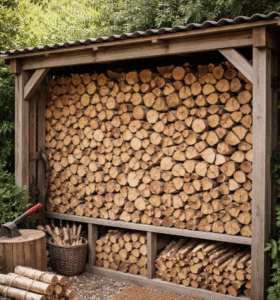
For households choosing wood heating, fuel quality remains fundamental. In England, firewood sold in quantities below two cubic metres must be certified as Ready to Burn, confirming a moisture content of 20% or less. Smoke-control requirements must also be checked: wood can only be burned in an appropriate exempt appliance within a smoke control area, using fuel permitted by its manufacturer.
Correct operation, regular servicing, chimney sweeping and a working carbon monoxide alarm are essential parts of ownership—not optional extras.
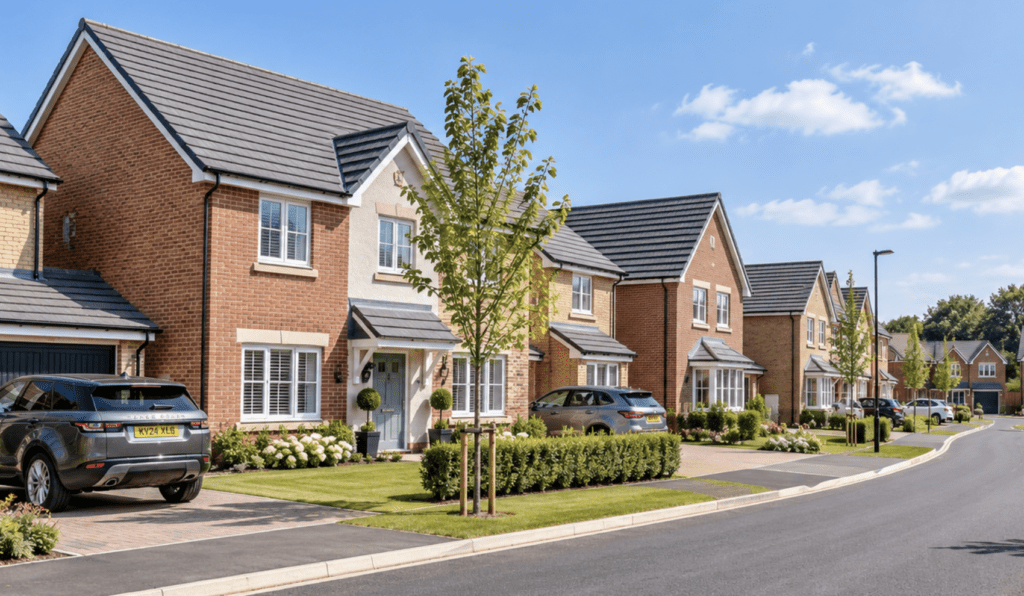
Fifteen months on, the case is about a carefully planned choice
Our view is that the strongest case for a wood-burning stove in a new-build home is not that every property needs one, or that wood will always outperform other heating options. It is that a suitable stove, in a suitable home, can offer a valuable additional choice.
For anyone planning a new build, we would put reducing heat demand first. Then consider how the primary heating system, any supplementary appliance and the building’s ventilation will work together, not just in ideal conditions, but when circumstances change.
The aim should be a home that is economical to heat, comfortable to live in and thoughtfully prepared.
Planning a new-build or self-build project?
Explore our Ecodesign stove range and speak to a Charlton & Jenrick retailer about the right output, installation requirements and suitability for your home.