As household budgets remain under pressure and attention turns to the autumn weather outlook, Gas Safety Week reminds us that keeping a home warm also means keeping it safe.
Gas Safety Week 2026 runs from 14 to 20 September, with a message that deserves attention well beyond the campaign itself: “Take No Chances.” Led by Gas Safe Register, the campaign encourages households to take gas safety seriously, have appliances checked and use engineers who are properly registered and qualified for the work.
That message is straightforward. Putting it into practice, however, can be harder when money is tight.
For someone balancing energy bills, food shopping, rent or mortgage payments, an appliance check may feel like another expense that can wait. When the boiler still produces hot water and the cooker still lights, postponing maintenance can seem reasonable. The problem is that an appliance appearing to work is not the same as an appliance being safe: an expert can check things such as combustion, ventilation, and the appliance’s overall safe operation.
Taking gas safety seriously means recognising both sides of the problem: unsafe appliances can have devastating consequences, but financial pressures can make preventive action difficult.
Familiar appliances can conceal serious risks
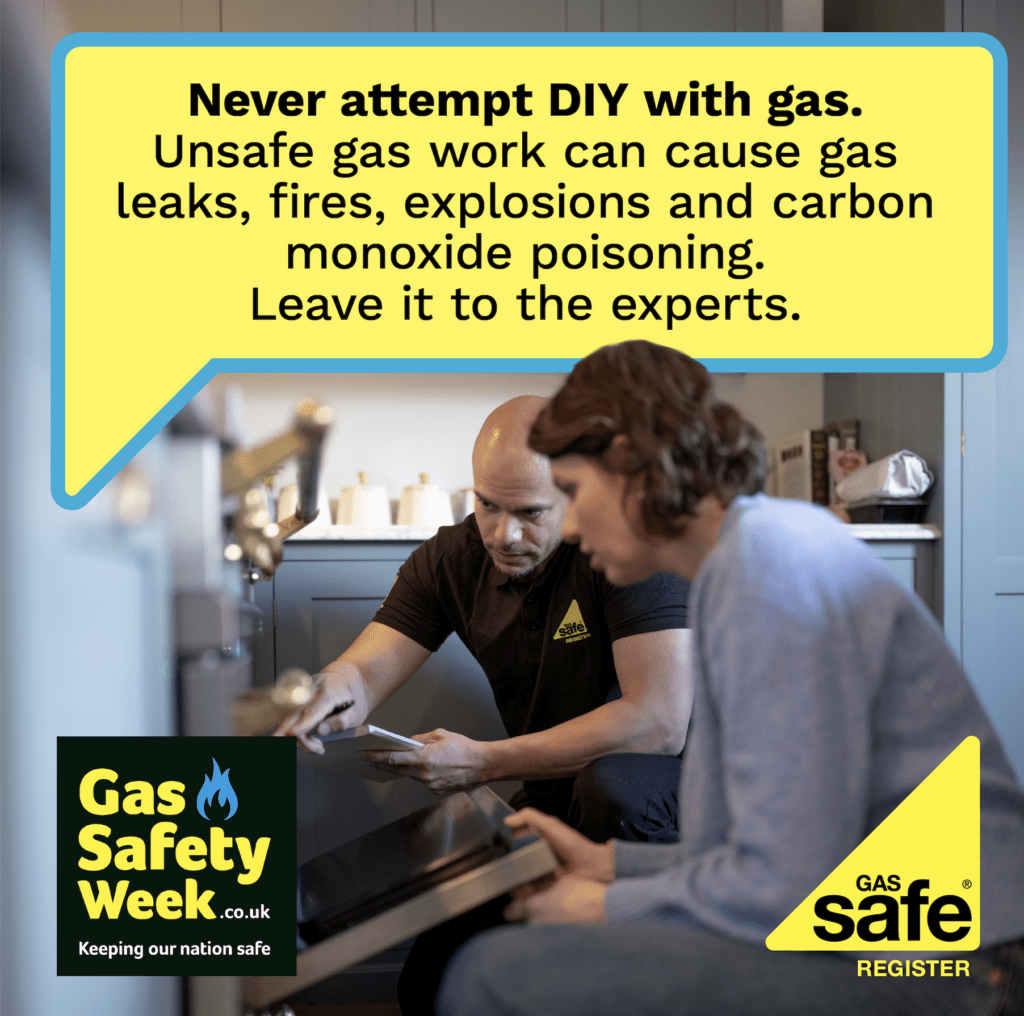
Gas boilers, cookers and fires are familiar parts of a home. That familiarity can make their risks easy to overlook. Poor installation, inadequate maintenance and faults can lead to gas leaks, fires, explosions or carbon monoxide poisoning. These are different hazards, but all underline why gas work requires professional competence.
Carbon monoxide (CO) is particularly dangerous because it cannot be seen, smelt or tasted. It can be produced when carbon-containing fuels, including gas, oil, wood and coal, burn incompletely. Once inhaled, it interferes with the body’s ability to deliver oxygen to its tissues and organs. Serious exposure can be fatal.
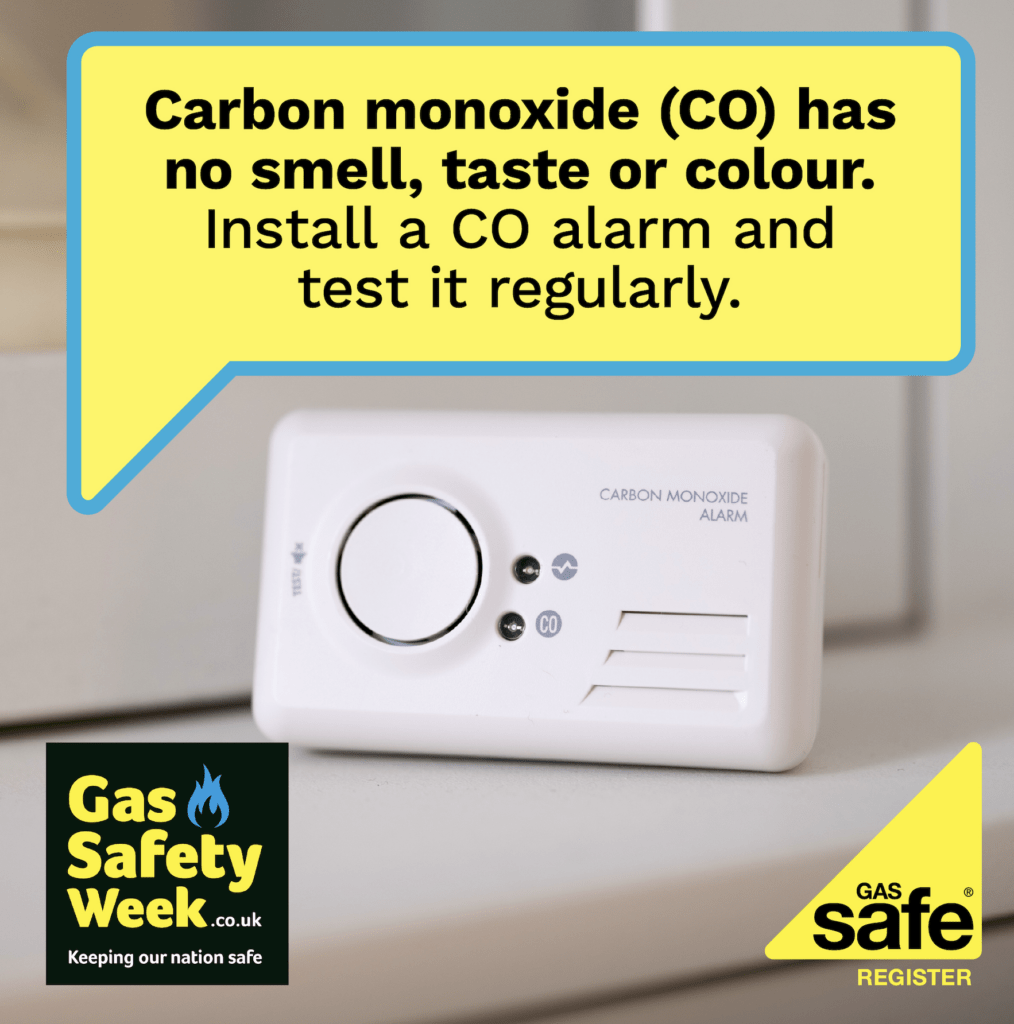
The distinction between a gas leak and carbon monoxide is key. A household should never assume that the absence of a gas smell rules out danger. Carbon monoxide does not provide that warning. Nor should a household wait for something dramatic to happen before taking maintenance seriously. Gas safety is fundamentally preventive: checking an installation, maintaining appliances and responding to concerns before someone becomes ill or an emergency develops is essential. Gas Safe Register recommends annual appliance safety checks and servicing, unless the manufacturer’s guidance specifies otherwise.
The cost of living can become a safety issue
The connection between household finances and gas safety is a cause for concern. Research commissioned by Gas Safe Register and conducted among 2,000 UK adults in April 2026 found that 53% had changed their spending habits over the preceding year. More than a quarter (28%) reported cutting costs on home maintenance and DIY. The campaign’s official industry publication also reported that 16% had delayed routine gas safety checks. While these survey findings reflect reported behaviour, and not actual inspections proving those households had unsafe appliances, they do reveal a concerning point.
Energy costs remain part of that pressure. Ofgem’s published price cap for 1 October to 31 December 2026 is £1,723 a year for a typical dual-fuel household paying by Direct Debit in Great Britain, approximately 4% higher than the preceding cap period. This is an annualised illustration, not a maximum household bill: actual costs depend on consumption and other factors. The Ofgem cap does not apply to Northern Ireland.
Against that background, it is understandable that people look for savings wherever they can. A routine appointment has an immediate, visible cost. The danger it is intended to prevent may feel somewhat remote.
People may also feel anxious about what an inspection might uncover. For a household with no financial cushion, the possibility of being told that an appliance needs repair or replacement may make avoiding the appointment feel easier than confronting the problem. But obviously, avoiding a diagnosis cannot make a fault safe. The appropriate response is to improve access to help, not to normalise postponement.
Public safety messaging should acknowledge this without blaming people. “You should have had it checked” is of limited use to someone who genuinely cannot afford the work. A better message might be: “Do not ignore the risk, and seek support before financial pressure pushes you towards an unsafe decision”.
Saving money must not mean lowering the safety standard
There is an important difference between comparing prices and compromising on competence.
It is sensible to get service quotations, ask what a check or service includes, and avoid paying for things you don’t need. It is not sensible to employ someone for gas work without checking that they are legally registered and qualified for the particular job.
The Gas Safe Register lets consumers check both businesses and individual engineers. Not every registered engineer is qualified for every type of gas work, so it’s important to know the relevant appliance and fuel categories. Someone qualified for one category should not automatically be assumed competent to work on another, including liquefied petroleum gas, or LPG. A recommendation from a friend, a professional-looking website or a logo on a van should not replace that check.
The Health and Safety Executive reinforced this point during Gas Safety Week 2026, highlighting prosecutions involving unregistered workers, fraudulent credentials and dangerous installations. One case involved a family whose newly installed boiler and pipework had three gas leaks; the supply was shut off for six weeks, leaving them without heating or hot water. The work took place in February 2024, and sentencing followed in January 2026.
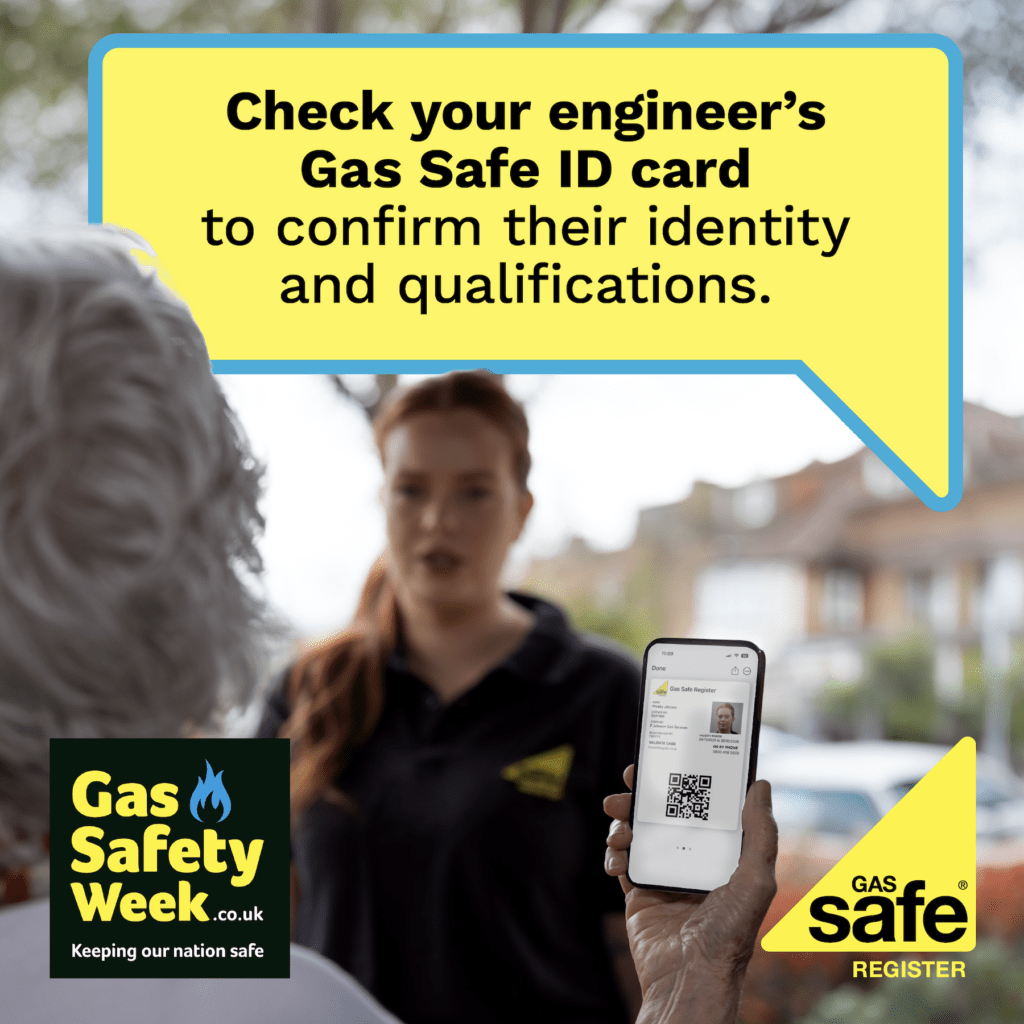
Before work begins, ask to see the engineer’s Gas Safe ID card and check the qualifications on the reverse. Registration can also be verified independently through the Gas Safe Register. Gas work is not an appropriate DIY cost-saving project, even for someone otherwise confident with household repairs.
A safety check and a service are not interchangeable
Another useful step is understanding exactly what you’re booking when you reach out to a gas engineer. Do you need a check or a service? A gas safety check assesses whether the appliance is safe to operate. A service includes safety checks but also involves the appliance-specific inspection and maintenance required by its manufacturer. Depending on the equipment, that can include additional testing, cleaning or examination of components.
For landlords, maintaining gas appliances is a distinct responsibility from keeping the annual gas safety record. The HSE makes clear that effective maintenance involves an ongoing programme of inspection and any necessary remedial work, rather than simply collecting paperwork once a year.
When contacting a gas engineer, ask whether the quotation includes a safety check, a service, or both. Confirm which appliances are included and whether any additional work needs separate authorisation. A boiler appointment should not be assumed to cover a gas fire or cooker elsewhere in the property.
Gas cooking appliances need attention too. The Gas Safe Register advises owners to follow the manufacturer’s maintenance and servicing guidance and act promptly if there are signs that an appliance is not operating correctly. Clear communication helps households compare quotations fairly. It also avoids the false reassurance of believing that every gas appliance has been checked when only one was included.
Recognise warning signs, but do not rely on them
Knowing what to look for is useful, but it should not replace professional checks.
Potential warning signs include soot or yellow-brown staining around an appliance, a pilot light that repeatedly goes out, and increased condensation. Unexpected yellow or orange flames can also indicate a problem, although some decorative fuel-effect fires are designed to have that appearance. These signs require appropriate assessment rather than a DIY diagnosis.
Physical symptoms deserve equal attention. The NHS lists headache, dizziness, nausea or vomiting, weakness, confusion, chest or muscle pain and shortness of breath among possible symptoms of carbon monoxide poisoning. Symptoms may worsen inside an affected building and improve outside. A headache does not, by itself, prove carbon monoxide exposure. Equally, it should not be dismissed when there is reason to suspect a problem with a fuel-burning appliance.
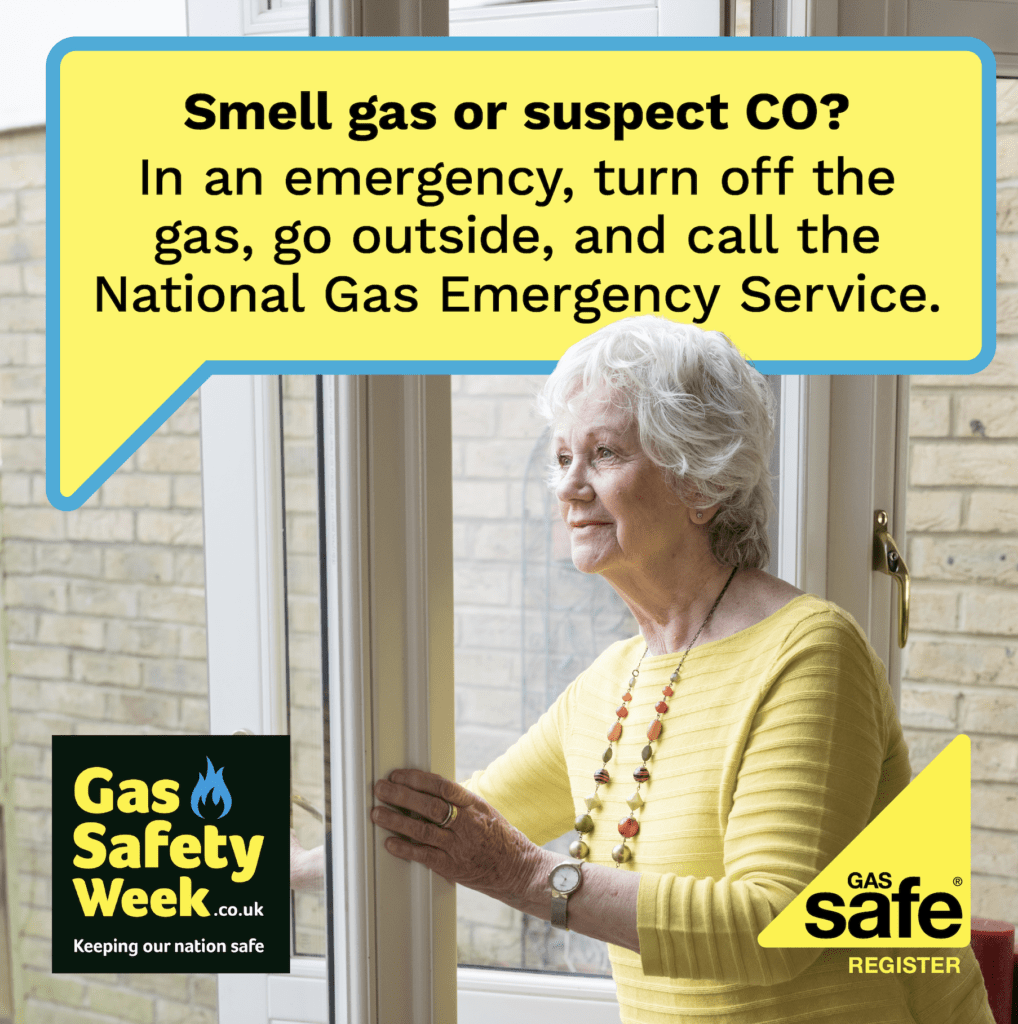
The important principle is to act on a credible concern rather than waiting for certainty. An observation can identify a reason to seek help; it cannot say if an appliance is safe. Some other warning signs are more obvious, such as a smell of gas. In an emergency, turn off the gas, go outside and call the National Gas Emergency Service on 0800 111 999.
Carbon monoxide alarms are essential, but they are not a substitute for maintenance.
An audible carbon monoxide alarm provides an important additional layer of protection. Gas Safe Register recommends fitting one in every room containing a gas appliance, following the manufacturer’s installation instructions. A standard smoke alarm does not detect carbon monoxide, and a simple colour-changing warning strip cannot wake a sleeping person.
Choose an alarm that complies with the relevant BS EN 50291 standard, test it regularly and replace batteries or the alarm itself when required. Alarms have a limited operating life, so the expiry or replacement date should be taken notice of. Appropriate positioning is also important: follow the instructions rather than placing it wherever there happens to be a spare shelf.
The legal requirements for alarms differ across England, Scotland, Wales and Northern Ireland. Landlords should check the rules that apply to their property rather than assuming one country’s requirements apply throughout the UK.
Keeping heat in must not mean blocking essential ventilation
When heating costs are high, stopping draughts can feel like an obvious priority. But ventilation intended to support the safe operation of an appliance is not an unnecessary gap you need to seal. Air vents, flues and chimneys must not be obstructed. Gas appliances need the right ventilation, and combustion gases must escape safely. Blocking a vent to make a room feel warmer can cause serious issues.
The same caution applies during home improvements. Changes to ventilation or disruption of a flue can create carbon monoxide risks, so consider the impact on existing gas appliances when planning building work. An apparently unrelated alteration is not a reason to overlook the heating system.
Alternative heating also needs care. Keep portable heaters away from bedding, curtains, furniture, and clothing, and never use them to dry laundry. Fuel-burning heaters introduce carbon monoxide considerations as well as fire risks. Saving energy is always a very worthwhile goal. The boundary is that savings should come from appropriate controls, efficiency improvements and informed advice, not from defeating safety measures or improvising with unsuitable equipment.
What help is available when money is tight?
People worried about affordability should contact their energy supplier early rather than waiting until the situation becomes urgent.
In Great Britain, Ofgem says suppliers must work with customers who are struggling to agree an affordable payment plan. Customers can also ask about reviewing repayments, additional time to pay, payment reductions or breaks, and hardship support. Independent advice can help identify other assistance and clarify the available options.
It is also worth asking specifically about a free gas safety check.
Some suppliers offer these to customers who meet their eligibility requirements. EDF, for example, has an application process covering qualifying homeowners, with conditions relating to benefits and household circumstances. Check eligibility with the supplier; don’t assume every customer, or everyone receiving additional support, automatically qualifies.
Ask what the offer covers. A free safety check should not be assumed to include a full service, repair work or replacement equipment. Understanding the scope before the appointment can prevent another unexpected financial worry.
Eligible households should also consider joining their supplier’s and network operator’s Priority Services Register. Support can include accessible communications, help with certain meter-related difficulties, and additional support during supply interruptions. It is not a general promise of free repairs, but it can make essential services easier to manage.
In Northern Ireland, the Consumer Council provides information about support with energy costs, including supplier assistance, advice organisations and relevant schemes. Arrangements differ from those in Great Britain, so locally relevant advice matters. No single scheme will solve every household’s problem. Nevertheless, asking about help is a safer starting point than cancelling maintenance indefinitely or accepting an unqualified person’s offer to do the work cheaply.
Tenants should not be left carrying the responsibility alone
Gas safety in rented housing is not simply a matter of tenants being more careful. For ordinary residential tenancies covered by the relevant rules, landlords must arrange annual safety checks of the gas appliances and flues they provide, using an appropriately qualified Gas Safe registered engineer. Northern Ireland’s official guidance sets out corresponding duties for landlords there.
Existing tenants should receive the gas safety record within 28 days of the check, and new tenants should receive it before moving in. The record documents the inspection findings; where defects are identified, appropriate remedial action is still required.
Financial pressure does not make an unsafe appliance acceptable. Nor can a landlord’s relevant responsibilities simply be transferred to a tenant through the tenancy agreement. The HSE also states that where a heating appliance has been disconnected, the landlord must provide emergency heating while arranging appropriate remedial work.
Tenants can help by reporting concerns promptly and cooperating with properly arranged access. Landlords and managing agents should make that process straightforward, with clear appointments, reliable contact details and explanations of what will happen if a fault is found.
Could the predicted Super El Niño affect gas safety?
There is a relevant connection, but it needs careful explanation.
El Niño is a climate phenomenon involving warmer-than-average sea-surface temperatures in the tropical Pacific, which can influence weather patterns elsewhere. The Met Office said the developing event was already near record levels and could strengthen further before its anticipated winter peak. The Met Office’s August assessment had already identified an increased likelihood of wetter, stormier conditions across north-west Europe, including the UK, during autumn and early winter.
Crucially, the September update stressed that El Niño is only one influence on UK weather. A very strong event does not automatically mean more severe UK impacts, and seasonal forecasts cannot establish precisely where or when individual weather events will occur. It would therefore be misleading to say that a Super El Niño will cause boilers to fail, guarantee a freezing winter or necessarily increase every household’s heating bill.

The gas safety connections are indirect but useful to know. Here is an outline of the points to consider:
Flooding can affect appliances and installations
For households exposed to flooding, gas equipment needs careful assessment afterwards. The Gas Safe Register advises consulting a registered engineer before restoring the gas supply after a flood. Water may have entered installation pipework, and appliances may require inspection even where damage is not immediately obvious. Do not assume dry-looking equipment is safe to restart.
Properties using LPG have additional considerations: floodwater can move storage vessels or cylinders and damage their connections. Residents should follow supplier and professional advice rather than trying to restore a disturbed installation themselves.
If severe weather interrupts normal heating or electricity, the temptation may be to improvise. Do not use barbecues or camping stoves indoors or inside tents because of the risk of carbon monoxide accumulation. Portable petrol generators also need particular care. Keep them outside in well-ventilated areas where exhaust gases cannot gather or enter building openings. Putting one in a garage, shed or other enclosed space is not a safe domestic workaround.
The same preparation is important whether disruption is associated with El Niño, another weather pattern or an unrelated incident: knowing who to contact, understanding any additional household needs and avoid relying on unsafe emergency heating or cooking arrangements are key.
Know what to do in an emergency
If you smell gas or a carbon monoxide alarm sounds, take the situation seriously and get everyone into fresh air. Do not smoke, use naked flames or operate electrical switches. Open doors and windows and turn off the gas at the meter only where it is safe to do so, without delaying your exit; do not enter a basement or cellar to reach the meter.
From a safe place outside, contact the appropriate emergency service:
England, Scotland and Wales: call 0800 111 999 for a natural gas emergency.
Northern Ireland: call 0800 002 001 for a natural gas emergency.
LPG: use your supplier’s emergency contact number, as indicated on the supply equipment or supplier information.
Call 999 for a fire, explosion or immediate danger. Following possible carbon monoxide exposure, the NHS advises emergency help for symptoms including breathing difficulty, sudden confusion, loss of consciousness, weakness, or chest or muscle pain. Seek urgent medical advice for other suspected symptoms too, and explain that carbon monoxide exposure is a possibility.
Do not restart affected equipment or return to normal use until the relevant professionals have confirmed it is safe. Taking no chances should be a year-round commitment
Gas Safety Week – What does success look like?
Gas Safety Week provides a valuable prompt, but its success should be judged by what happens after the publicity ends. A good outcome might include an overdue appointment finally booked, an engineer’s credentials checked, a tenant receiving a missing safety record, or a struggling household discovering support it did not know existed.
It could also be a more thoughtful approach from organisations. Housing providers should make repairs easy to report. Engineers should explain findings and costs clearly. Campaigns should recognise that awareness alone is not enough when the barrier is affordability.
The cost of living and the weather outlook make the conversation timely. Neither should distract from the central point: gas safety is about protecting people, not merely maintaining equipment or completing paperwork.
The Gas Safety Week theme – “Take No Chances” should mean more than avoiding obvious risks. It should mean refusing to let hidden faults, financial pressure or uncertainty become reasons to do nothing.
Energy-price information and weather forecasts checked on 17 September 2026; these may change after publication.