The modern electric fire is no longer selected only when a chimney is unavailable. In premium interiors, it can establish the proportions of a wall, shape the atmosphere of a room and provide responsive local warmth. We look at how scale, depth, lighting and installation flexibility have transformed the electric fire from a practical alternative into a deliberate design choice.
More is not always best…
More decoration, more technology and more visual effects do not automatically create a better room. The qualities that tend to make an exceptional interior are proportion, balance, material choice, careful lighting and attention to the way a space will actually be lived in.
The same principle applies to a fire and fireplace.
A premium fire should not look like an appliance that was inserted as a bit of an afterthought after the rest of the room had been designed. It should establish a focal point, relate naturally to the furniture and architecture around it, and make a visual impact, even when heat is not required.
This is where the modern large electric fire has found its place.
It is no longer simply the option chosen because a gas supply, chimney or flue is unavailable. Nor does it have to imitate another type of fire in order to fit in and look good. Today’s best electric fires have developed their own feel: panoramic proportions, layered fuel beds, controllable flame pictures, integrated lighting and the ability to operate as both a source of warmth and a visual feature.
In many premium projects, electric is no longer the second choice.
Before electric became desirable
For much of the twentieth century, the domestic electric fire was considered primarily as a practical, no-frills room heater. It was compact, straightforward to install and useful when immediate warmth was needed. Its visual effect was often secondary to its heating function. Even when an electric fire occupied a traditional fireplace opening, it could still feel like a temporary appliance rather than an important part of the architecture. That image remained surprisingly persistent over time.
Electric fires improved, but public expectations did not always keep pace. The old assumptions continued: electric meant small, shallow and functional; a premium fireplace had to involve a chimney, a fuel supply and a real flame. The movement towards desirability did not occur because of a single feature or a single technological development. It came about from several smart advances and developments all working together.
Electric fires became wider. Their fuel beds became deeper and more detailed. Flame effects gained greater definition, movement and variation. The heater could be controlled independently from the visual display. Fires could be installed with one, two or three sides of glass. App control, thermostats, timers, open-window detection, and optional room lighting became widespread, which increased desirability.
The change had started. At the same time, homes changed.
Open-plan living created longer walls and larger shared spaces. Media walls brought fireplaces, televisions, storage, lighting and audio equipment into a single unit. New-build homes were increasingly designed without traditional chimneys. Homeowners began to expect greater control over lighting, temperature and atmosphere.
The electric fire was no longer being asked to fill an empty fireplace opening. It was playing centre stage in helping make a room look incredible.
Our current electric collection reflects that expansion, with models ranging from compact 16-inch fires to extra-wide, multi-sided installations.
First choice does not have to mean primary heat source
There is an important distinction to make when talking about electric fires as premium heating appliances. Being the first choice does not necessarily mean being the principal source of heat for the entire property.
A large open-plan home may have a heat pump, underfloor heating, radiators or another whole-house system designed around calculated heat loss. The fireplace has a different role. It can provide responsive warmth in the part of the room that is occupied, take the edge off a cool evening and create a more immediate sensation of comfort than a slower background system. This is known as zonal heating.
It can also operate visually when no additional heat is wanted. This is important because a premium electric fire is not used only on the coldest days of the year. Its key value also lies in the many evenings when the room needs a boost in atmosphere rather than simply a boost in heat. Independent flame and heat controls allow the visual display to remain, with no heat, during milder weather.
A large electric fire should not be assessed only by asking how many kilowatts it produces. Its unique quality also depends on how well it controls that heat, how convincingly it presents the flame, how easily it integrates with the room and of course, how often the homeowner can enjoy it.
Our range of electric fires, including the larger models, combines flame-only operation with thermostatic control, programmable timers and two heat settings. The Luminosa 150 and iRange i2200e Deep, for example, offer a 2kW heat output, while the visual effects can be enjoyed as a separate part of the experience.
Why scale changes the room
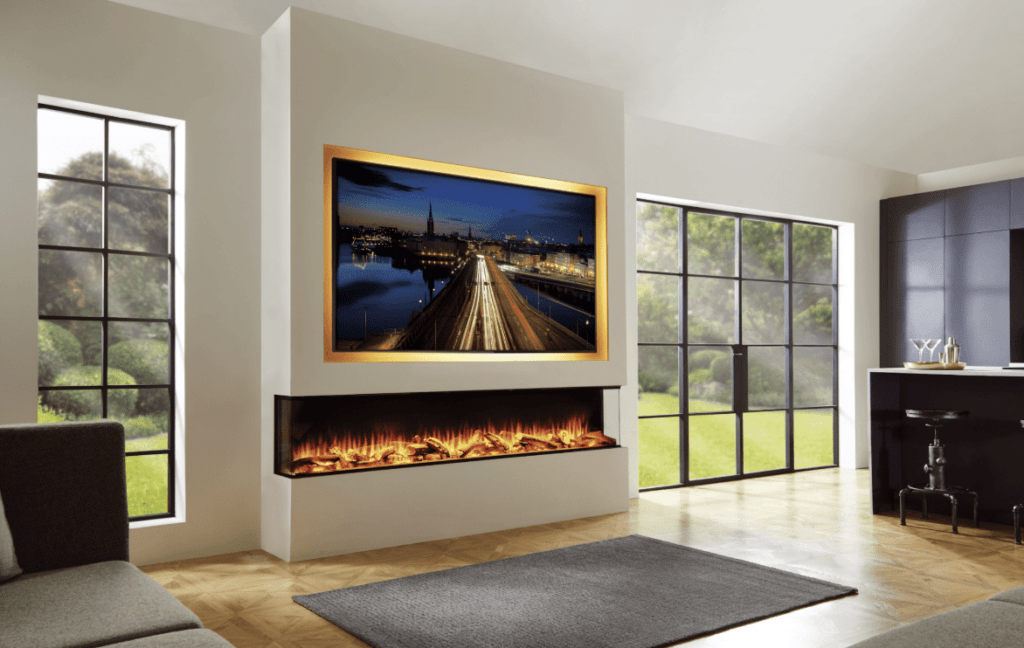
A large electric fire is not simply an electric fire made wider. Scale changes the relationship between the fire and the architecture around it. A compact fire tends to sit within an existing feature. A panoramic fire can become the feature. Its horizontal line can anchor a long wall, balance a television or piece of artwork and create a visual centre in a room that might otherwise feel dispersed.
This is particularly valuable in open-plan interiors.
Large shared spaces often contain several competing points: cooking areas, dining, television viewing, and space to relax and have conversation. Without a strong visual structure, the room can feel like a collection of furniture rather than a coherent interior.
A wide fire can help define the main seating area without enclosing it. It creates a focal point within the larger space. Even when installed into a dividing wall, it can connect two zones by allowing the flame picture to be seen from different directions. The horizontal proportions also affect how the room feels.
Televisions, tall windows and full-height cabinets introduce strong vertical shapes. A wide, low fireplace provides a counterbalance. It can visually lower the ‘centre of gravity’ of the room and encourage the eye to move across the wall rather than immediately upwards. This certainly does not mean the largest fire is automatically the most luxurious. Oversizing can be as damaging as undersizing. A very wide fire forced into a modest room may dominate everything around it. Conversely, a narrow fire can look lost within a long feature wall or expansive open-plan space.
The right premium look begins with proportion rather than product size.
The width of the wall, the dimensions of the television, the height of the ceiling, the viewing distance and the position of nearby furniture are all important. A fire needs enough surrounding space to breathe, but not so much that it appears disconnected from the room itself.
Premium is also about depth
Width creates impact. Depth creates immersion. One of the most significant advances in premium electric fire design has taken place inside the fuel bed.
A poorly designed shallow display has limited space in which to build a convincing visual scene. The logs, embers and flame effect can appear to occupy almost the same plane. From a distance, the fire may look attractive, but the illusion becomes less persuasive as the viewer moves closer or sees it from an angle. A deeper fire creates room for foreground, middle distance and background.
Logs can overlap naturally. Light can appear beneath and between them. The flame effect can rise behind a more substantial fuel bed rather than seeming to sit on its surface. Reflections and shadows can add another layer of movement.
This is why the word deep in the iRange Deep collection is more than a technical description. It identifies a different kind of visual experience.
The additional depth allows the fuel bed to become part of the design rather than merely a base for the flame. On the i1500e Deep, for example, the deeper construction accommodates a chunkier log arrangement and a glowing front-log feature designed to increase illumination across the fuel bed.
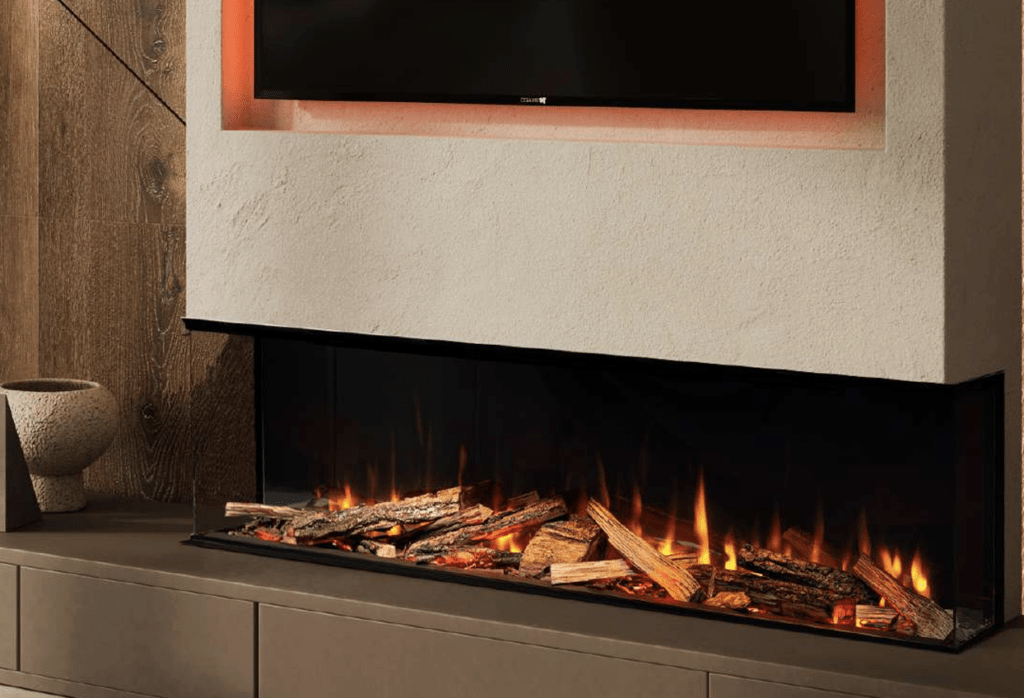
Premium realism does not necessarily mean trying to reproduce every characteristic of a combustion fire, but it does mean creating enough variation, depth and movement for the display to remain interesting over time. The fire should reward both a quick glance across the room and a closer view from the sofa.
Light has become part of the fireplace design
A modern electric fire sits somewhere between a heating appliance and a lighting installation. The flame is one layer. The illuminated fuel bed is another. Downlights can draw attention to the logs. Optional lighting around the fire can extend the effect into shelving, recesses or the wider feature wall. This offers far more control over the character of the room.
For everyday use, many homeowners may favour a warm amber flame, a softly illuminated log bed and understated surrounding light. A white or combined flame can provide a cleaner look in a cooler contemporary scheme. More expressive colours can be reserved for entertaining, celebrations or occasional changes of mood.
The luxury lies in the ability to tune the display for a given situation, not in making it permanently spectacular.
Lighting also needs to be considered across the whole room. Bright ceiling spotlights directed towards the glass may weaken the contrast of the flame. Illuminated shelves, television bias lighting and decorative wall lights can compete with the fireplace if each element is treated as a separate feature.
The fireplace should be allowed to lead when it is on. Other lighting should support it.
The iRange Deep: using the fire as architecture
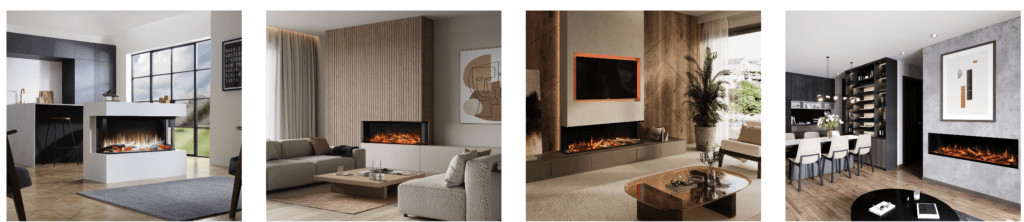
The iRange Deep collection demonstrates how a large electric fire can become an architectural component.
The range extends from the i750e to the i2200e, allowing the visual concept to be adapted to different rooms and wall lengths. The fires can be configured with one, two or three sides of glass, while multiple flame colours, illuminated fuel beds, tailored log options and optional mood lighting provide further control over the finished appearance. The range can support up to four metres of optional LED mood lighting.
The one-sided configuration offers the cleanest, most traditional appearance. It works particularly well where the fire is intended to have a long horizontal opening within a stone, plastered or timber feature wall. A two-sided corner installation changes the relationship with the room. Instead of being viewed only from directly in front, the fire becomes visible on approach from varying angles. This can be effective where a feature wall sits beside a doorway or where the seating area is approached from one side.
A three-sided installation can project well from a wall, occupy the end of a dividing structure or create a separation between two parts of an open-plan space. The side glass allows the fuel bed and flames to remain visible as people move through the room.
The i1500e Deep offers a generous 1.5-metre format that can create substantial impact without necessarily taking over the entire elevation. Its deeper fuel bed, larger log presentation, and one-, two-, or three-sided installation options make it well suited to feature walls and room dividers. Compatible smart controls and optional crackle effects add another layer to the experience.
The i1800e Deep creates an even broader centrepiece. Its large expanse of glass makes it particularly effective where the fireplace needs enough visual weight to hold a long media wall or wall-hung suite together. It also offers the choice of one, two or three visible sides, three flame-colour combinations and several log-set options.
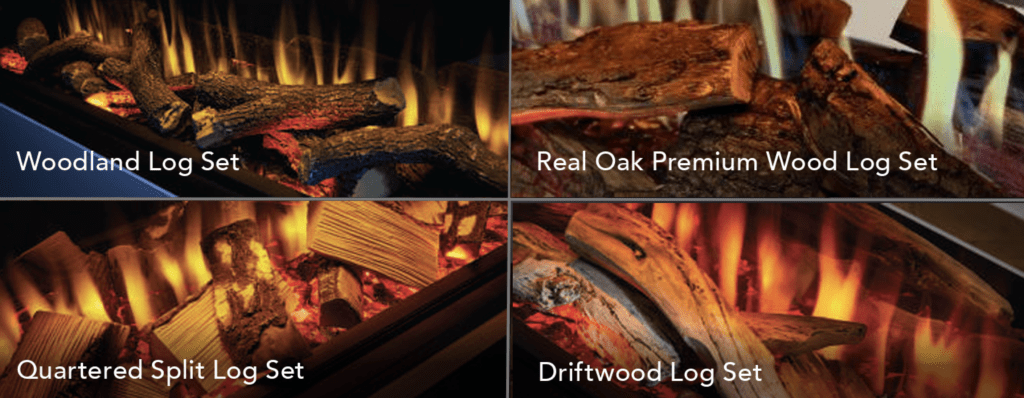
At 2.2 metres across, the i2200e Deep is our largest electric fire. Its proportions allow it to work across substantial feature walls, media installations and room dividers. The standard woodland logs can be replaced with options including driftwood, quartered split logs, a real wood log set or the hand-selected and scorched real oak premium log set. App control, optional crackle effects, adjustable flame settings, programmable heating and optional LED lighting allow the installation to be altered without rebuilding the wall around it.
Each width creates a different architectural rhythm. The i1500e may be the correct choice for a carefully proportioned reception room. The i1800e can provide stronger visual balance beneath a larger television or across a longer wall. The i2200e can establish the fireplace as the principal horizontal feature in a substantial open-plan interior.
The Luminosa Range: luxury through visual contrast
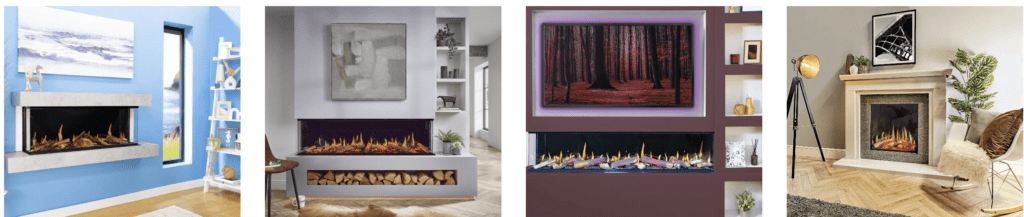
Where the iRange Deep makes a strong case for physical depth and architectural versatility, the Luminosa range places particular emphasis on the definition and detail of the flame picture.
Its Real Flame Technology combines flame movement with the appearance of embers and smoke, while pulsating illumination within the logs adds another level of activity. The dark screen programme uses a darker rear surface to increase flame contrast and draw attention towards the logs.
In the same way that a cinema image gains impact from controlled surrounding light, a flame display becomes more vivid when the background does not compete with it. The darkness gives the brighter elements somewhere to exist. Sparks, embers and illuminated edges become easier to distinguish.
This produces a different kind of luxury from simply making the flame larger.
The Luminosa 150 offers 16 flame options, each with five brightness settings, together with nine log-light choices, three downlight options and a ten-option Ambilight fuel bed. It can be operated through the C&J Smart App, including control of the optional crackle sound, and can be installed with one, two or three sides of glass. Again, the value is not in using every possible effect simultaneously. It is in being able to create a flame picture suited to the room.
A warmer, restrained arrangement may complement oak joinery, natural stone and soft neutral fabrics. A brighter white flame may suit crisp plasterwork, darker cabinetry or a more minimal interior. The log and fuel-bed lighting can then be adjusted so that the fire remains visually balanced rather than becoming a single bright strip.
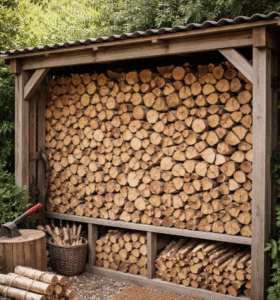
Logs remain visible during daylight. They are effectively part of the furniture and material palette of the room. The standard birch and oak arrangement combines different colours and sizes, while premium options include the lightly scorched real oak premium wood log set.
Our various log sets:
This level of detail is particularly relevant in a high-end installation. A fire may operate for several hours in the evening, but it occupies the wall all day. It needs to look considered in both states.
If you are looking for a more traditional fireplace look, the Luminosa 62 is ideal. It has all the benefits found with the other fires in the Luminosa range but fits into an existing fireplace surround.
Why our Opulus fire belongs here
Our Opulus is not a large-format electric fire. It is a 16-inch fire designed to fit more traditional fireplace proportions. That might appear to place it outside a discussion about premium large electric fires. In reality, it provides an important counterpoint.
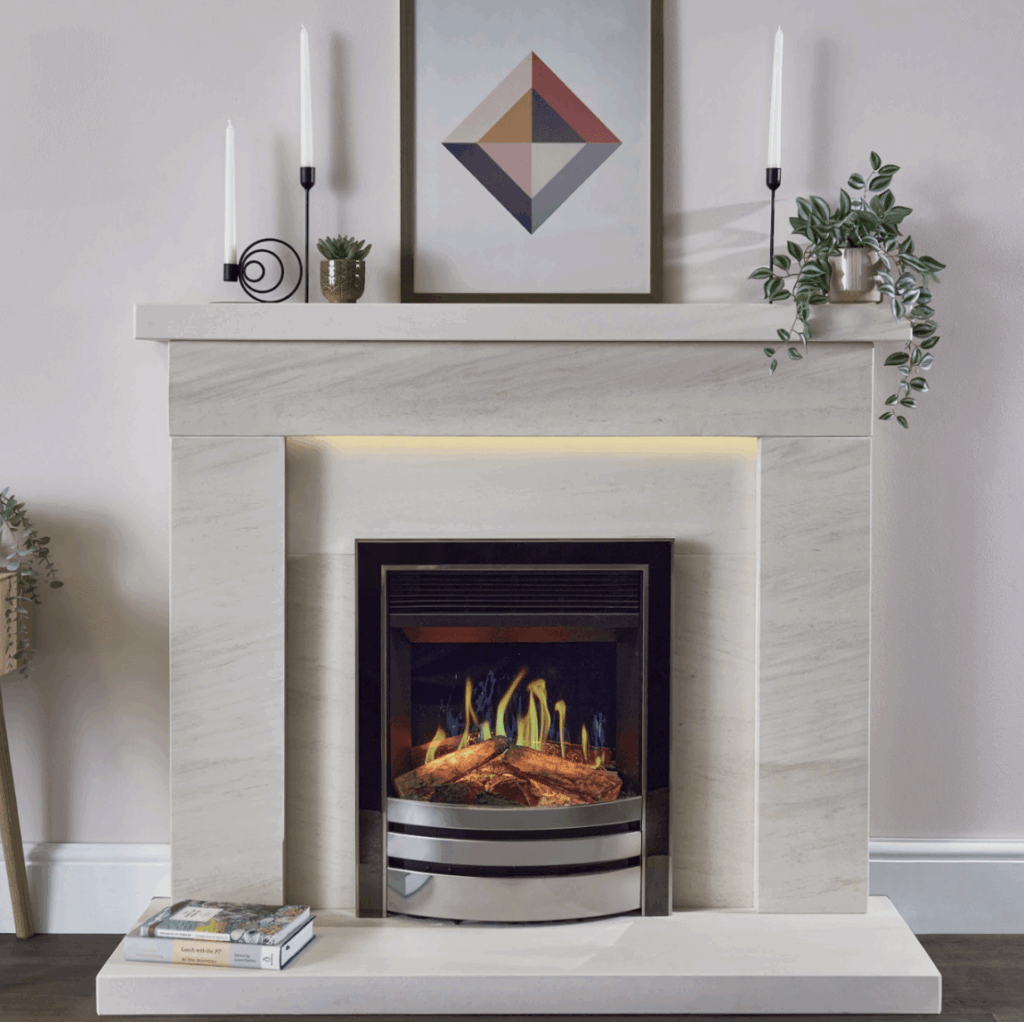
A period-style room, compact sitting room or original chimney breast may not benefit from a panoramic opening. Removing traditional proportions simply to install the widest possible appliance can make the interior not as well thought out.
In those settings, the premium decision may be to preserve the established architecture while improving the quality and control of the fire within it.
The Opulus brings our Real Flame Technology into the 16-inch format. It offers 16 flame-colour options with five mood settings, dancing flames with sparks and smoke, pulsating woodland-log lighting, multiple downlight and fuel-bed settings, C&J Smart App control and optional crackle sound. It is also compatible with 14 fascia and fret options, enabling the technology to sit within different decorative styles. Heating is provided through automatically controlled 0.75kW and 1.5kW settings.
Designing a large electric fire installation properly
The perfect fire installation, assuming you are wanting a media wall/wall design, depends as much on the decisions around the fire as it does on the appliance itself. Ideally, choose the fire before designing the wall. The fire should be selected during the earliest stage of the room design.
Its width, depth, glass configuration, ventilation requirements, electrical supply and service access will affect the construction around it. Choosing the appliance after the wall has been designed can lead to compromised proportions, awkward vents or unnecessary alterations.
This is especially important in a media wall. The television, soundbar, consoles, lighting drivers, router and other equipment all require space, cable routes and appropriate ventilation. The structure should be designed as a coordinated installation as opposed to a decorative box containing unrelated products.
You should design from several viewpoints. A front elevation shows only one version of the room. Consider how the fire will appear from the main sofa, the doorway, the dining table and any adjoining space. A side panel of glass should have a view through it. Equally, a one-sided installation may produce a better look where the fire is always seen from directly in front.
Do not automatically match the television width. A fireplace and television do not always need identical widths. Exact alignment can create a disciplined, symmetrical composition, but it is not the only successful approach. A wider fire can visually anchor a television, while a narrower one may leave useful space for shelving or cabinetry. What is important here is the relationship between all the elements: the fire, screen, wall, storage, ceiling height and furniture. Highly patterned stone, busy timber grain, illuminated shelving and a large television can all compete with the fire.
A strong feature wall does not require every surface to demand attention. Often the most effective approach is to allow one material to frame the fireplace calmly. Smooth plaster can make the flame appear sharper. Darker finishes can increase contrast. Textured stone can add quality, provided its pattern does not overwhelm the details of the fuel bed. The purpose of the surround is to make the fire feel integrated.
Plan the lighting as one system
Optional fireplace mood lighting should be coordinated with the room’s other lighting circuits. Consider whether shelves, alcoves and the back of the television need separate controls. Think about the appearance of the room when the flame is the main source of visual interest, when the television is in use and when the fireplace is switched off.
Preserve access
The cleanest feature walls often appear completely seamless, but the equipment inside them will still require inspection, maintenance or eventual replacement.
Power connections, control equipment and relevant components should remain accessible in accordance with the appliance and installation instructions. A removable panel or carefully positioned access point is preferable to dismantling finished joinery or decorative surfaces later. Good service access is part of a good design.
What buyers are really choosing with high-end electric fires
A premium electric fire is not purchased only for its flame effect or heater. People are choosing flexibility, style and control. They can decide whether the fire appears warm and traditional or clean and contemporary, and whether it is visible from one room or several. The visual display can be used with heat, without heat, or as part of a wider lighting scene. There is also greater freedom from some of the physical constraints associated with a combustion fireplace. Because an electric fire does not require a chimney or combustion flue, it offers greater flexibility over its position within the building.
These points are why larger electric fires have become so relevant to premium interiors. Their appeal is not based on being a substitute for something else. It comes from what electric technology allows them to do in their own right.
They can be wide without requiring a correspondingly large chimney opening. They can be multi-sided without dividing the room completely. They can also provide local warmth without making heat essential to the visual experience. They bring together flame, fuel bed, lighting and smart control in one installation.
The best electric fire is therefore not the one that tries hardest to conceal the fact that it is electric; it is the one that uses the advantages of electricity most intelligently.
Discover our full range of electric fires here.