The month of May can feel like the wrong time to think about heating. The days are longer, the heating is finally off, and the last thing most households want to do is plan for when the heating goes back on. Yet this year, May could be the most important month for getting ahead of winter energy costs.
The Iran conflict has added fresh pressure to global oil and gas markets. In the UK, this is important as wholesale energy costs feed into the prices suppliers charge households. Ofgem has confirmed that the current energy price cap for a typical dual-fuel household paying by Direct Debit is £1,641 a year from 1 April to 30 June 2026, but it has also said the next cap, covering July to September, will be published by 27 May. Disruption linked to the war in the Middle East has increased wholesale gas and electricity prices, which will affect the July-to-September cap.
The concern is not only July. The real test for many homes will come in October, when cooler evenings return, central heating is switched back on, and daily consumption rises sharply. MoneySavingExpert’s early May round-up of supplier forecasts suggests the price cap could rise from £1,641 now to around £1,853 in July and around £1,893 in October for typical use, though longer-range forecasts remain uncertain.
For households already close to the edge, even a modest percentage increase can be serious. National Energy Action defines fuel poverty as spending 10% of income on heating, and says millions of UK households are already unable to afford enough heat to keep a home warm and healthy. Government statistics for England show that in 2025, 2.36 million households were in fuel poverty under the official Low Income Low Energy Efficiency measure, while 7.63 million households needed to spend more than 10% of their income after housing costs on energy.

What can a household do now?
The price cap is often described as an annual bill, but it is not a cap on your total bill. It limits the unit rates and standing charges suppliers can apply to default tariffs. Use more energy, and you still pay more. Ofgem makes this clear: the actual amount a household pays depends on usage, location and meter type.
That means the first step now is to understand your own winter pattern. Look back at the bills from October to March. How many kilowatt hours of gas and electricity did you use? Did usage spike during cold snaps? Were estimated readings used? A smart meter, regular manual readings, or a simple spreadsheet can help you see whether your home’s issue is high unit cost, high consumption, or both.
The month of May is also the time to check whether your Direct Debit is realistic. A very low summer payment can feel helpful, but it may only store up debt for winter. Ask your supplier for an account review based on actual annual usage. If you are already behind, contact them now rather than in October. Ofgem rules require suppliers to work with customers to agree on an affordable payment plan, and customers can ask for payment breaks, more time to pay, hardship support or a review of debt repayments.
Use the warm months for the jobs that save heat later
The cheapest unit of energy is the one you do not need to buy. That does not mean sitting cold; it means stopping paid-for heat from escaping.
Walk around your home with the cooler months in mind. Check loft insulation, draughts around doors, gaps around pipework, poorly fitting letterboxes, unused chimneys, single-glazed areas and rooms that never seem to stay warm. Small jobs such as draught-proofing, radiator reflector panels, thick curtains, pipe lagging and sealing gaps can be done gradually and usually cause less disruption than emergency winter fixes.
Bigger measures need more lead time. The Great British Insulation Scheme is designed to improve some of the least energy-efficient homes in Great Britain and reduce bills; Ofgem says it is available to some low-income and vulnerable households and to eligible homes with an EPC rating of D to G in certain council tax bands. Government guidance also points low-income households towards the Energy Company Obligation, Great British Insulation Scheme and Warm Homes: Local Grant. Applying in May gives more time for eligibility checks, surveys and installation before heating season.
Think about how you heat the room you actually use
One lesson from recent winters is that whole-house heating is not always the most economical way to stay comfortable, and we have mentioned this many times in various articles. Many people spend evenings in one main living space. A well-chosen, efficient secondary heat source can help make that room feel warmer without overheating unused bedrooms or hallways. This is known as zone heating.
This is where appliance choice and installation quality matter. Modern glass-fronted gas fires, for example, can be far more efficient than old open fires. Our glass-fronted gas fires start at around 77% efficiency, with some models achieving over 90%, compared with a traditional open log fire that may operate at around 25% efficiency or less. For homes suited to wood-burning stoves, our Fireline stove range offers an impressive efficiency of 78% to 82% and meets Ecodesign and clearSkies Level 5 certification. Electric fires, 100% efficient at point of use, are growing in popularity, offering a diverse range of styles if wood or gas is not for you.
Below is our 4D Ecoflame 22″ Maxi electric fire:

Gas appliances must be fitted by a Gas Safe registered engineer. Solid-fuel appliances require the right flue, ventilation, clearances, and professional installation, typically through a HETAS-registered installer.
May and June are better months to visit a showroom, ask questions, compare outputs, book surveys and arrange installation than September, when demand rises.
Check support before the rush
Many households miss out on help because they look too late or assume they will not qualify. Government guidance says low-income households or those on benefits may be eligible for the Warm Home Discount, energy-saving improvement schemes and local support. The Warm Home Discount is a one-off £150 discount on electricity bills; the 2025 to 2026 scheme has closed and is due to reopen in October 2026.
That makes May a good time to make sure the basics are right. Check that the correct name is on your energy account, especially if you receive benefits or Pension Credit. Keep supplier letters. Update your address if you have moved. Ask your supplier how prepayment customers will receive any discount. In Scotland, some low-income households may need to apply through their supplier, so waiting until winter can mean joining the queue late.
Anyone of state pension age, pregnant, living with young children, living with a disability or long-term medical condition, or facing a recent life change such as bereavement, job loss, or hospital recovery should also consider the Priority Services Register. The register can provide extra help such as advance notice of planned power cuts, meter-reading support, accessible bills, emergency help and nominated contact arrangements.
Decide on tariffs with your eyes open
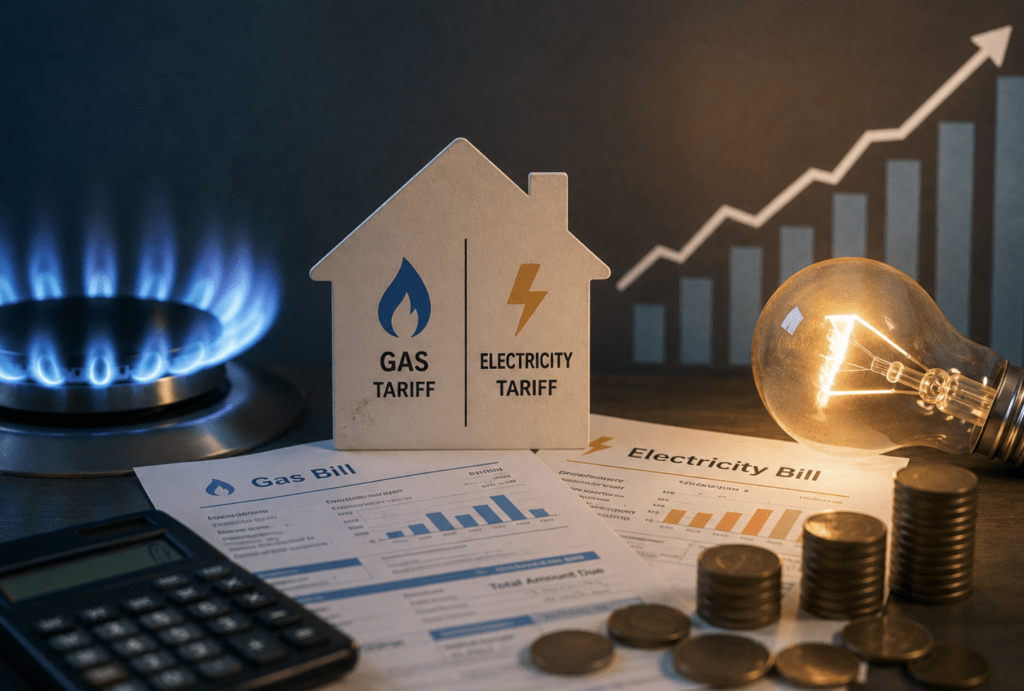
Fixed tariffs can offer peace of mind, but not every fix is a good value. Variable tariffs can be cheaper now, but expose you to future increases. Tracker tariffs may look attractive in calm markets, but can move quickly when wholesale prices rise.
The key is not to guess, but to compare using your actual annual consumption. Check the unit rates, standing charges, exit fees and term length. A deal that looks cheaper for a typical household may not suit a low-user flat, a large family home or someone who uses a stove to heat one room. Wholesale volatility has led some suppliers to pull or increase fixed deals, so whether to fix depends partly on personal risk tolerance and household usage.
Make a May-to-October plan
By the end of May, aim to have actual meter readings, a clear balance, a realistic Direct Debit, and a list of heat-loss jobs. In June, get quotes for insulation, appliance servicing or any new fire or stove installation. In July and August, complete disruptive work while the heating is off. In September, test heating controls, bleed radiators, service appliances, sweep chimneys where required, and check carbon monoxide alarms. In October, review the new cap, check Warm Home Discount eligibility, and set heating controls around your real routine.
No household can control the Iran conflict, wholesale energy markets or the weather. But many households can control preparation. Starting in May gives you time: time to reduce heat loss, make informed tariff decisions, access support, service appliances, and choose efficient room heating before the first cold evening arrives. For winter 2026, that preparation may be the difference between reacting to higher bills and being ready for them.