When the weather is warm, buying a new fire is probably not the first thing on your mind. Most people only start thinking seriously about fires, chimney sweeping and home heating once the evenings begin to draw in. By then, autumn has arrived, temperatures are dropping, and everyone else has had the same idea.
That is exactly why summer can be one of the best times of year to start planning.
Buying a fire in the warmer months may feel counterintuitive, but it can make the whole process calmer, more considered and often more convenient. Instead of rushing to choose an appliance, you can take your time, compare styles, speak with showroom staff, arrange surveys, book installers, prepare your chimney or flue – if needed, and make sure everything is ready well before the first cold snap arrives.
Whether you are considering a wood-burning stove, a gas fire, an electric fire, or a larger fireplace renovation, summer offers something that winter rarely does: breathing space.
Below are seven reasons why buying a fire in the summer can be a smart move.

1. You may find better off-season prices and a calmer buying experience
Heating products naturally become more popular when the weather turns cold. In autumn and winter, many homeowners suddenly realise their living room is chilly, their old fire looks dated, their stove needs replacing, or their heating bills are higher than expected. As demand rises, showrooms, retailers and installers become busier.
Summer is different. Fewer people are actively shopping for fires, which can sometimes create opportunities for better value. Retailers may be preparing for new-season stock, clearing display models, running seasonal promotions or making room for updated ranges. Discounts are never guaranteed, but the quieter period can give buyers a better chance of finding a favourable deal than during peak demand.
For a wood-burning stove, the total project may include a site survey, flue liner, hearth, register plate, chimney work, ventilation, carbon monoxide alarm, commissioning, certification and possible making-good work around the fireplace opening. For a gas fire, you will need suitable gas installation work carried out legally by a Gas Safe registered engineer; Gas Safe Register states that gas businesses and engineers must be on the register to carry out gas work legally.
For an electric fire, the project may be simpler, especially if it is a plug-in model, but larger media wall fires or hard-wired installations may still require electrical planning, joinery, plastering or building work.
2. You are more likely to get the style, size and model you actually want
One of the biggest frustrations of buying during peak season is the potential for limited availability on some models. When demand increases, popular models, finishes, outputs and door styles can sell quickly. If you wait until autumn or early winter, there is a higher chance you will find that the fire you wanted has a longer lead time, or cannot be installed within your desired time frame, or maybe out of stock. This is by no means a certain probability, but it’s worth considering.
Fires are not one-size-fits-all. A fire needs to suit the room, the property, the chimney or flue arrangement, your preferred fuel type, your lifestyle and your design taste. All this can take time.
If you are buying a wood-burning stove, you will need to think about heat output, stove efficiency, room size, whether you live in a smoke control area, the type of chimney or flue you have, and whether you have suitable space to store dry logs. If you are in a smoke control area, you can only burn authorised fuels unless using a Defra-approved or exempt appliance. All Charlton & Jenrick wood-burning stoves are Defra-approved.
If you are buying a gas fire, you will need to consider whether you want an open or glass-fronted model and whether it will be an inset, hole-in-the-wall, or stove design. You will also need to decide if you want a balanced flue or a conventional flue.
If you are buying an electric fire, your choices may include inset fires, freestanding electric stoves, wall-mounted fires, panoramic fires, three-sided media wall fires and larger feature fireplaces. Electric fires can be especially attractive for homes without a usable chimney, or for rooms where visual impact and flexible installation are priorities.
Summer shopping gives you more time to visit a showroom, see flame effects in person, compare finishes and understand how different products actually look when operating. This is especially useful with electric fires, where flame realism, lighting effects, fuel bed options, glass size and control features can vary greatly between models.
3. Installers often have more flexible availability
A good fire installation depends on the right professional. The appliance may be beautifully designed, but it still needs to be installed safely and correctly.
This is where summer can be especially useful. Installers are often busiest in autumn and winter, when everyone wants their stove, gas fire or fireplace ready immediately. During the summer, appointment availability is often much better, making it easier to book surveys, choose installation dates, and coordinate related trades.
In winter, installer diaries can fill quickly. That can potentially leave you waiting longer, especially if your project is more complex than a straightforward replacement. Summer gives you a better chance of securing a convenient date and dealing with any unexpected issues before the colder weather arrives.
Unexpected issues can be common with fireplace projects. A chimney might need sweeping or lining. A fireplace opening may need alteration. An old appliance may need safe removal, or a hearth might need replacing. In a busy season, each extra step can create delays. In summer, there is more time to handle those steps.
4. Chimney sweeping, inspections, and remedial work can be easier to arrange
If your new fire will use an existing chimney, summer is a sensible time to have it checked. A chimney is not just a decorative feature; it is a working part of the heating system. It needs to remove combustion gases safely and perform properly when the appliance is in use.
A chimney may look fine from the room, but the inside can tell a different story. There may be soot, tar deposits, nesting material, loose masonry, blockages, damaged liners or signs of deterioration. These problems are better discovered in summer than on the first cold evening when you want to light the fire.
Chimney sweeps may have better availability than they do in autumn, and if they identify a problem, you have more time to deal with it. This could include fitting a new liner, repairing a chimney pot, adding a cowl, removing debris or addressing damp-related issues.
Chimney preparation is particularly important for stove installations. A stove generally works best when the flue system is properly sized, correctly lined where required, and matched to the appliance. Poor flue performance can affect lighting, draw, efficiency, smoke control and overall user experience.
Summer offers an opportunity to coordinate chimney work with the rest of the project. You might book a sweep first, then a fireplace survey, then the installation, then any plastering or decorating. Doing this in a planned sequence is far less stressful than trying to solve everything in November when both installers and sweeps are heavily booked.

5. Good weather can make installation cleaner, safer and less disruptive
Installing a new fire can involve more disruption than many people expect. Even a relatively straightforward job can involve tools, dust sheets, materials, repeated trips in and out of the house, removal of the old appliance, chimney access, hearth work, drilling, lifting and cleaning up.
Summer weather can make all of this easier!
When the ground is dry, there is less chance of mud being carried through the house. Doors can be opened for ventilation without making the room freezing cold. Installers can move equipment in and out more comfortably. If external chimney work is required, conditions are often safer and more manageable than during wet, windy or icy weather.

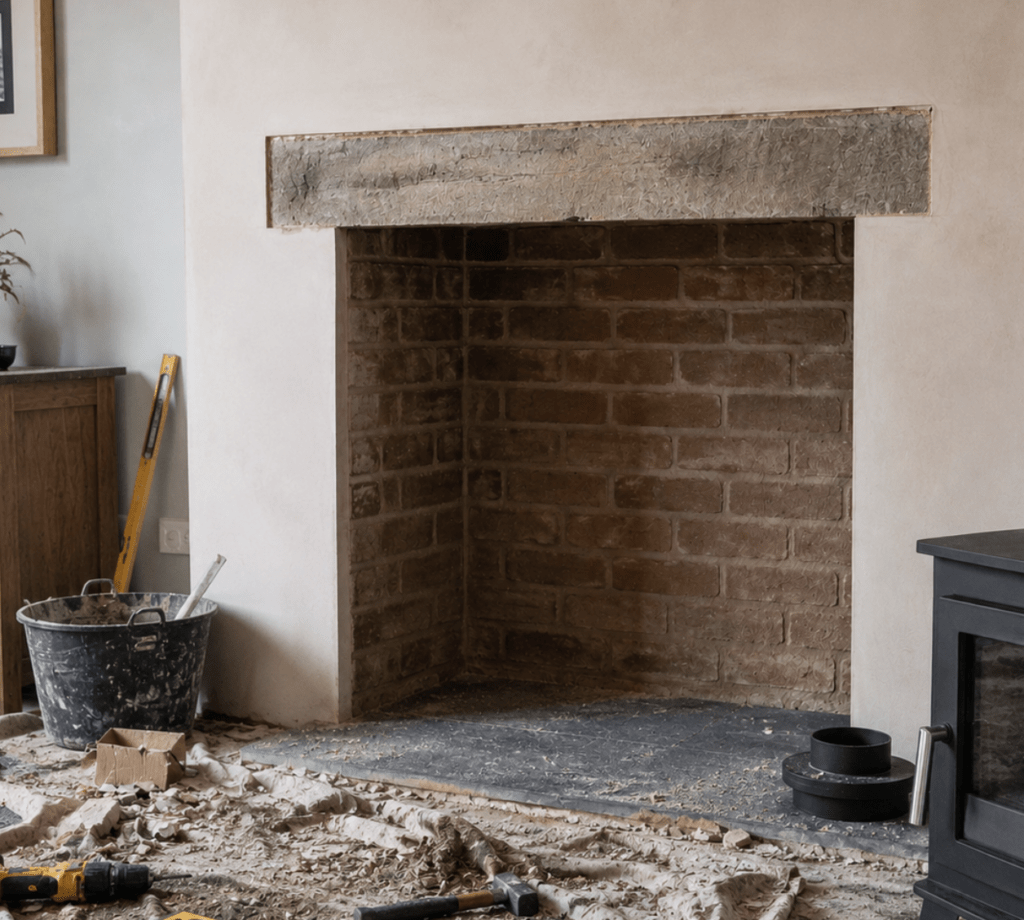
The benefits are even greater for larger projects. A media wall installation may involve timber framing, plasterboard, plastering, electrical work, decorating and sometimes flooring adjustments. A fireplace renovation may involve opening up a chimney breast, installing a lintel, fitting a hearth, repairing brickwork and making good around the opening. A stove installation may involve roof access, chimney lining, flue terminal work and fitting a closure plate or register plate.
Dry weather is certainly not guaranteed in a British summer, but it is usually a better season for home improvement work than winter. It can also make it easier to live without the room for a short period. If your living room is being worked on, you are less likely to rely on it for warmth in July than in December.
6. You have time to learn how to use the fire before you rely on it
A new fire is exciting, but it also comes with a learning curve. Summer gives you time to understand how the appliance works before it becomes part of your daily heating routine.
For a wood-burning stove, there is a technique involved. You need to learn how to light it efficiently, how much kindling to use, how to control the air vents, how to avoid over-firing, how to refuel safely, how to keep the glass cleaner, and how to recognise good combustion. You also need to understand what fuel the manufacturer recommends and what should not be burned.
New stove owners also need time to get used to the first few burns. Some appliances require gentle initial firing, and painted surfaces may cure during early use. The exact process depends on the manufacturer, so the instruction manual should always be followed.
For gas fires, summer gives you time to understand remote controls, thermostatic settings, pilot lights, batteries, servicing requirements and safety instructions.
For electric fires, you may need to get familiar with flame settings, heat settings, timers, thermostats, lighting options, remote control functions, app controls or smart-home integration. Many modern electric fires are highly customisable, with adjustable flame colours, fuel bed lighting and independent flame-only options. Summer gives you the chance to use those visual settings even when you do not need heat

This settling-in period is valuable.
If something is not quite right, you have time to contact the retailer or installer before peak season.
There is also the issue of carbon monoxide safety for combustion appliances. Carbon monoxide can be present in fumes from fuels that are not burned under the correct conditions, and it cannot be seen, smelled or tasted. Buying and installing in summer gives you time to ensure alarms, servicing, ventilation, and user instructions are properly understood before regular use begins.
7. You can prepare your fuel supply properly before winter
This point is especially important for anyone buying a wood-burning stove. The appliance is only one part of the system. The fuel you burn has a huge effect on performance, efficiency, smoke, maintenance and safety.
Dry wood is essential. In England, wood fuel sold in volumes of less than two cubic metres must be certified as Ready to Burn, which confirms a moisture content of 20% or less. Wood certified as Ready to Burn should be stored properly so it is not sold damaged or wet. You should use a moisture meter to check the moisture of logs, especially if you are sourcing your own firewood.
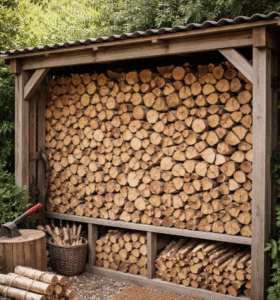
Buying your fire in summer gives you time to organise fuel storage before you need to use the stove regularly. That might mean buying a log store, clearing space in an outbuilding, stacking logs off the ground, improving airflow, covering the top of the stack, and keeping fuel away from rain.
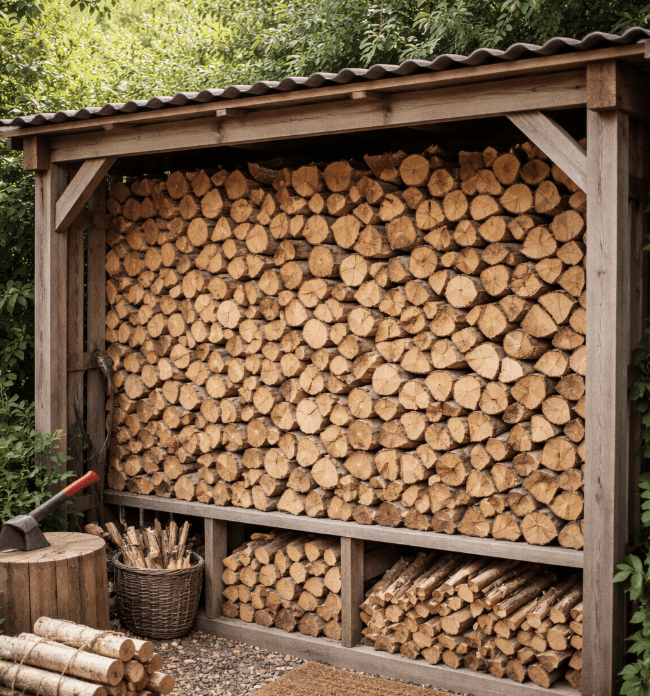
Good fuel storage is not just about convenience. Wet logs can be difficult to light, produce more smoke, blacken stove glass, create more deposits in the chimney and deliver less useful heat because energy is wasted driving moisture out of the wood.
Dry logs burn better and make the stove easier to control. Summer is also a better time to plan your fuel-buying habits. Instead of panic-buying logs during a cold spell, you can decide whether to buy kiln-dried logs, larger bulk loads, briquettes or smokeless fuels suitable for your appliance. If you are gathering or seasoning your own wood, be aware that it won’t be ready for immediate use. Some wood can take a long time to season properly (typically between 6 months to two years), depending on species, split size, storage conditions, ventilation and starting moisture content.
If you decide to collect your own firewood in the summer, it can be a more enjoyable experience than trekking through a cold, wet, muddy woodland in the middle of winter.
What to do before buying a fire in summer
Before choosing your fire, it is worth working through a simple checklist and asking yourself lots of questions:
First, decide what you want the fire to do. Is it mainly decorative, or do you want meaningful heat output? Will it be used every day in winter, occasionally at weekends, or mostly for atmosphere?
Second, check what is practical for your property. Do you have a working chimney? Would you need a flue liner? Is there a gas supply? Is the room suitable for a balanced flue fire? Would an electric fire be simpler? Are there any building, ventilation or clearance issues?
Third, think about the room size. A fire that is too small may not provide the comfort you expect. A stove that is too powerful can make the room uncomfortably hot and may be harder to run efficiently.
Fourth, use the right professional. For solid fuel appliances, look for suitably trained and registered installers. For gas fires, use Gas Safe registered engineers. For electrical work, use a competent electrician where required.
Fifth, ask about paperwork. Depending on the installation, you may need compliance documents, commissioning information, warranty registration, appliance instructions and servicing advice.
Sixth, consider the long-term maintenance. Wood-burning stoves need fuel management, ash removal, chimney sweeping and periodic servicing. Gas fires need appropriate servicing. Electric fires are generally lower maintenance, but filters, vents, remotes, lamps, LEDs or electronic components may still require care depending on the model.
Finally, plan fuel and accessories early. Stove owners may need a log store, a moisture meter, a companion set, stove gloves, an ash carrier, hearth products, and, of course, suitable fuel. Gas and electric fire owners may need remote batteries, servicing reminders or suitable electrical arrangements.
Act Now:
Buying a fire in summer gives you the luxury of preparation. You can choose more carefully, book more easily, install with less disruption, prepare fuel properly, learn how the appliance works and enjoy peace of mind before the cold weather arrives.
By the time autumn comes, you will not be joining the rush. You will already be ready.
If you’re considering a fire, now is the perfect time. While most won’t be thinking of fires just yet, use this to your advantage and enjoy a more relaxing buying experience.
Find a local showroom here.