An extra £100 towards winter energy costs is welcome news. Used carefully, it could help pay for essential heating, tackle an uncomfortable draught or make evenings at home feel warmer without turning up the thermostat.
The newly announced Household Energy Payment is due to start reaching eligible households from January 2027. The scheme announced for England covers Council Tax bands A to D, while the devolved governments will decide how to use funding for similar support elsewhere in the UK.
At Charlton & Jenrick, we believe the best heating advice starts with the home you already have. Before buying anything, consider where you feel cold, how your heating is being used and whether a small improvement could help you keep more of the warmth you are paying for.
Here is what the payment means, followed by practical ways to put it to work.
Who can receive the £100 energy payment?
The government has announced a one-off payment, delivered through the Council Tax system. Its initial guidance for councils targets homes in bands A to D occupied as a sole or main residence. The government’s household guidance explains that:
* Eligible households in England must live in the property as their main home and be responsible for Council Tax.
* Most exempt households are also intended to be included, subject to the full criteria.
* Empty properties, second homes and households where the householder is not responsible for Council Tax are excluded.
* Eligible Direct Debit payers should receive the money automatically into their bank account.
* Councils will invite people who do not pay by Direct Debit to apply.
Renters should check who is responsible for Council Tax under their tenancy. Renting does not, by itself, rule you out.
Scotland, Wales and Northern Ireland will receive additional funding, with their governments deciding the arrangements. People should check for announcements rather than assume England’s eligibility rules apply to them.
When will the money arrive?
From January 2027 – but that does not mean everyone will be paid in January. Some councils say payments are expected to begin then, with individual dates still unconfirmed and no payment expected before Christmas.
Whenever you get paid, the first thing is to decide whether the money needs to pay for heating. If you are rationing essential warmth or running short of meter credit, putting the payment towards energy may be the most useful choice. Buying an energy-saving product makes little sense if it leaves you unable to heat the rooms you use.

A simple starting question is: what is making this home uncomfortable?
Spending against the actual problem gives the payment a clearer purpose. Spending money on an overdue gas fire service will take priority over sorting a draft. Do not feel obliged to spend all £100 at once either. Keeping some available for a cold spell can be more valuable than buying several products with uncertain benefits.
The government has also announced a £100 million discretionary fund for councils to help households particularly affected by rising energy costs, including some outside bands A to D. Local criteria will determine access.
Note: When the government offers money, fraud often follows. Remember, only provide personal or bank details through a verified council channel. If a message offering the payment looks suspicious, go directly to your council’s website rather than following its link.
Before we look at how best to use this £100, first decide whether the money needs to pay for heating
If you are rationing essential warmth or running short of meter credit, putting the payment towards energy may be the most useful choice. Buying an energy-saving product makes little sense if it leaves you unable to heat the rooms you use. Here are a few initial ideas:
Stop unwanted draughts while keeping ventilation working
A draught across your feet or the back of your neck can make a heated room feel uncomfortable. Where a home has adequate ventilation, sealing unintended gaps around an external door or opening window can be a useful first improvement.
Check the gaps before buying strips: the wrong thickness can prevent a door or window from closing properly. A suitable letterbox brush or door-bottom seal may also help where that is the source of the draught.
Never cover trickle vents, air bricks, extractor vents or the ventilation required by a fire, stove or boiler. If you have a combustion appliance and are unsure, ask a competent installer before changing the room’s airflow. Draught-proofing must not compromise safe operation or moisture control.
Make the warmth you already pay for reach you
Some of the most useful improvements cost nothing. Move furniture away from radiators so warm air can circulate. Draw curtains when it gets dark, but keep them clear of radiators so they do not trap heat against the window. Open them during daylight to benefit from sunshine.
Review your existing heating schedule too. Does it still match your schedule when you are home? Have you left room settings higher than needed? Make small changes and check comfort rather than assuming a lower setting is always better.
Heat pumps and other systems may need a different scheduling approach than a conventional boiler, so follow the guidance for your equipment.
You may discover that a ten-minute adjustment is more useful than another gadget.
Consider radiator reflectors where they can make a difference
Purpose-made reflector panels can reduce heat escaping behind radiators on uninsulated external walls. They are a targeted improvement: there is much less reason to fit them behind radiators on internal walls, where the heat remains within the home. Measure first, choose material intended for the job and follow the fitting instructions. Ask your landlord before fitting panels if you rent.
This is a useful option for a suitable property, rather than a reason to buy a kit for every radiator. If your walls are already well insulated, keep the money for a more pressing need.
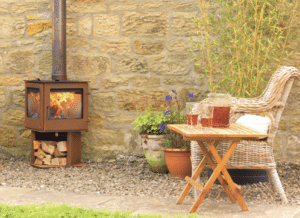
Our Woodtec 8kW double-sided stove:

Add personal warmth without letting the home become cold
A heated throw can be useful when sitting at a desk or watching television. It warms a small area close to you, so its electricity demand can be far lower than that of a room heater. An ordinary blanket and warm layers may already provide the comfort you need.
To understand running costs, use this calculation:
Power in kilowatts × hours used × your electricity unit price = electricity cost.
For illustration, at an assumed rate of 30p per kWh, a 100-watt throw operating continuously for four hours uses 0.4kWh and costs 12p. This is an example only, not a tariff forecast. Actual use depends on the product, setting and thermostat cycling.
Buy from a reputable retailer, follow the instructions and check for damage before use. Do not combine an electric blanket with a hot-water bottle, and only use it overnight if the manufacturer explicitly permits it.
Personal warmth should complement adequate room heating. We recommend heating frequently used rooms, including the living room and bedroom, to at least 18°C. Some people need warmer conditions. A throw does not protect the rest of the home from cold, condensation or frozen pipes.
Use an existing fire thoughtfully
An existing fire can provide warmth where you are spending time. The financial benefit depends on what it replaces. For example, running an electric fire while leaving all other heating unchanged adds to energy use. It may help manage costs if it allows an appropriate reduction elsewhere, but the result depends on the building, tariffs and heating system. Keep other rooms adequately heated and ventilated.
Using the same illustrative electricity rate of 30p per kWh, a 2kW electric fire running continuously at full power costs 60p an hour, or £1.80 for three hours. A thermostat may reduce actual consumption once the room reaches its setting. Check the appliance manual and your own tariff.
This calculation also shows why a heated throw and a room heater serve different purposes: one warms a person, the other warms a space. Running costs alone don’t tell you which will meet your needs. For a gas fire, check its gas input and tariff rather than applying the electric cost example. Keep servicing up to date and use a Gas Safe registered engineer qualified for the appliance.
For stove owners, prioritise maintenance and suitable fuel
If a wood-burning stove is already part of your heating routine, it may be worth putting some of the payment towards an overdue sweep or service. Obtain a quote first: £100 may cover only part of the work.
Use fuel approved for the appliance. Wood should have a moisture content of 20% or less; look for the Ready to Burn mark when buying packaged logs. Avoid burning waste, painted or treated wood. Dry fuel is more heat-efficient and produces less smoke than wet wood, although wood burning still produces air pollution.
Follow the manufacturer’s operating instructions and local smoke control requirements. Keep required ventilation clear, maintain a working carbon monoxide alarm and keep logs, soft furnishings and drying clothes at the specified safe distance.
Existing Charlton & Jenrick owners can access the technical library on our website for appliance information. If anything is unclear, speak to your retailer or installer before us.
A practical way to divide the £100
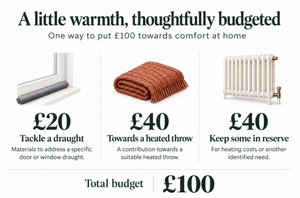
No shopping list suits every home. For a household whose essential heating costs are already covered, this is one possible allocation:
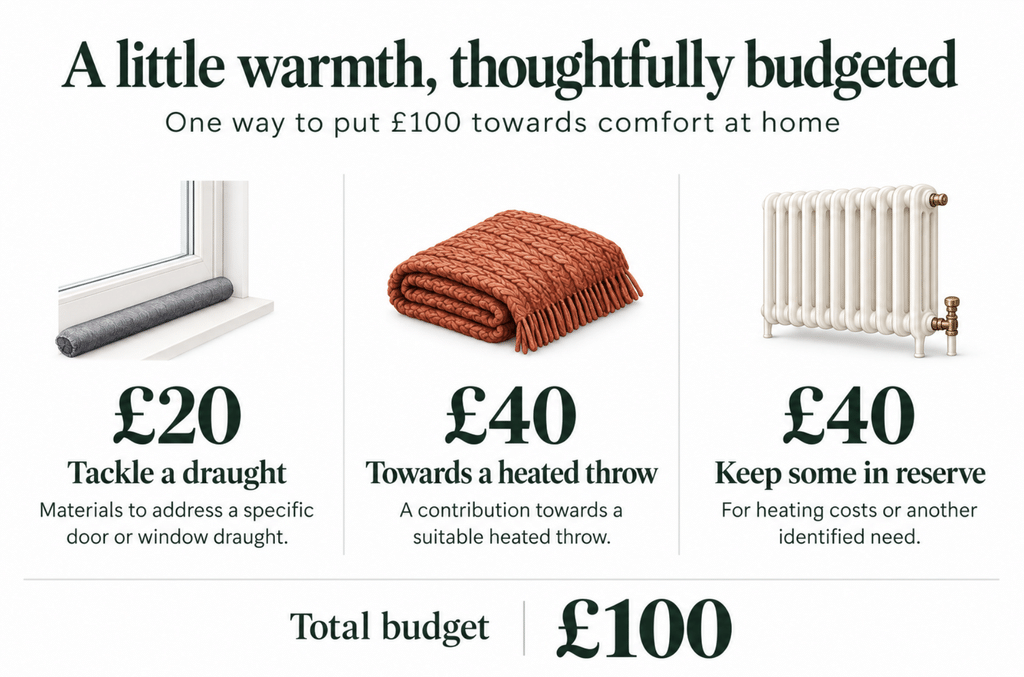
These are suggested spending limits, not verified product prices or guaranteed savings. If a safe, suitable product costs more, adjust the plan; do not sacrifice quality to fit the example.
If you already have a throw, keep the £40 in the heating budget. If your home has no unwanted draughts, don’t spend £20 trying to solve a problem you don’t have. A suitable radiator reflector kit is another possible substitution, while an overdue sweep or service may deserve priority over every item in the table.
The best result is a warmer, safer home within your budget, even if that means spending the whole payment on energy.
A winter warmth checklist to share. Before spending the payment:
* Check your Council Tax band and your council’s official payment guidance
* Prioritise essential heating and immediate household needs
* Identify where you lose heat or feel uncomfortable
* Check existing timers, thermostats and room settings
* Keep radiators clear and use curtains effectively
* Seal unwanted gaps only where ventilation remains adequate
* Follow safety instructions for heated throws, fires and stoves
* Keep some money available if you are unsure what will help most
At Charlton & Jenrick, we know that warmth is about everyday comfort: a living room you enjoy spending time in, a comfortable bedroom and heating you feel confident using. A £100 payment will not solve every winter challenge, but a few well-chosen decisions can make it more useful.
Share this guide with someone who could benefit, and check the official payment information again before January. If you need help using an existing Charlton & Jenrick appliance, contact your supplying showroom for advice specific to your model.