El Niño is back in the headlines in 2026, and for good reason. Although it begins thousands of miles away in the tropical Pacific, it can influence weather patterns across the world, adding extra heat to an already warming climate system. For homeowners, developers, architects and manufacturers like us, that makes it more than a distant scientific term. It is part of the wider climate story now shaping how homes are designed, heated, cooled and lived in.
The World Meteorological Organisation reported today, 2 June 2026, that El Niño conditions are developing, with an 80% likelihood of an El Niño event during June to August 2026 and probabilities near or above 90% that it will continue until at least November. Most forecast models suggest it will be at least moderate and possibly strong, although the exact strength and timing remain uncertain.
That does not mean the UK is guaranteed a record-breaking summer. UK weather is influenced by many factors, especially the Atlantic jet stream, pressure patterns, sea temperatures around the British Isles and the position of high-pressure systems over Europe. The Met Office has also stressed that El Niño’s influence on the UK is indirect, and that it is too early to draw firm conclusions about specific UK seasons.
However, El Niño is important because it can add a natural warming push on top of human-induced climate change – that background warming is already clear. Our recent article on climate change and construction explained that climate change is no longer a distant environmental issue for the built environment. It is now directly influencing where buildings are developed, how they are designed, how they are heated and cooled, and how resilient they are expected to be over their lifetime.
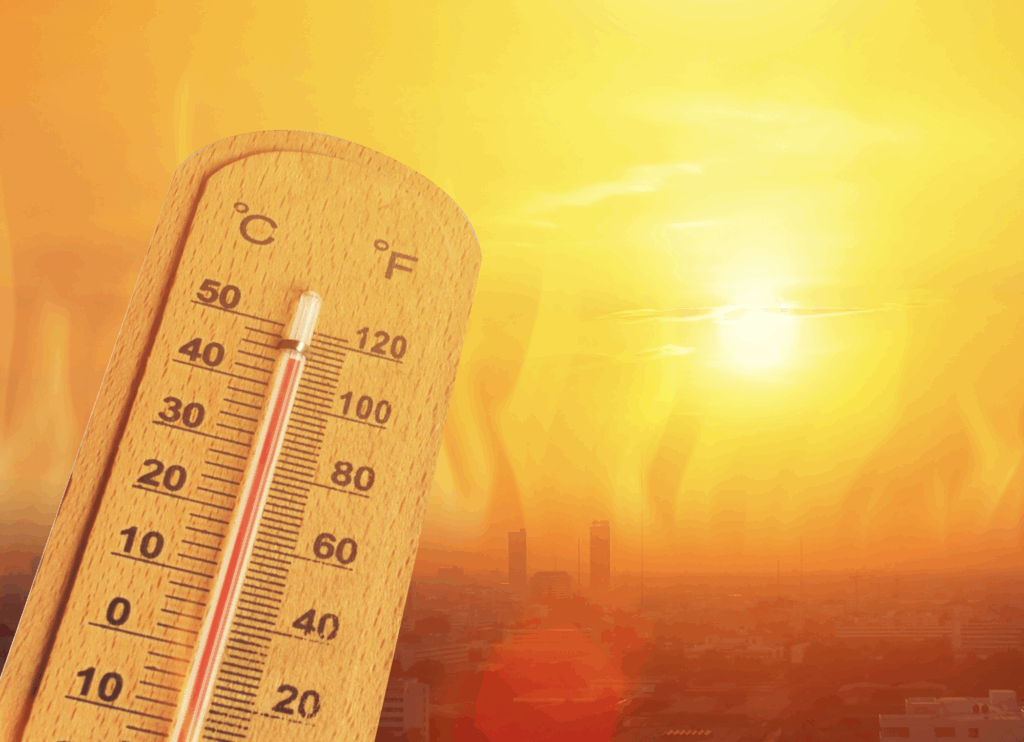
What is El Niño?
El Niño is the warm phase of the El Niño–Southern Oscillation, often shortened to ENSO. It occurs when sea surface temperatures in the central and eastern equatorial Pacific area become unusually warm, interacting with the atmosphere above and shifting rainfall, wind and temperature patterns across many regions. WMO explains that El Niño and La Niña normally develop between March and June and often peak between November and February, although each event is different.
In simple terms, El Niño releases extra heat from the tropical Pacific into the atmosphere. That can raise global average temperatures and change the likelihood of drought, flooding, heatwaves and storms in different parts of the world. It does not create identical conditions everywhere or override local weather systems, but it changes things.
This current El Niño is being closely watched because it is unfolding in an already very warm planet. NOAA’s Climate Prediction Centre said in May 2026 that El Niño was likely to emerge soon, with an 82% chance during May to July 2026, and a 96% chance of continuing through the Northern Hemisphere winter of 2026–27. NOAA also noted that stronger El Niño events do not automatically guarantee stronger impacts, but they can make certain impacts more likely.
Will El Niño make the UK summer hotter?
It may increase the overall heat risk, but that doesn’t mean it will automatically produce a hot UK summer.
For us in the UK, summer heat usually depends on whether high pressure becomes established, whether warm air is drawn up from continental Europe or North Africa, how dry the ground becomes, and how the jet stream behaves. A developing El Niño can influence global circulation, but the UK sits in a complicated mid-latitude zone where the signal is less direct than in parts of the tropics.
That said, the broader seasonal picture points towards heat being a serious risk. WMO’s Global Seasonal Climate Update for May to July 2026 said that forecasts indicated a near-global dominance of above-normal land surface temperatures, with a strong signal of warmer-than-normal conditions across Europe and Northern Africa.
That is important for the UK because severe heat here often arrives when high pressure allows hot air to move north from Europe. If Europe and North Africa are already running warmer than normal, the pool of heat available to feed UK hot spells can be greater. So El Niño should not be seen as the only reason for possible summer heat in 2026, but it is one more factor in a climate system already moving towards higher temperatures.
El Niño plus climate change: why the combination matters
El Niño is natural. Climate change is not. The concern in 2026 is that natural variability is now occurring on top of a much warmer baseline.
WMO has said that 2024 was the hottest year on record due to the combined effects of the powerful 2023–24 El Niño and human-induced climate change driven by greenhouse gases. It also states that there is no evidence that climate change increases the frequency or intensity of El Niño events, but a warmer ocean and atmosphere can amplify associated impacts by increasing the energy and moisture available for extremes such as heatwaves and heavy rainfall.
This is the key point for homeowners and the construction sector: El Niño may come and go, but the underlying warming trend remains. The UK has already experienced a rapid shift in its climate record. The Met Office reported that 2025 was both the UK’s warmest and sunniest year on record, with human-induced climate change making that record annual temperature approximately 260 times more likely.
Looking ahead, WMO’s Global Annual to Decadal Climate Update says annual global temperatures between 2026 and 2030 are expected to remain at or near record levels. It gives an 86% chance that at least one year between 2026 and 2030 will surpass 2024 as the warmest year on record, and a 91% chance that at least one year will temporarily exceed 1.5°C above pre-industrial levels.
This is why summer heat can no longer be treated as a one-off inconvenience. It is becoming a design, comfort, health and energy issue.
Why hotter summers change how homes are designed
For many years, UK homes were designed mainly around keeping heat in. Insulation, airtightness and efficient heating remain essential, especially during winter. But climate change has added a second challenge: keeping homes comfortable in summer.
Our recent climate change article highlighted this shift, noting that buildings now need to produce fewer emissions while also performing well in a changing climate, including hotter summers, wetter winters, heavier rainfall, flood risk and water scarcity.
This matters because a home that performs well in winter can still overheat in summer if it is poorly designed. Large areas of south-facing glazing, limited shading, insufficient ventilation, dark external materials, hard landscaping, and poor orientation can all contribute to internal heat gain. In flats, urban homes and highly insulated properties, heat can build up during the day and remain trapped overnight.
That is why overheating has become part of Building Regulations in England. Approved Document O sets standards for overheating in new residential buildings, with the aim of limiting unwanted solar gains and providing ways to remove excess heat from the indoor environment.
For developers and architects, this means summer comfort needs to be considered from the earliest design stage. Orientation, window sizing, shading, ventilation routes, thermal mass, landscaping and product specification all need to work together. It is no longer enough to design only for winter heat retention.
What this means for heating choices
At first glance, an article about El Niño and summer heat may seem far removed from fires, stoves and other heating products. In reality, it is closely connected to the bigger question of year-round comfort.
Homes still need to be warm, welcoming and efficient in winter. The UK will continue to experience cold spells, damp days and periods where reliable heating matters. But heating products now sit within a wider performance conversation. Homeowners are increasingly asking how a product looks, how efficient it is, where it can be installed, what output is suitable, how it fits with the property’s fabric, and how it supports modern living.
That is why correct specification is so important. An appliance should be appropriate for the room, the building and the way the homeowner uses the space. Overspecification can create comfort issues, while poor installation or unsuitable product choice can undermine efficiency. Our role is to help customers and specifiers think beyond appearance alone, combining design, performance, installation guidance and long-term suitability.
In our recent article, we discussed how electric fires, gas fires and wood-burning stoves each have different roles depending on the property, layout and lifestyle of the homeowner. That remains true in a warming climate. The future is not about abandoning comfort; it is about making better, more informed choices.

Preparing homes for hotter summers
For homeowners, the practical lessons from El Niño and climate change are straightforward. Heat should be managed before it enters the home wherever possible.
External shading, curtains or blinds, sensible ventilation, lighter-coloured finishes, planting and reduced hard surfacing can all help. Good habits matter too: closing windows and blinds during the hottest part of the day, ventilating when outdoor temperatures fall, and checking weather warnings during heat events.
For anyone renovating or buying, overheating should now sit alongside energy bills, insulation, heating systems and ventilation as a core comfort question: How will the home stay warm in winter? How will it stay cool in summer? Does it have effective ventilation? Are products correctly sized and installed? Will the home remain comfortable as summers become hotter?
For developers, the issue is even broader. Climate-ready homes are likely to be more attractive to buyers, insurers, lenders and planning authorities. Good design can reduce overheating risk, lower running costs, improve comfort and help future-proof properties for decades.
El Niño is a warning, not the whole story
El Niño in 2026 is not the sole cause of summer heat, and it should not be treated as a guaranteed forecast of a record-breaking UK summer. But it is a powerful reminder that natural climate cycles now operate in a warmer world.
When El Niño develops, it can push global temperatures higher. When that occurs alongside long-term climate change, the risk of extreme heat increases. For the built environment, this reinforces a message we are already seeing across construction and development: homes must be designed for the climate ahead, not just the climate of the past.
For us, that means continuing to focus on efficient, well-specified, design-led heating products that suit modern homes and modern expectations. Comfort is no longer only about warmth in winter. It is about creating homes that feel good, perform well and remain resilient throughout the year, including during the hotter summers that are becoming an increasingly important part of life in the UK.