Scandinavian interiors have long been associated with simplicity, functionality and a close connection to nature. From clean architectural lines to natural materials and uncluttered living spaces, Nordic design creates homes that feel calm, practical and welcoming.
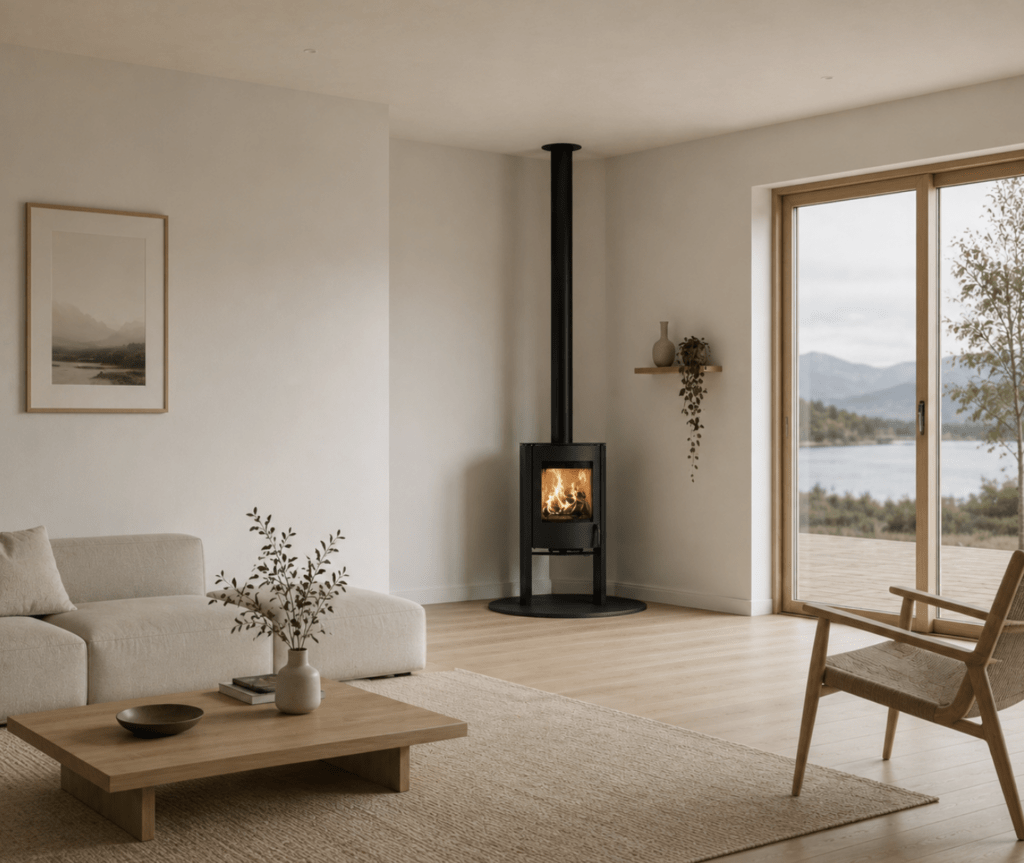
The Scandinavian stove reflects the same principles. Its compact form, efficient use of space and restrained appearance can make it a striking focal point without overwhelming the room.
However, choosing home heating today involves more than appearance and warmth. As households become increasingly conscious of climate change, energy efficiency and local air quality, it is important to consider how a stove fits into the wider heating needs of the home.
A modern approach to Scandinavian heating
For generations, wood has played an important role in domestic heating across Norway, Sweden, Denmark and Finland. In these countries, long, cold winters created a practical need for reliable sources of warmth that could be produced locally and used even in remote or rural areas. Firewood was widely available, relatively easy to store and, when properly seasoned, capable of providing steady heat through extended periods of cold weather. As a result, fireplaces, masonry heaters and wood-burning stoves became closely associated not only with survival and comfort, but also with Scandinavian domestic life and the idea of creating a warm, welcoming home during the darkest months of the year.
However, the modern interpretation of Scandinavian heating is not simply about burning more wood or installing a larger stove. Contemporary energy thinking places far greater emphasis on efficiency, moderation and reducing unnecessary demand. The aim is to create a comfortable indoor environment while using as little energy as reasonably possible. This approach begins with the building itself. Before choosing any heating appliance, homeowners should consider how effectively the property retains heat and whether improvements can be made to reduce overall energy consumption.
The Scandinavian principle is ultimately one of balance. Comfort is achieved not through excessive fuel use, but through careful building design, effective insulation, appropriate controls and thoughtful selection of heating technologies. Where a wood-burning stove is included, it should be correctly sized, properly installed, responsibly operated and integrated into a broader plan for energy efficiency and lower emissions. This allows the household to enjoy the practical and cultural benefits of a fire while limiting waste and reducing its environmental impact.
Is burning wood environmentally friendly?
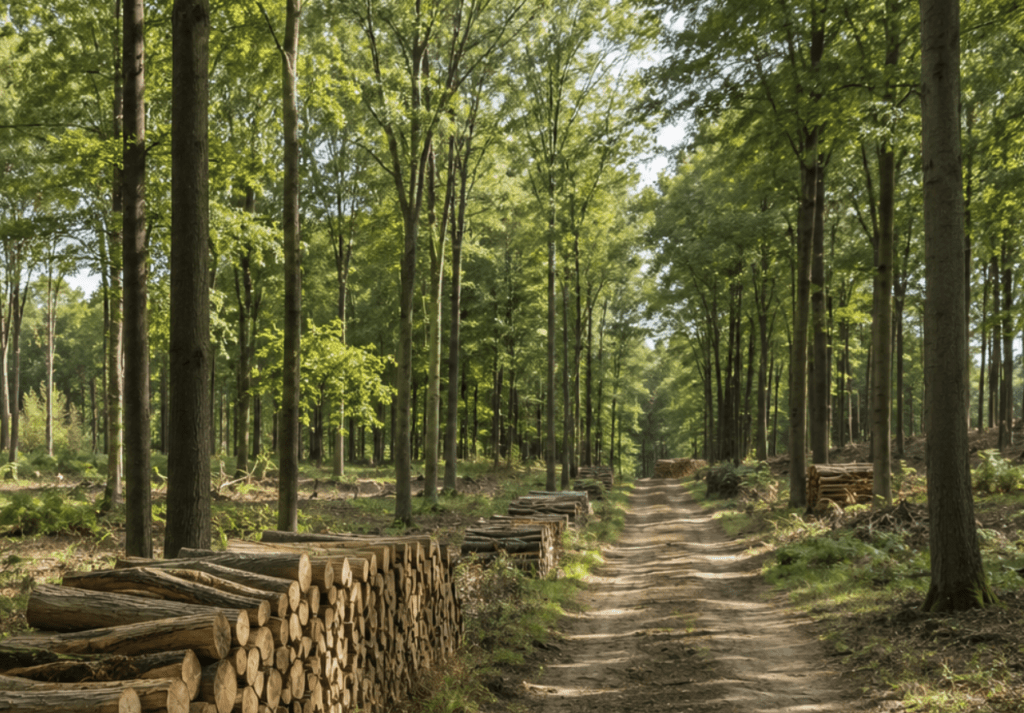
Wood is a renewable fuel that can play a valuable role in efficient, lower-carbon home heating when it is sourced responsibly and burned in a modern, high-performance stove. As trees grow, they absorb carbon dioxide from the atmosphere and store that carbon within the timber. When wood is harvested from well-managed forests and woodlands, where new growth continually replaces the wood being used, it forms part of a renewable carbon cycle. This makes sustainably sourced wood fundamentally different from fossil fuels, which release carbon that has been locked underground for millions of years.
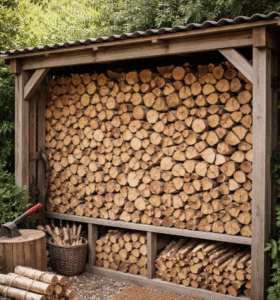
The environmental performance of wood heating is best when fuel is sourced locally, woodland is actively and sustainably managed, and the stove is designed to achieve efficient, controlled combustion. Using properly seasoned or certified dry wood (Ready to Burn) is particularly important. Dry fuel ignites more readily, burns at a higher temperature and releases more useful heat, allowing homeowners to achieve greater comfort from every log.
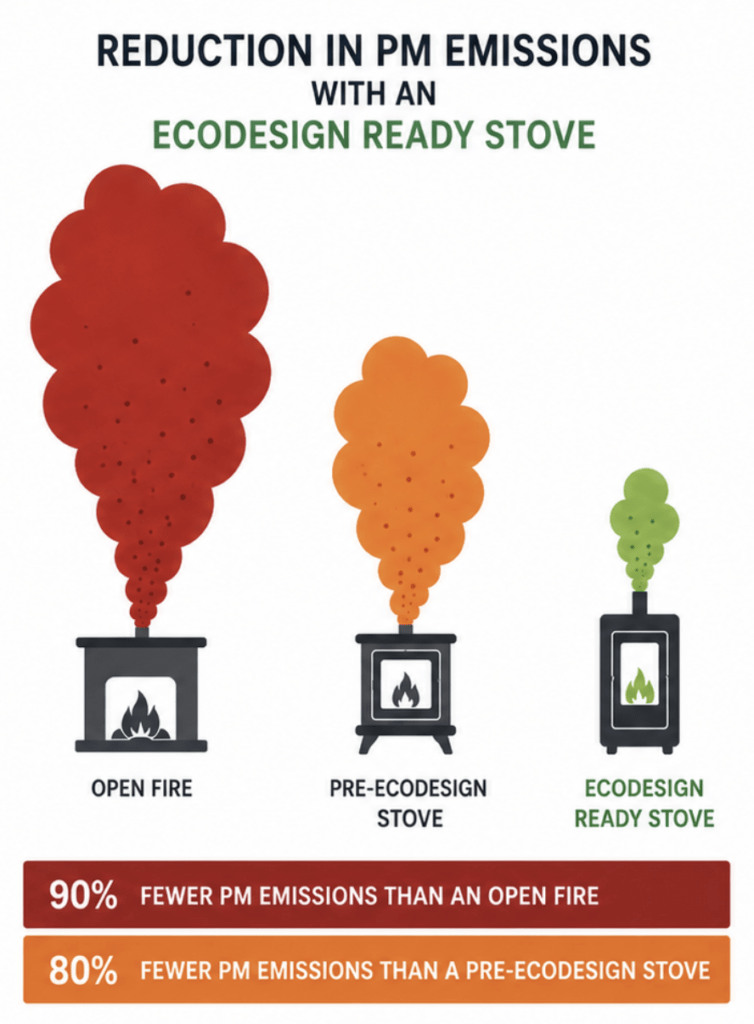
Modern Ecodesign wood-burning stoves are engineered to make far more effective use of fuel than open fires and many older appliances. Advanced airflow systems, improved firebox design and controlled secondary combustion help burn the gases released from the wood more completely. This produces more heat for the room, reduces wasted energy and significantly lowers smoke and particulate emissions compared with traditional forms of wood burning.
Wood fuel can also support the productive management of forests and rural landscapes. Regular thinning, coppicing and the removal of damaged or lower-grade timber can improve woodland structure, support regeneration and provide a practical use for material that may not be suitable for construction or other long-life products. A strong market for responsibly sourced firewood can therefore help make sustainable woodland management economically viable.
A correctly sized wood-burning stove can be especially effective as a focused source of heat. Rather than heating an entire property to the same temperature, homeowners can warm the rooms they use most, reducing reliance on central heating and giving them greater control over household energy consumption – this is known as zone heating. Wood can also provide useful energy resilience, particularly in rural properties, off-grid homes and areas where alternative heating options are limited.
Responsible fuel sourcing and correct operation remain central to achieving the best results and part of the Scandinavian ethos. Homeowners should use clean, untreated wood with a low moisture content, operate the appliance at the temperature recommended by the manufacturer and ensure that the stove and chimney are regularly maintained. A stove should never be allowed to smoulder for extended periods, as efficient, lively combustion delivers more heat and cleaner performance.
When these principles are followed, a modern wood-burning stove, whether it be Scandinavian-style or not, can be an exceptionally efficient, dependable and environmentally responsible heating appliance. It combines renewable fuel, advanced combustion technology and controllable room heating in a way that supports both household comfort and a more sustainable approach to energy use.
Air quality considerations
Alongside the wider environmental benefits of responsibly sourced wood fuel, local air quality is another important consideration. All forms of combustion produce emissions, including fine particulate matter (PM), so the type of appliance, the quality of the fuel and the way the stove is operated all make a significant difference.
This is where modern Ecodesign stove technology has transformed the performance of wood-burning appliances. Ecodesign means less fuel is required to achieve the desired room temperature, reducing waste and improving the overall environmental performance of the appliance.
Ecodesign requirements for new solid-fuel local space heaters came into force in the UK back in January 2022. These standards set minimum efficiency levels and strict limits on emissions, including particulate matter, carbon monoxide and other combustion by-products. Appliances that meet these requirements must demonstrate cleaner and more controlled performance under recognised test conditions.
The contrast with an open fire is particularly significant. Much of the heat from an open fireplace is lost up the chimney, while the unrestricted combustion process can produce considerably more smoke. A sealed modern stove gives the user far greater control over the fire, helping it reach and maintain the temperatures required for efficient combustion.
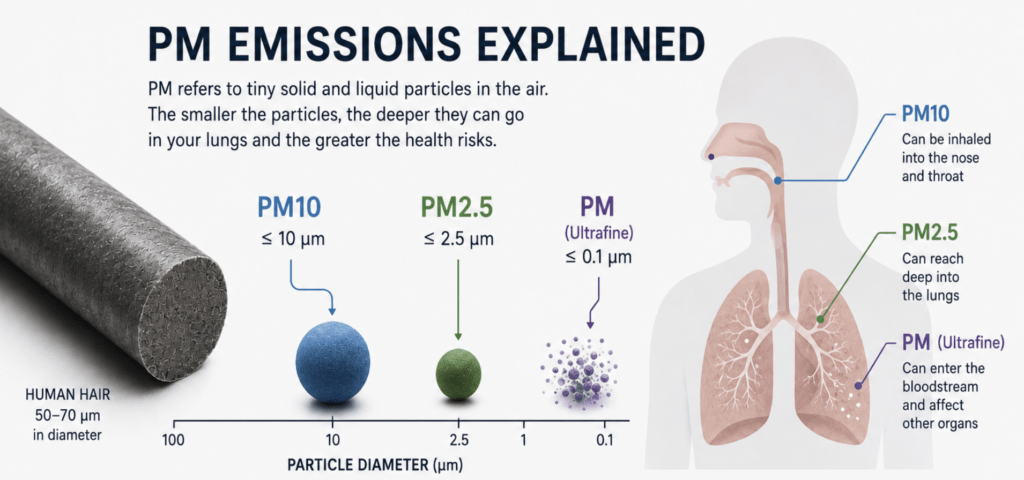
Fuel quality is equally important. Dry wood burns hotter and more completely than damp or unseasoned logs. It produces more usable heat, creates less smoke and helps keep the stove, flue and chimney operating effectively. Homeowners should therefore use clean, untreated wood with a moisture content suitable for the appliance and follow the manufacturer’s operating instructions.
Correct sizing also contributes to cleaner performance. A stove that is appropriately matched to the room can be operated within its intended heat range, rather than being repeatedly damped down or allowed to smoulder. Professional installation, regular servicing and routine chimney sweeping further support efficient combustion and long-term reliability.
When modern appliance technology is combined with dry fuel, proper installation and responsible operation, wood burning can provide highly efficient, controlled and dependable heat. The result is a heating solution that retains the comfort and character of a real fire while delivering the much cleaner performance expected from a contemporary home appliance.
Using a wood-burning stove more responsibly
The way a stove is selected, installed and operated has a major effect on its performance.
Choose the correct output
A stove that is too powerful for the room may regularly be operated at a low temperature. This can lead to poor combustion, deposits in the appliance and flue, and increased smoke. A professional heat-loss assessment can help establish whether a stove is appropriate and what output is required.
Use dry, suitable fuel
In England, wood sold in quantities of less than two cubic metres must be certified as Ready to Burn, confirming that it has a moisture content of no more than 20%. Drier wood burns more effectively because less energy is spent evaporating moisture. Only clean, untreated wood suitable for the appliance should be used. Painted, preserved or manufactured timber should never be burned unless the manufacturer specifically identifies it as an approved fuel.
Check local restrictions
Many towns and cities are within Smoke Control Areas. In these locations, wood can generally only be burned in a Defra-exempt appliance, and the appliance must be used with the fuels and operating methods approved by its manufacturer.
Homeowners should check with their local authority before purchasing or installing a stove.
Install and maintain it correctly
The performance quoted for any appliance assumes correct installation and operation. The chimney or flue should be professionally assessed, the ventilation requirements must be followed, and the stove should be serviced and swept at appropriate intervals.
Operating instructions should also be followed carefully. Allowing a fire to smoulder for long periods is not an environmentally responsible way to use a modern stove.
Scandinavian design with modern efficiency
The enduring appeal of the Scandinavian stove lies in the way it brings together practical performance, thoughtful engineering and timeless design.
Scandinavian interiors are known for their emphasis on simplicity, proportion and purposeful use of space, and these same principles are reflected in the design of the stoves themselves. Rather than relying on unnecessary ornament, they use clean lines, balanced forms and carefully considered details to create an appliance that feels both elegant and highly functional.
Cylindrical bodies make efficient use of floor space and can help a stove sit comfortably within both compact rooms and larger open-plan interiors. Curved glass windows provide a broader, more immersive view of the flames, allowing the fire to remain visible from more than one angle and strengthening the stove’s role as a focal point within the room.
Integrated log stores add further practicality while also giving the appliance a more substantial, architectural presence. By keeping fuel neatly contained and close at hand, they contribute to a cleaner, more organised appearance and reinforce the sense that every element of the design has a clear purpose. The restrained shapes and understated finishes associated with Scandinavian styling also give these stoves a lasting quality. They are less dependent on short-lived interior trends, making them well suited to a wide range of homes, from contemporary spaces with minimalist furnishings to more traditional properties where warmth, texture and natural materials play a central role.
We offer a selection of Scandinavian-inspired models that combine this distinctive aesthetic with the performance expected from a modern appliance. Each has been designed to deliver efficient, controllable heat while meeting current standards for emissions, efficiency and responsible wood burning.
The result is a range of stoves that provides more than just warmth. They offer a carefully considered blend of design, comfort and everyday practicality, bringing the character of a real fire into the home in a form that feels modern, refined and built to last.
Our cylinder stoves include:
Purevision BPVR Cylinder
The Purevision BPVR Cylinder is designed around a panoramic ceramic-glass window that provides a wide view of the fire.
It has a nominal output of 5kW, an operating range of approximately 3.2–6.8kW and an efficiency of up to 87%. It is SIA Ecodesign certified, clearSkies certified and Defra exempt for burning wood logs in Smoke Control Areas when installed and operated in accordance with its approval.
A choice of pedestal, log-store and wall-mounted configurations allows the design to be adapted to different spaces.
Its high efficiency means a greater proportion of the fuel’s energy is converted into useful room heat. However, as with every solid-fuel appliance, efficient operation depends on correct sizing, dry fuel and appropriate user behaviour.
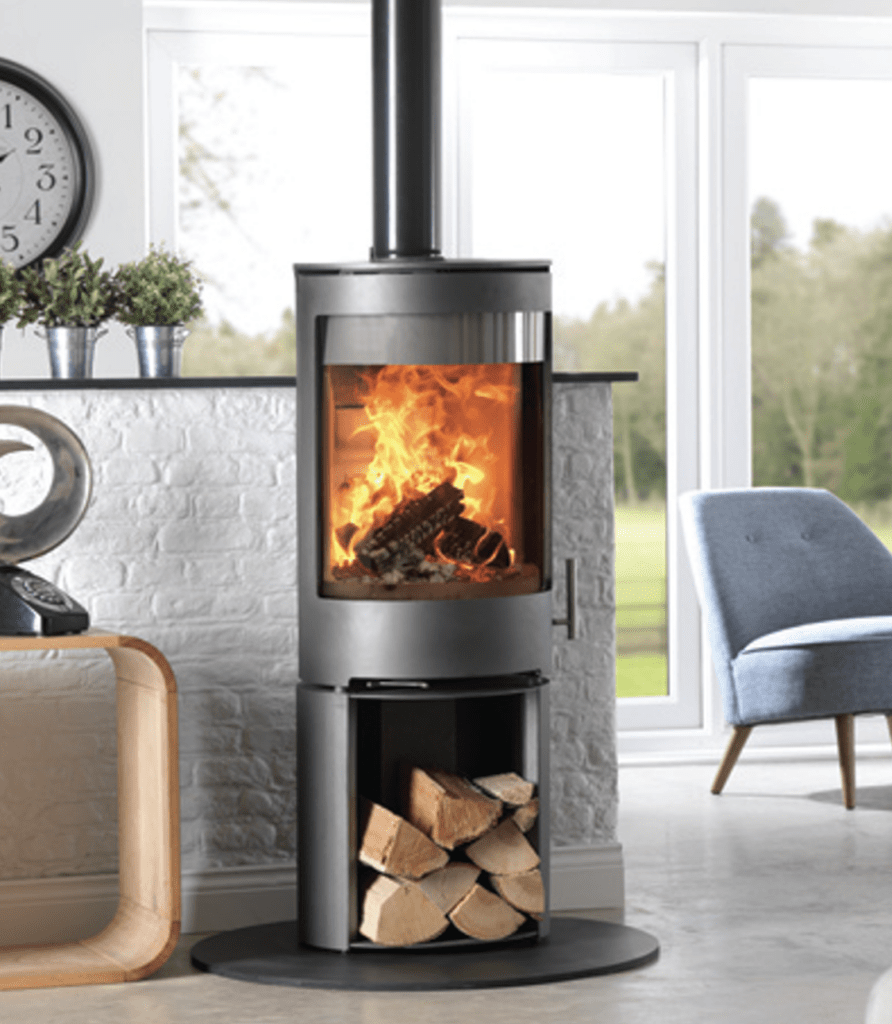
You can discover more about this stove here.
Woodtec FCS Cylinder
The Woodtec FCS Cylinder offers a compact cylindrical shape with a curved window and integrated log store.
It has an efficiency of 82.1% and can, subject to all installation requirements, be positioned with a clearance of 10mm at the rear and 25mm at the sides from combustible walls. It meets Ecodesign requirements and is listed as Defra exempt.
Its relatively small installation clearances may make it suitable for rooms where space is limited, although the complete installation must always comply with the manufacturer’s instructions and relevant building regulations.
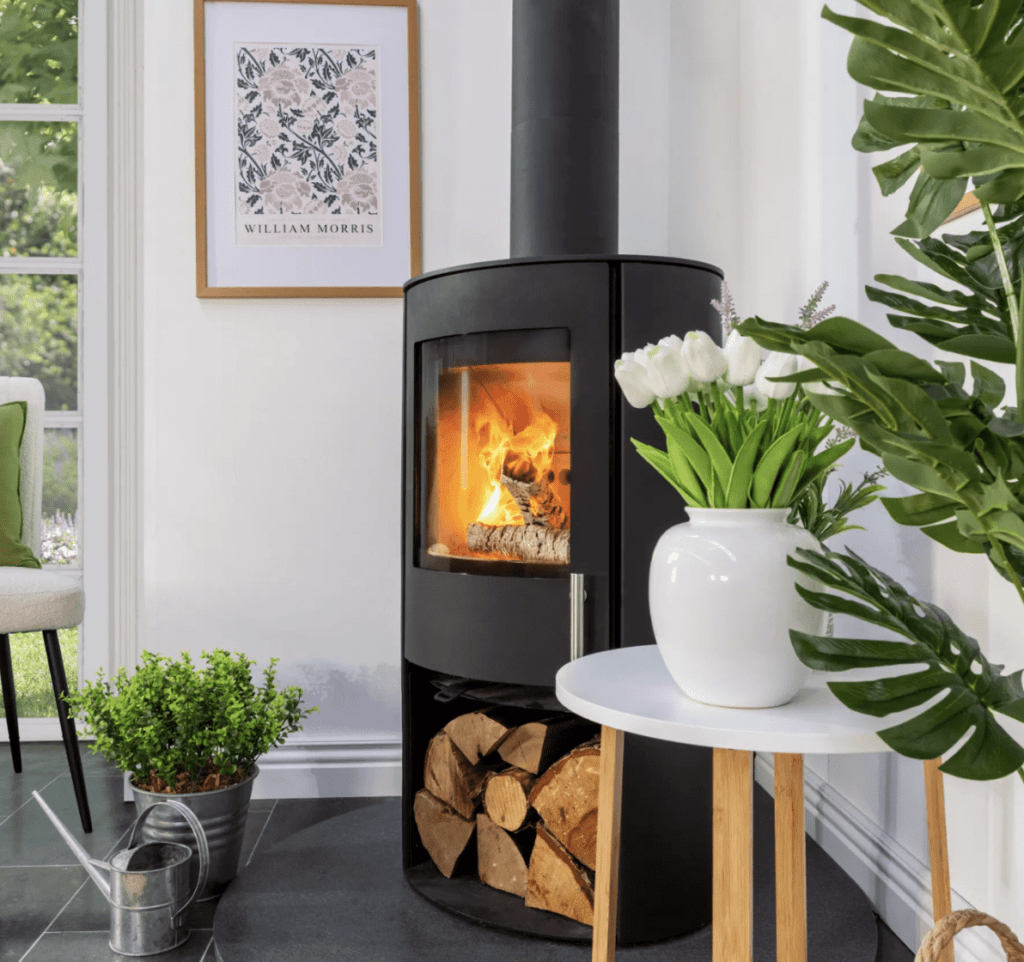
You can discover more about this stove here.
Go Eco Circulus
The Go Eco Circulus uses a raised cylindrical design to bring the firebox and flames closer to eye level. It produces a nominal 5kW output, has an efficiency of 82.1% and is clearSkies Level 4 certified, Ecodesign certified and Defra exempt for burning wood in Smoke Control Areas.
Its room-sealed construction and optional external-air connection may be particularly relevant in modern, airtight properties. The suitability of any stove for a highly insulated home should nevertheless be professionally assessed, as such properties often have relatively low heat requirements.

You can discover more about this stove here.
Choosing warmth with greater awareness
Scandinavian design demonstrates that comfort does not have to mean excess. A well-designed home uses materials carefully, avoids unnecessary consumption and balances beauty with practical performance. The same principle should be applied to heating.
A modern stove can provide efficient, controllable and visually appealing supplementary warmth when it is correctly selected and responsibly operated. But an environmentally informed decision should also recognise that wood combustion produces carbon dioxide and air pollutants.
Before choosing a stove, consider:
1. how much heat the room genuinely requires;
2. whether the property could first be made more energy efficient;
3. whether the stove will be a primary or supplementary heat source;
4. where the wood will be sourced;
5. whether local Smoke Control Area rules apply; and
6. whether another heating technology would better support the property’s long-term carbon-reduction plans.
The result should be a heating choice that suits the home, matches your design and style aspirations and respects the local environment.
To explore our range of Scandinavian-inspired wood-burning stoves and discuss the installation requirements for your property, visit your nearest Charlton & Jenrick showroom or discover more online.