When the final fire of the season goes out, sometime in late March, it is tempting to imagine your stove putting its feet up, closing the air controls and enjoying a well-earned summer holiday. Sadly, your stove is not relaxing. Although it may not be burning, it is still connected to a chimney exposed to changing temperatures, humid air, wind, rain, and, occasionally, wildlife looking for somewhere nice to live.
With no regular heat moving through the system, the conditions inside both the stove and chimney can change considerably between spring and autumn.
Most of those changes happen quietly. That is why the first cold evening in October is not the ideal time to discover them.
For this article, we are talking primarily about wood-burning and multi-fuel stoves. Gas appliances and their flues should be inspected and serviced by an appropriately qualified Gas Safe registered engineer.
Your chimney may start breathing the wrong way…
During the heating season, hot combustion gases rise through the chimney. This creates the upward movement of air, or draw, that helps the stove burn correctly and carries combustion products safely out of the house.
Once the stove is cold, that reliable upward pull is no longer present. Air movement through the chimney becomes more dependent on the weather, the temperature inside and outside the property, wind pressure and what is happening elsewhere in the house.
On a warm, muggy day, air can sometimes move down the chimney rather than up it. Extractor fans, tightly sealed windows and pressure differences around the roof may also influence which way the air travels. This can bring a cold draught into the room, together with the distinctive aroma of old soot and tar, not necessarily the summer fragrance you were hoping for.
An occasional faint smell may simply reflect temporary air conditions. A persistent, strong or worsening smell, however, deserves investigation. It could be connected to dampness, heavy deposits, poor ventilation or a partial blockage. Opening windows or disguising the smell with an air freshener might make the room more pleasant, but it will not tell you what is happening inside the chimney.
Moisture moves in when heat is away
Moisture is one of the main things that can change inside a stove and chimney during the summer.
When the stove is used regularly, heat helps to dry the flue and surrounding masonry. During the months of non-use, that drying effect disappears. Warm, humid air may enter the chimney and condense when it meets cooler internal masonry or metal components.
Rainwater can also enter through damaged chimney pots, cracked flaunching, defective flashing, porous brickwork or an unsuitable or damaged terminal. Without the heat of a regular fire, that moisture may remain in the system for much longer.
Old soot and combustion deposits can hold moisture. When water combines with certain residues left by burning, it may produce corrosive compounds that damage metal flue liners, stove bodies, connectors, and other internal components. This is one reason why leaving a heavily sooted system untouched throughout the summer is not good practice.
Warning signs can include:
1. Rust spots or orange staining inside the stove
2. Damp or unusually clumped deposits
3. White, powdery salts on chimney masonry
4. Brown or yellow stains on the chimney breast
5. Peeling paint or wallpaper
6. A persistent musty, smoky or tar-like smell
7. Water marks that become more obvious after heavy rain
Water can enter a chimney from several different places, so the source needs to be identified before repairs or redecoration begin.
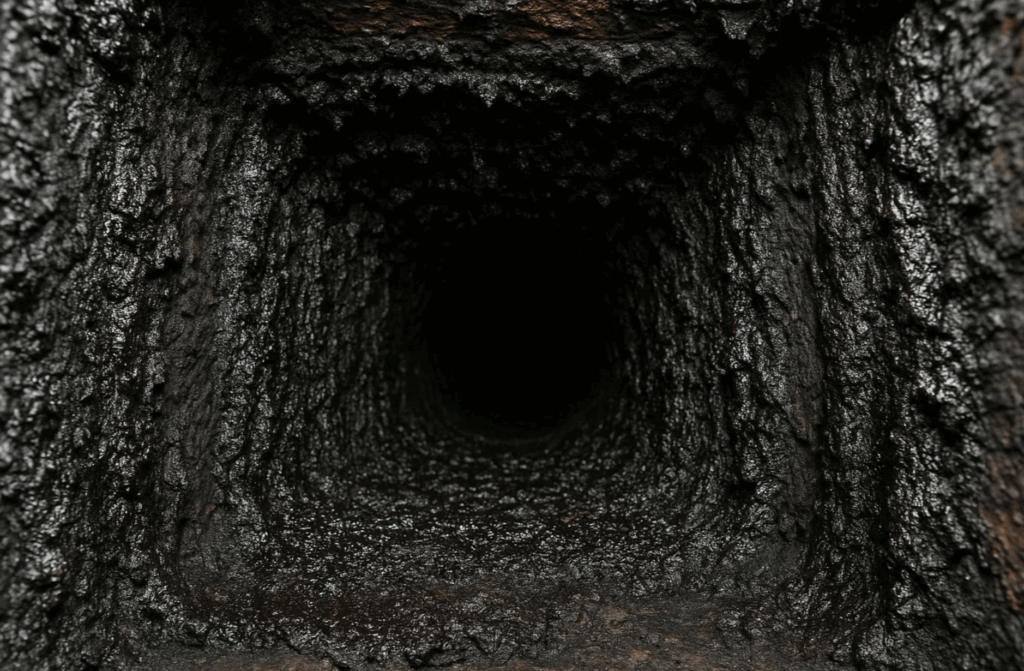
Thick creosote in a chimney:
Birds may view your chimney as an ideal home
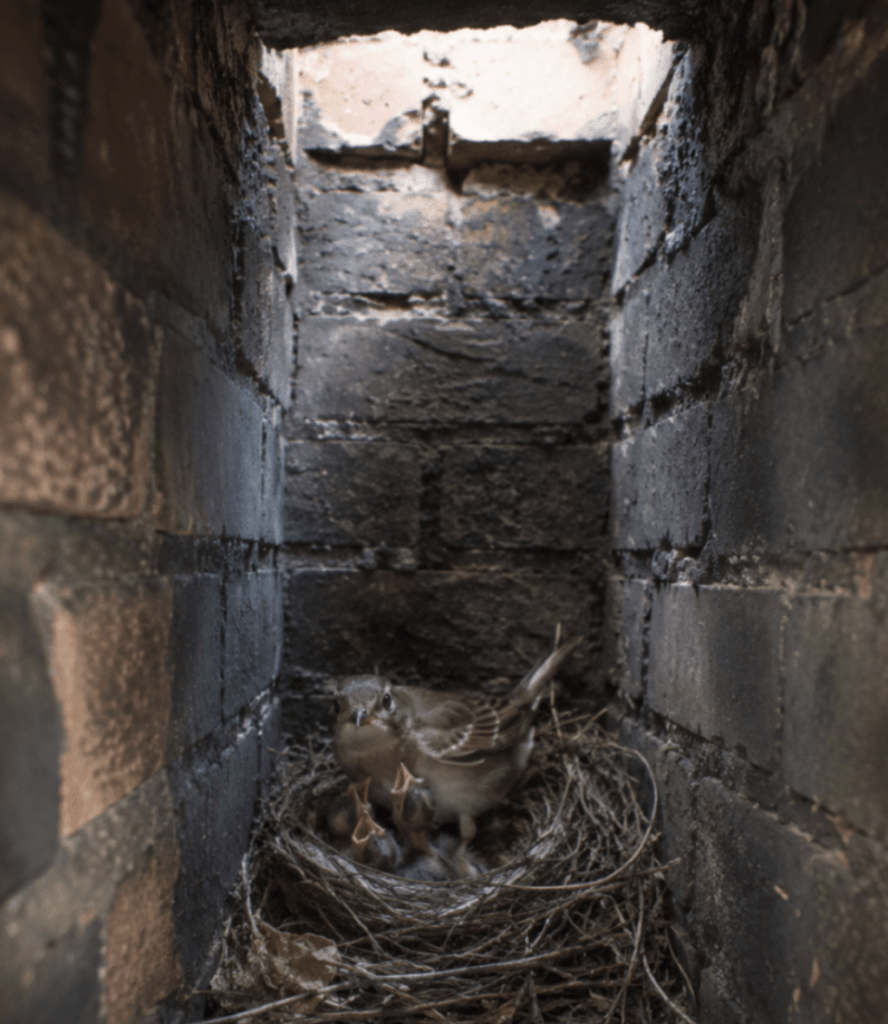
From a bird’s point of view, an unused chimney can appear rather appealing. It is high, sheltered and, for several months, free from smoke and heat. Unfortunately, a nest made from twigs, leaves, grass and other materials can create a serious obstruction. Debris may also fall farther down the flue or onto the baffle plate inside the stove.
Possible signs include scratching or chirping noises, pieces of vegetation appearing in the firebox, feathers, an unusual smell or a sudden change in airflow.
Never try to remove a suspected nest by lighting the stove. Apart from the risk of setting the nesting material alight, active wild bird nests are legally protected. An active nest in a chimney must be left alone, with no fire lit, until it is no longer in use. A professional chimney sweep or chimney specialist can advise on the correct next step.
Once the nest is empty and the chimney has been properly cleared, a correctly specified bird guard or cowl may help prevent the problem from returning. The important words here are correctly specified. A guard or cowl must suit the appliance, fuel and chimney set-up; buying the first cheap guard or cowl you find online is not recommended.
Your stove can become a very expensive cupboard
A cold stove is remarkably good at collecting dust, cobwebs and other objects. By September, these objects may have become several candles, a decorative pine cone and something the children found in the garden.
Before the stove is used again, everything that does not belong in the firebox must be removed. The appliance should also be cleaned so that its internal components can be seen and inspected properly. Summer is an excellent time to look for the wear left behind by the previous heating season.
Pay particular attention to:
1. Cracked, crumbling or displaced firebricks
2. A warped, damaged or incorrectly positioned baffle plate
3. Loose, flattened or fraying door rope seals
4. Damage to the glass or glass gasket
5. Stiff or seized air controls
6. Corrosion around the stove outlet or flue joints
7. A worn grate, ashpan or riddling mechanism
8. Loose door catches, handles or hinges
These parts all contribute to how the appliance controls air and protects its structure. A damaged seal, for example, can allow uncontrolled air into the stove. A damaged or misplaced baffle can affect the route taken by combustion gases.
Regular servicing and maintenance help a stove operate more safely and efficiently.
For model-specific instructions, always refer to the appliance manual rather than assuming that advice for another stove applies to yours.
Soot does not magically disappear in July
The fact that the stove is not being used does not mean the deposits from the previous winter have gone anywhere.
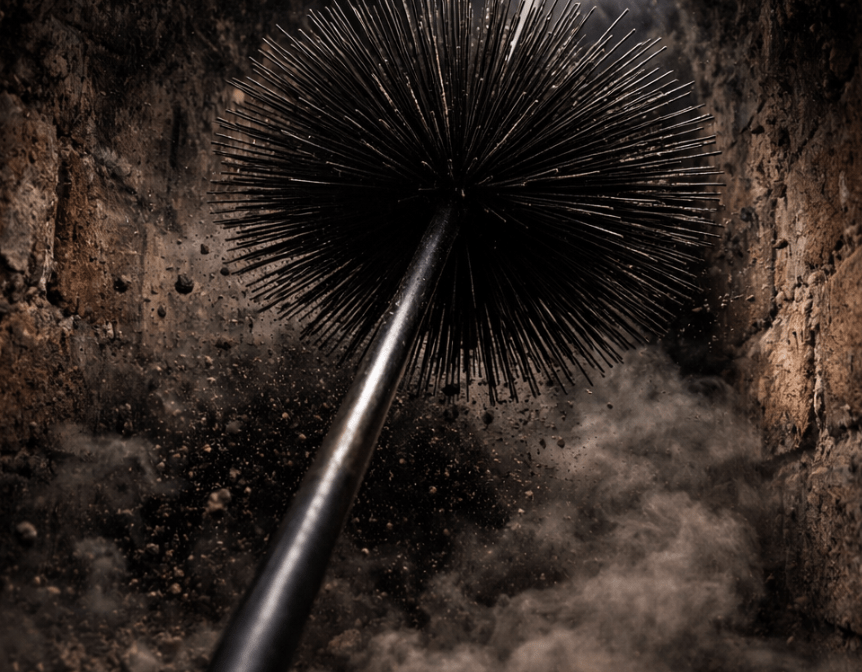
Soot and tar can remain inside the chimney throughout the summer, where they may absorb moisture, contribute to smells and conceal defects. A blockage can also develop after an end-of-season sweep because of nesting activity, falling debris or damage at the top of the chimney.
You should have your chimney swept before the season and at the end, and during the season – the frequency depends on how often you use it. A professional sweep can also look for signs of nesting, water ingress, excessive tar, liner problems and damaged components. Even lined chimneys need sweeping. A liner makes a chimney suitable for its intended appliance; it does not provide immunity from soot, tar, debris or blockages.
This is more than an exercise in keeping things tidy. Fire and rescue services recorded 2,019 chimney fires in England during 2024–25. Regular sweeping and correct stove operation help reduce the risk.
Your log store is having a summer too
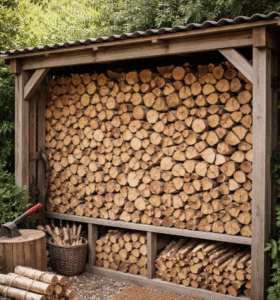
While the stove is out of use, the fuel supply for next winter should be getting ready. Logs need airflow and protection from rain. They should be stored off the ground, with cover above them and ventilation around the sides. Wrapping a woodpile tightly in plastic can trap moisture rather than keep the logs usefully dry.
For clean and efficient burning, wood should have a moisture content of 20% or less. Wet wood wastes heat by forcing the fire to evaporate water before the log can burn effectively. It can also increase smoke and deposits in the chimney.
A moisture meter is a useful addition to the stove owner’s toolkit, provided it is used according to its instructions. It is considerably more dependable than tapping two logs together!
Summer is also a good time to check that the fuel you intend to use is suitable for your appliance and permitted in your area
Why October is the wrong time to be thinking about this
The first genuinely cold evening tends to arrive with very little respect for household maintenance schedules. That is when many people suddenly remember that the chimney has not been swept, the stove door seal looked worn last winter and something has been making noises above the baffle since May.
If a sweep discovers a nest, damaged liner, leaking chimney, worn component or unsuitable terminal, the stove may need to remain out of use until the problem is resolved. Roof and masonry work can also become more difficult to arrange as the weather deteriorates.
The summer and early autumn provide more time to inspect the system, obtain professional advice, order replacement parts and complete repairs before the appliance is needed. Sweeps, installers and repair specialists also become busier as temperatures fall and more households begin preparing for winter.
Your pre-autumn stove checklist:
Long before the first fire of the season, work through the following:
Arrange a professional chimney sweep. Ask the sweep to look for soot, tar, nesting material, debris, water ingress and visible liner problems.
Inspect the chimney from a safe position. Look for leaning pots, damaged terminals, crumbling mortar, failed pointing or vegetation. Do not attempt roof work without suitable access and expertise.
Check the room and chimney breast. Investigate damp marks, peeling decoration, unusual smells and debris around the stove.
Clean and inspect the appliance. Check the firebricks, baffle, seals, glass, air controls, grate, ashpan and accessible flue connections.
Arrange servicing or repairs early. Replace damaged parts with compatible components specified for the stove.
Check the fuel supply. Make sure logs are dry, correctly stored and suitable for the appliance.
Test the carbon monoxide and smoke alarms. Follow the alarm manufacturer’s testing instructions and check the expiry date. An alarm is an essential warning device, but it is not a replacement for a clear chimney and a properly maintained appliance.
Read the stove manual again. It may not be beach-reading material, but it contains the correct lighting, operation and maintenance instructions for the appliance.
Pay attention during the first use. Once the system has been cleared and any faults addressed, follow the manufacturer’s lighting procedure. Watch for poor draw, smoke entering the room, unusual smells or unexpected noises. Stop using the appliance and seek professional advice if anything appears wrong.
If a carbon monoxide alarm sounds or anyone experiences symptoms such as headache, dizziness, nausea or confusion, leave the property and obtain urgent assistance. Do not use the appliance again until it has been examined by a qualified professional.
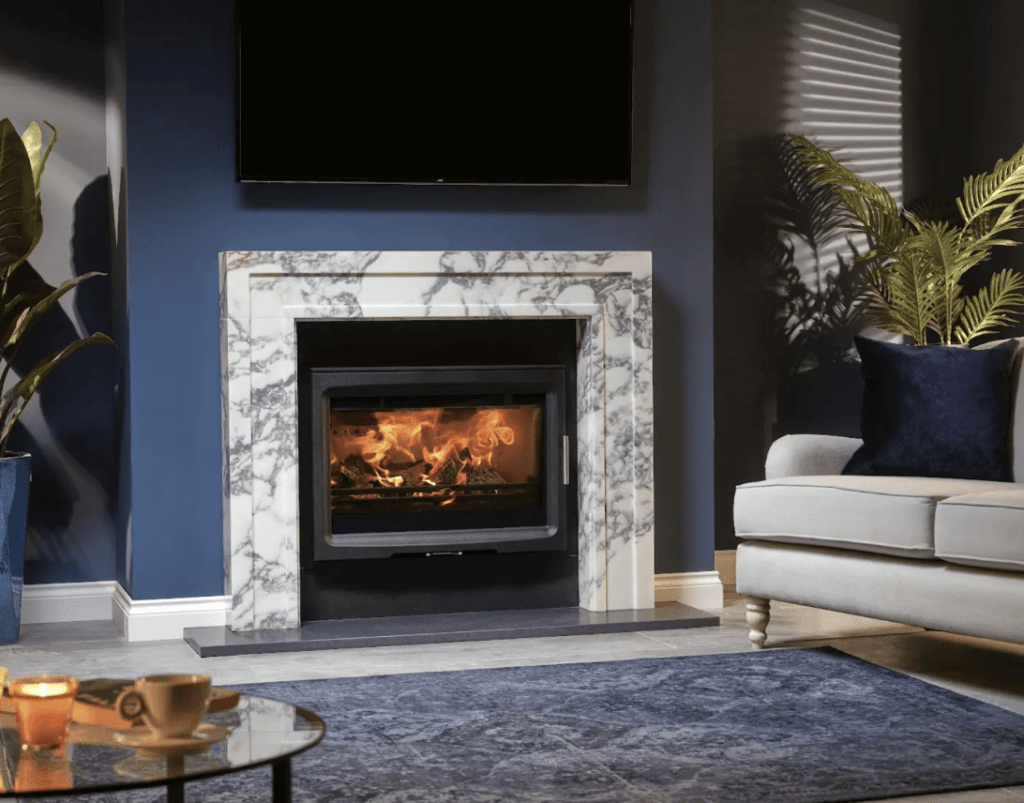
Our Purevision 8kW inset stove – one of many Ecodesign stoves in our range.
Your stove is probably not plotting anything while you are enjoying the warmer weather. It is simply sitting beneath a cold, weather-exposed chimney while humidity, air pressure, rain, dust and wildlife carry on around it.
Those quiet summer months can reveal or worsen problems that were not obvious when the appliance was last used. The sensible answer is not to worry about the stove all summer, but to give it some attention well before it is needed again.
A clean chimney, dry appliance, sound components, working alarms and suitable fuel mean that when the first chilly evening finally arrives, you can concentrate on enjoying the fire, rather than wondering why there is a jackdaw’s front room somewhere above the baffle plate.