When we choose how to heat our homes, it is natural to focus on what is directly in front of us: the flame, the warmth, the appearance of the appliance and the comfort it brings to the room. Yet the true impact of heating reaches well beyond the fireplace, stove or fire we enjoy at home.
Every heating decision has a wider story. There is the appliance itself, the materials used to make it, the energy or fuel it consumes, the way it is installed, how efficiently it performs, the emissions associated with its use and what happens when it eventually reaches the end of its service life. Sustainability is not only about what we can see. It is about understanding the full journey behind the warmth.
Looking beyond the appliance
A gas/electric fire or wood-burning stove has to be designed, manufactured, transported, installed, maintained and eventually repaired, replaced or recycled. Each stage contributes to the overall footprint of the product.
At Charlton & Jenrick, we believe customers deserve heating products that combine style, performance and responsible design. We have been manufacturing fires since 1986, and our range now includes gas and electric fires, as well as wood-burning stoves. Our Paragon and Infinity gas fires are handmade at our factory in Telford, Shropshire, and our products are supplied through a dedicated network of more than 400 showrooms around the UK. Good heating is not simply about creating warmth. It is about creating products that are efficient, reliable, attractive and suitable for the way people live today.
“Retrofitting our homes with low carbon heating systems… is an essential milestone on the road to net zero.” — UK Parliament Energy Security and Net Zero Committee

There is no single perfect heating solution
Sustainability is often discussed as though one heating method must be the answer and every other option must be wrong. Real homes are rarely that simple.
Electric fires can offer convenience, clean operation at the point of use and strong design flexibility, especially for contemporary interiors and media wall installations. Gas fires can provide controllable, responsive heat with a realistic living flame. Wood-burning stoves can offer dependable, low-carbon warmth when used correctly with suitable fuel and a modern, efficient appliance.
Each option has strengths. Each also has wider considerations. Electricity depends on how it is generated and how demand is managed. Gas remains a fossil fuel, although appliance technology continues to evolve. Wood burning must be carried out responsibly, using the right appliance, installation, maintenance, and fuel.
This is why we do not believe in over-simplified arguments. The better approach is to help homeowners understand the practical differences among heating options so they can make informed decisions based on their property, lifestyle, budget, and priorities.
Responsible wood burning still has a very important role among heating options. Although wood burning is sometimes spoken of as though every stove and every fuel choice is the same.
They are not…
Some media sources still fail to differentiate between the significant efficiency differences between an open fire and an Ecodesign stove. In doing so, they then misinform the public about burning wood, and often push the incorrect ‘burning wood is bad’ narrative.
Modern stove technology has moved on significantly. At Charlton & Jenrick, all our wood-burning stoves are designed to meet Ecodesign emissions and efficiency standards, and the vast majority achieve the highest clearSkies certification. Our Fireline, Purevision and Go Eco ranges reflect our commitment to improving performance while reducing environmental impact.
“The public must be engaged” in the transition to sustainable heating. — UK Energy Research Centre (UKERC)
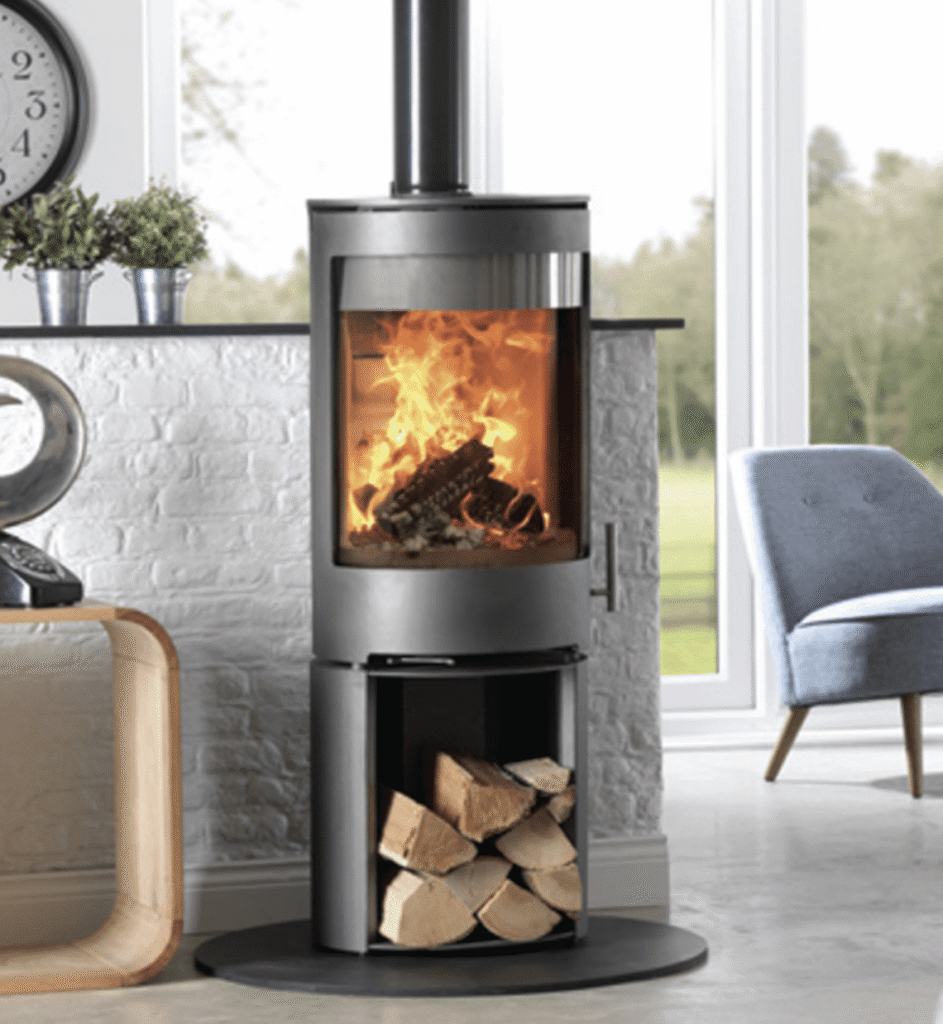
Ecodesign regulations for solid-fuel local space-heating appliances came into force in the UK on 1 January 2022. Ecodesign Ready stoves and fires are designed and tested to meet standards focused on reducing emissions and improving energy efficiency in home heating.
Of course, even the best stove must be used properly. Fuel quality is essential. DEFRA’s Burn Better guidance advises that wood burned at home should be dry, with a moisture content of 20% or less, because wet wood produces more smoke, particles and tar deposits, while dry wood provides better heat efficiency. That is why we always encourage responsible stove ownership: choose a suitable appliance, have it installed correctly, maintain it properly, sweep the chimney as required and burn only the fuel recommended for the appliance.
Air quality matters – and so does context
Air quality is an important issue and should never be brushed aside. Domestic burning is a source of fine particulate matter, and government, industry and consumers all have a part to play in reducing emissions. A recent House of Commons Library briefing noted that solid fuel fires account for around a fifth of the UK’s particulate matter emissions.
That is precisely why modern, efficient appliances and good burning practice matter. Older open fires and outdated appliances are very different from today’s Ecodesign-compliant stoves. A modern stove, correctly installed and operated with dry, suitable fuel, is designed to burn more efficiently and produce fewer emissions than older forms of solid fuel heating.
The goal should be improvement, not confusion. Better appliances, better fuels, better information and better maintenance all help reduce impact.
“Pathways to improve energy efficiency and to decarbonise heating… are critical to achieving the UK’s net zero targets.” — Industrial Decarbonisation Research & Innovation Centre (IDRIC)
Why fuel choice is part of sustainability
The fuel we use is just as important as the appliance we choose. For wood-burning stove owners, locally and responsibly sourced dry wood can be a smart decision. It supports good combustion, reduces smoke and helps avoid unnecessary transport impact. Homeowners should look for sustainably sourced wood from nearby, sustainably managed woodland where possible.
“Wood is a renewable fuel source when responsibly sourced and properly managed.” — Forestry England
For gas appliances, the future is also evolving. We have invested in our gas range to be ready for a hydrogen blend, with further development continuing across the range. Blending up to 20% hydrogen into the existing gas grid is a way to reduce carbon dioxide emissions while allowing familiar gas appliances to remain usable.
For electric fires, the appeal is different again. Modern electric fires offer design flexibility, ease of use and the ability to create a dramatic focal point without the need for a chimney or flue. Our electric fire range includes options suitable for media walls, inset installations and contemporary living spaces.
The best heating choice is rarely about one factor alone. It is about matching the right product to the right home.
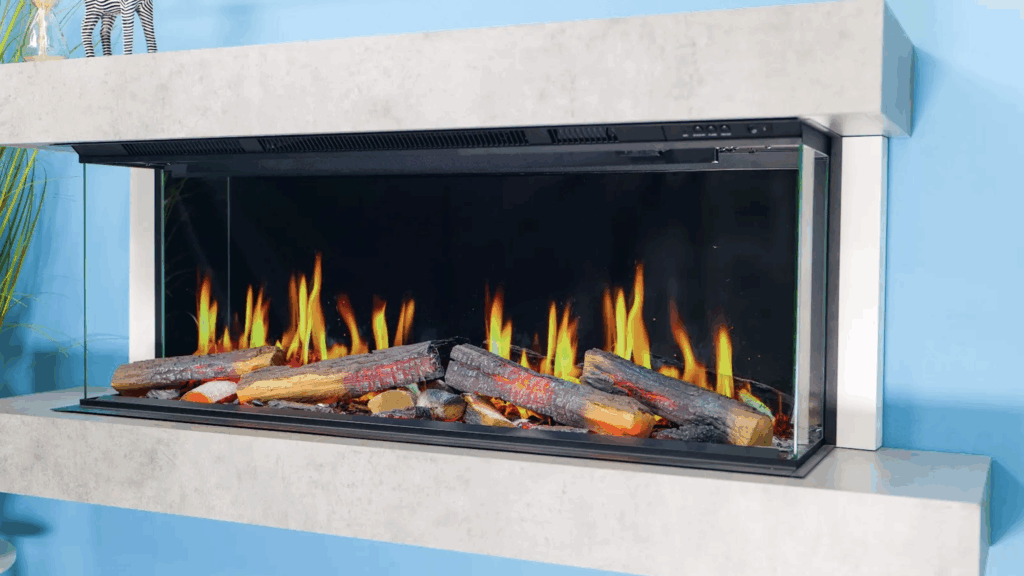
Our Luminosa 110 Electric Fire
A balanced future may be a mixed one
The future of heating is unlikely to be solved by one technology alone. Many homes may benefit from a combination of solutions: central heating for whole-house warmth, electric fires for flexible focal-point heating, gas fires for responsive comfort and wood-burning stoves for dependable secondary heat.
This mixed approach can also support resilience. A modern stove, for example, can offer warmth during periods when other systems are costly, unavailable or under pressure. An electric fire can provide atmosphere and localised comfort without heating the whole home. A gas fire can deliver quick, controllable heat when it is needed.
At Charlton & Jenrick, our role is to create products that help homeowners make those choices with confidence. We design across fuel types because we understand that every home is different. A rural cottage, a new-build property, a media-wall living room and a traditional fireplace opening will all have different requirements.
Sustainability starts with honest questions. When choosing a fire or stove, it is worth asking:
• Is the appliance efficient?
• Is it suitable for the property
• Will it be installed by a competent professional?
• Is the fuel appropriate and responsibly sourced?
• Can the product be maintained properly?
• Does it meet current regulations?
• Will it still suit the household in years to come?
These are practical questions, but they are also sustainability questions. A product that performs well, lasts well and is used correctly will almost always be a better choice than one selected only for short-term convenience.
Our view at Charlton & Jenrick
We believe home heating should be warm, beautiful and responsible. It should make a room feel welcoming, but it should also be chosen with care.
That means looking beyond headlines and considering the full picture: the appliance, the fuel, the home, the installation, the user and the wider environmental impact. It means recognising that every heating method has benefits and trade-offs. It also means continuing to improve technology, efficiency and customer guidance.
We are committed to helping people find heating solutions that suit modern homes and modern expectations. Our focus is simple: style, function, performance and responsible choice.
Heating will always be about comfort. But today, it also needs to be about awareness. What we cannot see still matters, and the more clearly we understand the wider impact of our choices, the better equipped we are to make decisions that are right for our homes, our communities and the future.