Smoke Control Areas (SCAs), often called smokeless zones, are designated by local authorities where the emission of smoke from chimneys is heavily restricted to improve air quality. In a smoke control area, you generally cannot release visible smoke from your chimney, and you may only burn authorised (smokeless) fuels unless you use an approved low-emission appliance, such as an Ecodesign wood-burning stove. These rules resulted from severe air pollution in the mid-20th century.

The most famous example was the Great Smog of London in 1952, a deadly smog that blanketed the city for five days, resulting in thousands of deaths. This smog prompted Parliament to take action.
The first Clean Air Act was passed in 1956, specifically to prevent such lethal smogs by restricting coal burning and allowing councils to create smoke-free zones. These “smokeless areas”, the early smoke control areas, required households and businesses to switch to smokeless fuels or cleaner heating sources.
The efforts paid off: after London’s smokeless zones were introduced, pollution levels dropped, and smog-related death rates fell dramatically.
Why do SCAs exist?
Essentially, they exist to protect public health and the local environment. Smoke from burning coal or wood contains fine particulate matter, soot, and other pollutants that can harm respiratory and cardiovascular health.
By limiting smoke emissions, SCAs help reduce air pollution, improve urban air quality, and prevent dangerous smog episodes that once affected cities across the UK. Smoke control areas aim to make sure that cities and towns can heat their homes in a clean and efficient way.
Laws and Regulations Governing Smoke Control Areas:
Clean Air Acts – Smoke control areas are enabled by clean air legislation. The Clean Air Act 1993, which consolidated earlier laws from 1956 and 1968, grants local authorities in England, Wales, and Scotland the power to designate any part of their districts as smoke control areas. Under this Act, in a smoke control area, it is illegal to emit smoke from the chimney of any building or furnace, unless you are burning an authorised smokeless fuel or using an appliance that has been exempted (approved) by the government’s website.
In practice, this means only certain fuels can be burned; for example, smokeless solid fuels like anthracite, semi-anthracite, low-volatile steam coal, or gas are allowed on open fires. Other fuels that normally produce smoke (e.g. ordinary wood or house coal) can only be used if you have a DEFRA-approved “exempt” appliance, such as an Ecodesign wood-burning stove or boiler designed to burn that fuel without smoke. Using unauthorised fuel in a non-exempt appliance in a smoke control area is illegal.
Modern updates – Environment Act 2021: In recent years, the regulations have been strengthened to improve compliance. The Environment Act 2021 introduced important updates to the Clean Air Act for England. Notably, it changed the enforcement approach: emitting smoke from a chimney in a smoke control area in England is no longer treated as a criminal offence but rather as a civil offence, punishable by a fine.
Local authorities can now issue on-the-spot financial penalties (civil fines) ranging from £175 to £300 for each violation in England. This reform was intended to make enforcement quicker, simpler, and more proportionate than prosecuting through the courts. Previously, violations were criminal offences that could lead to prosecution and fines up to £1,000 upon conviction.
The Environment Act 2021 also gave councils more powers; for example, they can extend smoke control orders to cover moored vessels like canal boats, after local consultation, so that boats in smoke control areas must also comply or face penalties. Additionally, the Act amended other laws so that in England, smoke from home chimneys can be treated as a statutory nuisance if it’s harmful to health or causes a nuisance, closing a previous loophole.
Wales, Scotland and Northern Ireland:
Devolved governments are following suit. Wales passed the Environment (Air Quality and Soundscapes) (Wales) Act 2024, which will similarly allow Welsh local authorities to issue civil fines for smoke control breaches, bringing Wales in line with the new English approach. Until those provisions come into force in Wales, smoke control offences there are still treated as criminal offences under the Clean Air Act 1993. In Scotland and Northern Ireland, the core rules of smoke control areas remain based on the Clean Air Act 1993 and the Clean Air (Northern Ireland) Order 1981 for NI, meaning it is illegal to emit smoke in a designated area, and fines of up to £1,000 per offence may apply if prosecuted.
Other relevant regulations: Alongside the smoke control area laws, the UK has tightened rules on solid fuels themselves to reduce pollution. Since 2021, the sale of the most polluting domestic fuels has been restricted in England. The Air Quality (Domestic Solid Fuels Standards) Regulations 2020 ban the sale of traditional house coal and wet (unseasoned) wood in small quantities, and set quality standards for manufactured solid fuels.
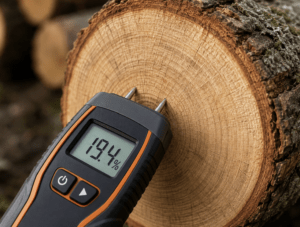
Now only smokeless coal, or very low-sulfur coal (VLSC), with less than 0.2% sulfur, can be sold for home use, and wood must be sold dry (kiln-dried or seasoned) with a moisture content of under 20%. These fuel standards complement smoke control laws; they ensure that even outside SCAs, cleaner fuels are used, and within SCAs, they make it easier for people to obtain compliant fuels.
Health and Environment Impacts of Smoke:
The restrictions in smoke control areas exist for good reason; the health and environmental impacts of smoke are serious. Smoke from burning solid fuels on open fires, like coal or wood, contains a mix of pollutants, but the most concerning are fine particulate matter, especially PM2.5 (particles 2.5 microns or smaller). These microscopic soot particles can penetrate deep into the lungs and even enter the bloodstream, causing widespread health damage.
Medical experts emphasise that there is no safe level of PM2.5 pollution; chronic exposure is linked to asthma, bronchitis, heart disease, strokes, and lung cancer, among other illnesses. Smoke also carries carcinogens, such as polycyclic aromatic hydrocarbons (PAHs), and can exacerbate respiratory conditions. In the short term, inhaling wood or coal smoke can irritate the eyes and throat and trigger asthma attacks; in the long term, it contributes to reduced lung function and serious diseases.
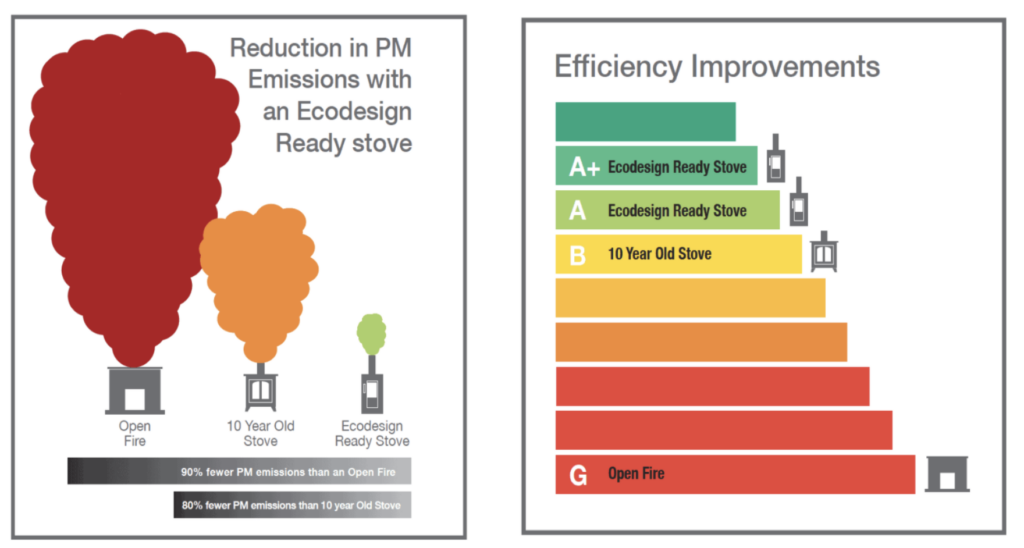
The diagram below illustrates the inefficiency of open fires and old, inefficient stoves, as well as the significant advancements made with Ecodesign wood-burning stoves.
How to Remain Compliant:
Complying with smoke control area rules is straightforward once you understand the necessary steps. Here are practical tips for different people, whether you’re a homeowner lighting a fire, a landlord with solid-fuel heating in your property, or a heating installer working in a smoke control zone:
Know if you’re in a Smoke Control Area: First, find out if your property is located in a smoke control area. Many urban areas are covered; for example, the majority of London is within SCAs, and the entirety of Birmingham and Glasgow is a smokeless zone. You can check your local council’s website or contact their Environmental Health department to be sure. Some councils have online maps or will tell you over the phone. In England, Defra also provides an interactive online map of SCAs. It’s essential to know this before installing or using any stove or fireplace to follow the correct guidelines.
Use only approved (Authorised) Fuels: In a smoke control area, you must burn an authorised smokeless fuel unless using an exempt appliance. Authorised fuels are those that have passed government tests for clean burning. Common examples include the previously mentioned smokeless coal briquettes, anthracite, coke, low-smoke manufactured solid fuels, and, of course, gas or electricity for heating. Wood logs by themselves are not on the authorised fuel list either, because wood typically produces smoke.
The only way to legally burn wood in a smoke control area is on an Ecodesign wood-burning stove. If you do have an open fireplace, stick to smokeless solid fuel designed for smoke control areas. Many of these products are sold as “smokeless ovoids” or “smokeless coal” and will be labelled as approved for use in smoke control areas. Always avoid burning household waste, treated wood, or anything that produces noxious smoke; not only is it illegal, but it’s also very unhealthy.
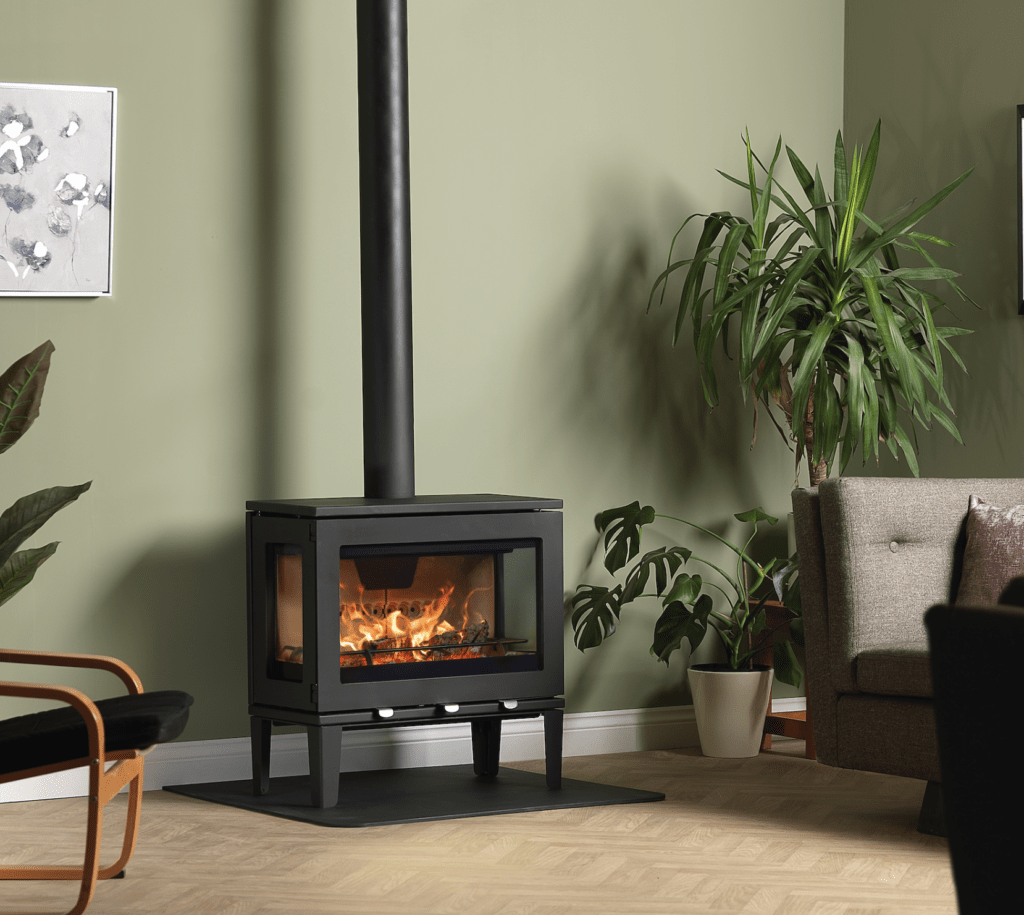
Use an Exempt Appliance for Wood or Other Fuels: If you love a wood-burning stove or have a biomass boiler, make sure it is a DEFRA-approved model (Ecodesign) when used in a smoke control area. If you have an existing stove that is not exempt, you can only use it with smokeless fuel. If you’re looking to buy a new stove, you can only purchase an Ecodesign-compliant one in the UK now. This became law on 1st January 2022.
Stove installers: It’s good practice, and often required by building regulations, to only install compliant stoves in properties that are in SCAs. HETAS-certified installers will typically guide homeowners through this process. Make sure to give the homeowner the stove’s user manual, which specifies what fuels they can burn.
Burn dry, clean fuel and maintain your appliance: Even with the right fuel and Ecodesign appliance, how you burn matters. If you’re burning wood in an exempt stove, use dry, well-seasoned or kiln-dried wood; it should ideally have a moisture content below 20%. Not only is this required for wood sold now, but dry wood produces far less smoke and more heat. Look for the “Ready to Burn” logo on bagged logs, which certifies they are dry. Store your fuel in a dry place; burning wet or damp fuel will create lots of smoke (and creosote in your chimney). Also, do not burn rubbish, treated wood or improper fuels; aside from being illegal, burning these can release toxic fumes and a lot of smoke. Keep your stove well-maintained, and have your chimney swept regularly. A well-maintained appliance will burn more cleanly and efficiently, reducing smoke. If you use a stove, learn how to operate its air vents for a hot, efficient fire. Smouldering fires create smoke, whereas fires burning briskly, but not over-loaded, create less smoke. Following manufacturer instructions is key.
Landlords and property managers: If you rent out a property in a smoke control area that has a fireplace or solid-fuel stove, you have a role in compliance. Ensure your tenants are aware of the smoke control rules, for example, consider including a clause in the lease or a note in the welcome pack about using only smokeless fuel or the provided Defra-exempt stove with the appropriate fuel. If the property has an open hearth, consider supplying smokeless fuel for them, or at least a starter kit with information on where to buy authorised fuel locally.
It’s wise to ensure any wood-burning stove in the property is an exempt model; if not, you may want to upgrade it or clearly instruct tenants not to burn wood in it. Remember that the person actually using the fire (the occupier) is legally responsible if there’s a violation, but as a landlord, you don’t want your tenants facing fines or causing neighbourhood complaints either. Good communication can prevent problems. It’s also worth keeping chimneys in your rental properties swept and appliances serviced, not only for safety and efficiency, but it will help tenants stay within the rules. If you provide any solid fuel heating, ensure it complies with building regulations and consider notifying the local council when you install a new stove (certified installers will do this as part of their process). By being proactive, landlords can avoid conflicts and help improve local air quality.
Examples of Smoke Control Areas Around the UK:
Smoke control areas have been established in many parts of the UK, especially in major cities that historically suffered from coal-smoke smog. Here are some notable examples and how they implement SCAs:
London: London was the first to implement smoke control zones after the 1950s smogs. Today, the vast majority of Greater London is covered by smoke control areas. Each borough in London has its own smoke control orders, for instance, the City of Westminster, Kensington & Chelsea, Camden, and many others have designated their entire boroughs as SCAs. This means a Londoner in most districts cannot use a normal wood fire or coal fire at home; only smokeless fuel or exempt stoves are allowed.
Birmingham: Britain’s second-largest city, Birmingham, is entirely a Smoke Control Area. In fact, Birmingham’s whole urban area was designated smoke-controlled as far back as 1985. Birmingham is actively updating its smoke control orders. This year, the city consulted on a new consolidated smoke control order, partly to include canal boats as mentioned above. So, whether you’re in the city centre or any suburb within Birmingham’s boundaries, the smokeless zone rules apply uniformly.
Greater Manchester: The Greater Manchester region, comprising cities and boroughs such as Manchester, Salford, and Stockport, has widespread smoke control areas. In fact, most of the metropolitan area has been under smoke control orders since the late 20th century. Each local council in Greater Manchester has designated areas, for example, Manchester City Council, Salford, and others have smoke control maps covering large residential swathes. Essentially, if you live in Greater Manchester, there’s a high chance your home is in an SCA, apart from some rural fringes. Residents should check their specific borough, but in places like Manchester, Bolton, Stockport, etc., the safe assumption is that only smokeless fuel or exempt stoves are permitted.
Glasgow: In Scotland, many urban areas also adopted smoke control from the 1960s onwards. Glasgow, the largest Scottish city, has essentially the entire city designated as a smoke control area. This reflects Glasgow’s push since the 1960s to eliminate smoke emissions from coal, which once earned it the nickname “Steamie”. Other Scottish cities, such as Edinburgh, Dundee, and Aberdeen, also have smoke control orders covering significant areas. The Scottish regulations mirror the Clean Air Act rules, so Glasgow residents must also use authorised smokeless fuels or exempt appliances. One difference is that Scotland hasn’t yet moved to the civil penalty system, so theoretically violations in Glasgow could lead to prosecution.
Other UK cities and regions: Many other cities and towns across the UK have smoke control areas. Coventry, for example, has smoke control covering the whole city. So do Leeds, Liverpool, Sheffield, Newcastle, and Nottingham. In Wales, cities such as Swansea and Newport have long had smoke control orders in specific districts. Interestingly, Cardiff currently has no smoke control areas in force, a reminder that not every city chooses to use this power, but the Welsh Government’s new legislation may encourage more widespread adoption in the coming years. In Northern Ireland, Belfast and other towns have “smokeless zones” under NI’s Clean Air Order 1981, similar in spirit to the mainland’s SCAs. Essentially, any area that historically had issues with coal smoke is likely to have some smoke control order in place. It’s always best to verify with your local council.
Smoke control areas are a key component of the UK’s clean air strategy, particularly in urban areas. They stand as a lasting legacy of mid-20th-century environmental policy, but also as a continuing tool to fight air pollution. By understanding the rules in your area and following best practices, everyone, from homeowners to industry professionals, can help ensure that we heat our homes without undermining the air quality. The laws have evolved, with new fines and standards, but the goal remains the same as in 1956: clear the skies of smoke for a healthier community.