Wood-burning stoves have an enduring appeal in our homes, offering not just heat but a unique atmosphere that radiates comfort. Many homeowners install a wood-burning stove not only for practical heating benefits but also for the cosy, inviting ambience it brings to a living space. From the crackle of burning logs on a cold winter evening to the charming glow dancing across the room, a wood-burning stove can transform a living room into a warm retreat.
The Aesthetic and Emotional Appeal of a Wood-Burning Stove
There’s a reason we often associate crackling fires with warmth and cosiness, it’s a visceral, timeless comfort. Fire has provided warmth and light for centuries, and today a wood-burning stove continues that tradition as both an efficient heat source and a stylish focal point The sight of flames through the stove’s glass and the gentle radiant heat create a soothing environment that people naturally gravitate towards. The warm glow and soft crackling sound of a stove can instantly make a space feel more welcoming and relaxing. In the long, dark evenings of a winter, this cosy centrepiece offers not just physical warmth but also an emotional uplift, turning a simple living room into a snug haven.
Beyond its warmth, a wood-burning stove introduces visual appeal and character. When lit, it provides flickering firelight that adds movement and a golden glow to the room. Even unlit, a well-chosen stove is a conversation and focal point.
A Design Focal Point – Interior Style and Added Home Value
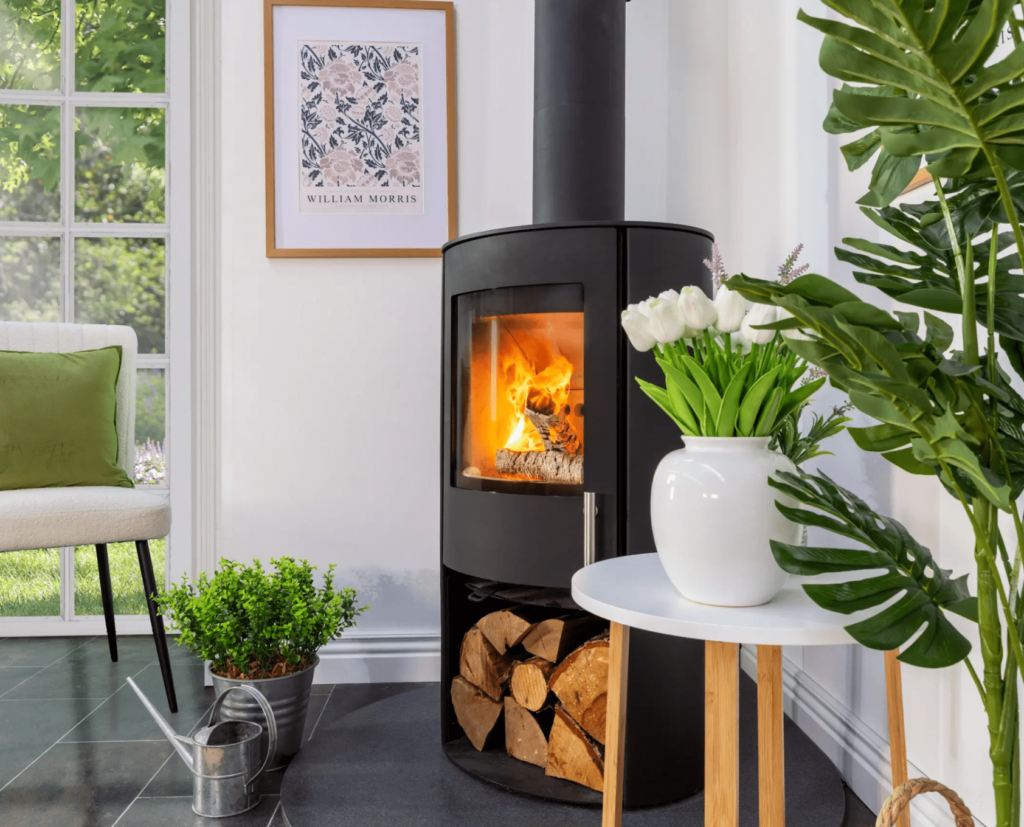
As we have mentioned many times before, in interior design, a wood-burning stove often serves as a striking focal point that can elevate the style of a living room. One of the great advantages of modern stoves is their versatility in design: they suit virtually any interior aesthetic. You can find contemporary stoves that complement modern, minimalist décor, such as a Woodtec FCS Cylinderical stove (below) or ornate traditional stoves that blend seamlessly into period homes and cottages. It’s unlikely for a stove to look out of place in any style of home. Stoves now come in various finishes and options, allowing you to coordinate the stove with your room’s colour scheme for a cohesive look.
Apart from style, a wood-burning stove can also contribute to the perceived value and charm of a property. A wood-burning stove is seen as an asset by many buyers and can make a home more attractive on the market. In fact, it’s widely suggested that installing a wood burner could increase your home’s value. This uplift comes not only from the stove’s practical benefits, like lower heating costs and energy efficiency, but also from the lifestyle appeal it offers. When prospective buyers walk into a living room and see a beautiful stove, they immediately envision a warm, cosy home.
In competitive housing markets, a wood-burning stove can be that unique selling point that sets a property apart, creating a memorable impression.
Technical Considerations: Size, Placement, Fuel, and Performance
While the charm of a wood stove is undeniable, it’s important to get the technical details right to ensure your stove not only looks good but functions well. Key technical considerations include choosing the correct size/output, deciding on placement and installation requirements, selecting appropriate fuel types, and understanding heating performance.
Below is a breakdown of these factors:
Stove Size & Heat Output: Selecting a stove with the right heat output for your room is crucial. An undersized stove may not provide enough warmth, whereas an oversized stove could overheat the space or be run inefficiently low. As a rule of thumb, roughly 1 kW of heat output is needed per 14 cubic metres of room volume in a typical UK home, (adjusting for insulation quality, less output is needed for well-insulated homes, more for older or draughty properties). For example, a 5kW stove is generally considered suitable for most small to medium living rooms. Using this guideline (or an online stove size calculator) will help you determine the kilowatt rating that will keep your space comfortably warm without wasting fuel. It’s always wise to consult with a stove showroom who can calculate the heat requirements based on your room dimensions, insulation, and layout.
Placement and Installation: Where you position the stove affects both its efficiency and safety. Ideally, the stove should be installed where heat can circulate freely, many stoves in the UK are situated in an existing fireplace or chimney breast, but freestanding installations against an external wall (with a new flue) are also common. Safety clearances are paramount: manufacturers specify minimum distances between the stove and any combustible materials. Ensuring a proper clearance gap around the stove (often 15–30 cm or more, depending on the model) prevents heat damage or fire.

The stove must sit on a non-combustible hearth that extends a sufficient distance in front and to the sides, this protects your floor from heat and stray. Additionally, think about the flue or chimney route: a straight vertical flue run is ideal for good draft. If you don’t have an existing chimney, a twin-wall insulated flue can be installed through the roof or along an exterior wall. Placement will also dictate how the stove ties into the room’s aesthetics; for instance, a centrally positioned stove can act as a symmetrical focal point, while a corner placement might save space in a smaller room.
Fuel Types (Wood vs. Multi-Fuel): Consider whether you want a dedicated wood-burning stove or a multi-fuel stove. Wood-burning stoves are designed specifically for logs, they have a flat bed where wood burns on a bed of its own ash. Multi-fuel stoves, by contrast, feature a riddling grate and ashpan, allowing them to burn not only wood but also smokeless solid fuels (such as coal, anthracite, or peat briquettes). The choice may come down to fuel availability and local regulations. In practice, most UK stove owners burn seasoned hardwood logs for the classic wood-stove experience.
If you opt for wood, fuel quality is critical: use well-seasoned or kiln-dried wood with moisture content under 20%. UK regulations now mandate that any firewood sold in small volumes must be Ready to Burn certified, i.e. sufficiently dry. Dry wood produces more heat and far less smoke and creosote than damp “green” wood. Avoid burning household rubbish, treated wood, or coal in a wood-only stove, these can produce toxic fumes or damage the appliance. Always check the stove manufacturer’s guidance on approved fuels for your model.
Heating Performance & Efficiency: Modern wood stoves are remarkably efficient heaters. Unlike an open fireplace, which may only be 10–20% efficient, with most heat lost up the chimney, a good wood-burning stove can achieve 70–85% efficiency or more. This means the majority of the wood’s energy is converted into useful heat for your room. The difference lies in the stove’s design: the fire burns in an enclosed, insulated chamber with controlled airflow, raising the combustion temperature and allowing more complete burning of the fuel. Ecodesign standards, which came into force in the UK in 2022, ensure that any new stove meets a minimum of 75% efficiency.
All the stoves in the Charton & Jenrick range achevied this efficiency standard a number of years before the 2022 dedline.
In practical terms, a quality stove can produce four times the heat output of an open fire using the same amount of wood. High efficiency also means you’ll use fewer logs for the same warmth. When evaluating stove models, compare their rated efficiency and clean burn technology. Features such as airwash (to keep the glass clear), secondary/tertiary air inlets (to re-burn smoke and boost efficiency), and convection panels (to distribute heat) all contribute to improved performance. Remember that actual heat output will depend on how you operate the stove, using properly dried wood, maintaining a good fire, and having a well-drafting flue are all part of getting the best heat and least smoke from your stove.
Safety Measures for Installation and Use
Installing and operating a wood-burning stove safely is paramount. These appliances involve high temperatures and live flames, so proper precautions protect both your home and your loved ones. Here are key safety measures to keep in mind:
Professional Installation: Always have your stove installed by a qualified professional, ideally a HETAS-registered installer in the UK. Wood-burning stove installations must comply with building regulations, and certified installers are trained to follow these standards. A professional will ensure the flue is correctly fitted and that the stove and chimney setup is safe and sound. Using a HETAS installer also means you’ll receive a certificate of compliance, avoiding the need to involve building control inspectors separately.
Proper Hearth and Clearances: Make sure you have a suitable non-combustible hearth of adequate size. UK regulations typically require at least 225mm in front of the stove door, or 300mm if the stove can be operated with the door open. The stove should sit fully on this hearth, which could be made of slate, stone, glass, or concrete. Maintain the manufacturer’s recommended clearances from any flammable materials, for example, keep furniture, wood trim, or curtains a safe distance away to prevent them overheating or catching fire. Never block ventilation air vents or air bricks in the room; stoves need a fresh air supply for combustion and to vent exhaust safely.
Carbon Monoxide Alarm: Carbon monoxide is an odourless, invisible gas that can be produced if the stove or chimney isn’t working perfectly, and it can be fatal. A CO alarm will loudly alert you at the first sign of any buildup of this dangerous gas. Place the alarm according to manufacturer instructions (usually at head height, 1–3 meters from the stove). Test it regularly and replace batteries as needed. In addition to a CO alarm, having a standard smoke alarm on each level of the home is advisable for general fire safety.
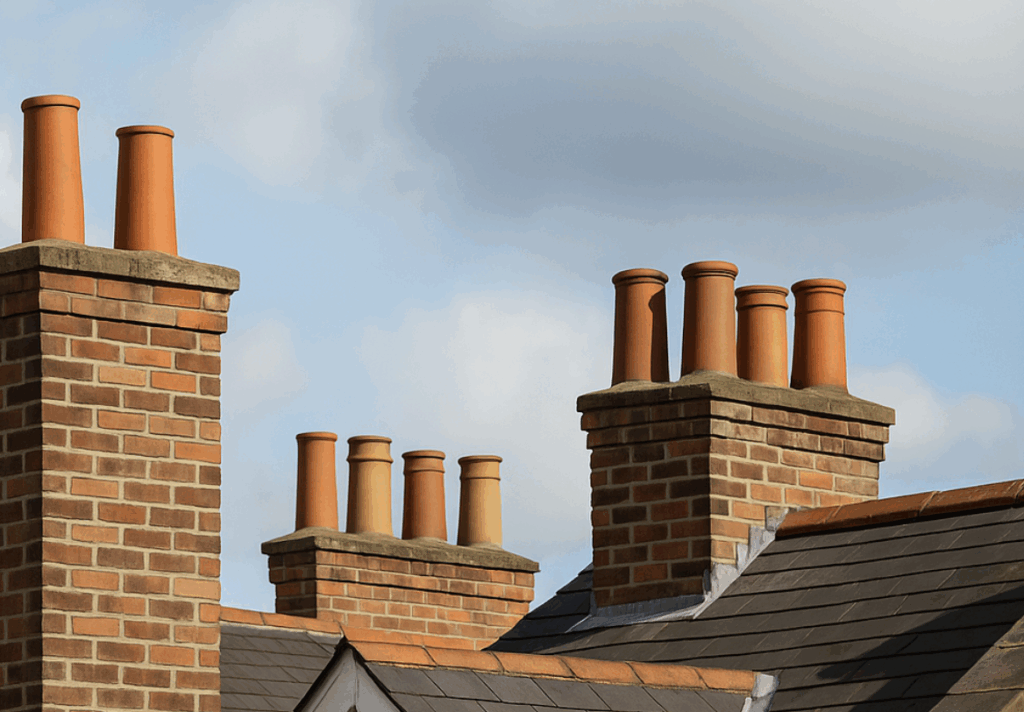
Regular Chimney Sweeping and Maintenance: Keep your chimney or flue clean and well-maintained. Soot and creosote (tar) can accumulate in the flue over time, especially if you burn wood that isn’t fully dried. These deposits not only reduce the draft and efficiency of your stove but also pose a risk of chimney fires. We recommend sweeping your chimney at least once a year, or three times a year if you use the stove frequently or burn a lot of wood. The best times are usually before the heating season (autumn) and after heavy use (spring) and one mid-season. Always use a professional chimney sweep; they will remove soot safely and can inspect the flue for any cracks or issues. Regular maintenance of the stove itself is also wise, periodically check door seals, clean the stove glass, and empty the ashpan before it overfills. Well-maintained equipment runs safer and more efficiently.
Safe Operation Practices: When using the stove, follow common-sense fire safety practices. Only burn recommended fuels and never overload the firebox with too much wood at once. Use a stove tool to open the door and air vents, they can become very hot. It’s prudent to use heat-resistant gloves when adding logs or adjusting controls. If you have young children or pets, consider using a fire guard or safety gate around the stove to prevent accidental contact with the hot surface. Keep combustibles (like newspapers, kindling, rugs, or Christmas decorations) a safe distance from the stove. Lastly, always ensure the fire is fully out before you go to bed or leave the house, let the fuel burn down to embers and close the air vents as instructed, so it doesn’t keep burning unattended.
By adhering to these safety measures, you can enjoy the warmth and charm of your wood-burning stove with peace of mind, knowing that you’ve minimised risks and complied with best practices.
Navigating UK Regulations: DEFRA Rules and Clean Air Compliance
The UK has specific regulations governing wood-burning stoves and what you can burn, largely to protect air quality. If you’re installing or using a stove, it’s important to understand these rules to stay compliant and environmentally responsible.
Smoke Control Areas: Many urban and suburban areas in the UK are designated Smoke Control Areas under the Clean Air Act. In a smoke control area, you cannot emit smoke from a chimney unless you are burning an authorized smokeless fuel or using an approved appliance. This means that if you want to burn regular wood logs in a town or city environment, you must use a DEFRA-approved stove (also known as a DEFRA-exempt appliance), all stoves in the Charlton & Jenrick range are DEFRA-approved.
DEFRA (the Department for Environment, Food & Rural Affairs) maintains a list of stove models that are tested and certified to emit very low smoke. Using one of these exempted stoves allows you to burn wood legally in smoke control zones by keeping emissions below the set limits. If you use a non-exempt stove or burn unauthorized fuel and produce visible smoke, you could face penalties, fines can run up to £1,000 for breaking smoke control laws, and even a £300 spot fine for emitting excess smoke from your chimney. Always check with your local council or the DEFRA website to see if you’re in a smoke control area and what rules apply.
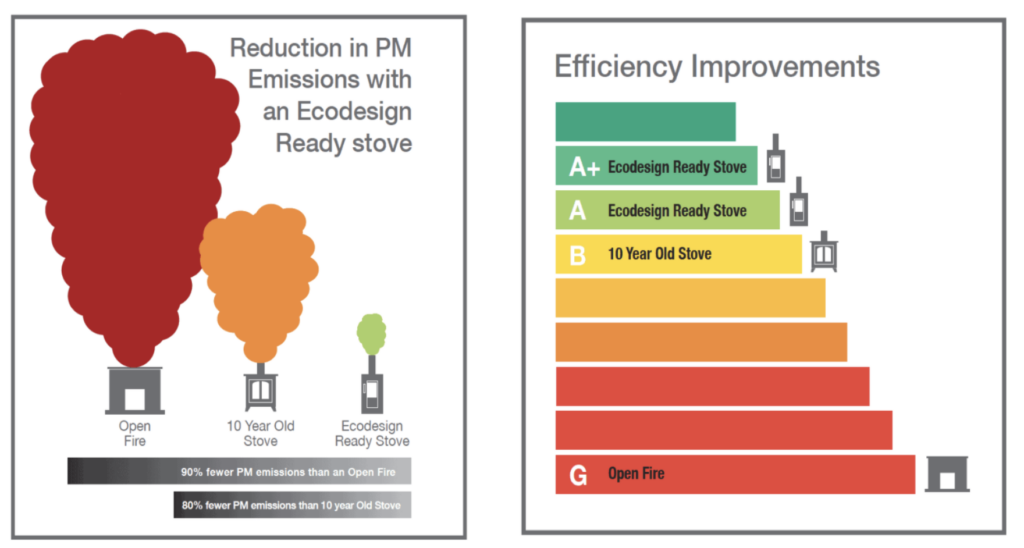
Ecodesign 2022 Regulations: Beyond smoke control zones, the UK (in line with EU standards) implemented the Ecodesign regulations in January 2022 for all new wood-burning and multi-fuel stoves. This is a significant development for air quality and efficiency across the country. Ecodesign rules set strict limits on emissions of particulates, carbon monoxide, organic gases, and nitrogen oxides, as well as a minimum efficiency requirement (75%+ efficiency). In other words, any stove on sale now should be EcoDesign-compliant, which means it’s much cleaner-burning than older models. A modern Ecodesign wood stove can emit up to 90% fewer particulate emissions than an open fire, and 80% less than an old 10-year-old stove that predates these standards.
Fuel Regulations: Another regulatory aspect to be aware of is the restriction on selling polluting fuels. As part of the government’s Clean Air Strategy, sales of coal and wet wood have been limited. Since 2021, retailers can no longer sell traditional house coal in small quantities, and wood logs sold in volumes under 2 cubic metres must be “Ready to Burn” certified (moisture content under 20%). This doesn’t ban you from burning existing stock of wet wood or coal, but it aims to ensure people switch to drier wood and low-sulphur smokeless fuels.
The reasoning is straightforward: wet (unseasoned) wood produces excessive smoke and PM2.5 pollution, and coal emits a lot of soot and sulphur. By using kiln-dried wood or briquettes and smokeless coal alternatives, stove users can dramatically cut the pollution from their fires. For stove owners, complying with these fuel rules mostly means sourcing your wood from reputable suppliers that provide certified dry logs or briquettes. Look for the Ready to Burn logo when buying firewood, it gives you peace of mind. Not only will this keep you on the right side of the law, it also improves your stove’s performance (dry wood yields more heat and less chimney build-up).
In summary, the UK regulatory landscape for stoves boils down to: use an approved stove and clean fuels, especially if you’re in a city, and always be conscious of the environmental impact of your stove. By choosing a modern low-emission stove and burning the right fuel, you’ll ensure your cosy fire doesn’t contribute unnecessarily to air pollution, keeping both the authorities and your neighbours happy.
Modern Stoves and Environmental Impact
Wood-burning stoves have unfarly faced some scrutiny in recent years due to misinformaiton and concerns about air pollution. When used correctly, a modern wood-burning stove can be a highly eco-friendly heating option.
Firstly, it’s important to note that wood is a renewable, carbon-neutral fuel. Trees absorb carbon dioxide as they grow; when you burn wood from a sustainably managed source, the CO₂ released is roughly the same as what the tree absorbed during its life, resulting in a balanced carbon cycle. This stands in contrast to fossil fuels like natural gas or oil, which release carbon that was previously locked underground.
A modern efficient stove burning seasoned wood therefore can heat your home with a much lower carbon footprint than a gas boiler or electric heating. In fact, its been discovered that a wood stove’s heat has less than one-tenth the carbon intensity of electric or gas heating in the UK. The caveat, of course, is that wood must be sourced and burned responsibly, using locally sourced logs (reducing transport emissions), and ensuring forestry is done sustainably, where new trees planted as others are harvested. Many stove owners take pride in sourcing their firewood from tree prunings, local woodlands, or suppliers who certify that their logs come from sustainable forestry operations.
Selecting the Right Stove for Your Space and Style
Choosing the perfect wood-burning stove involves balancing practical requirements with aesthetic preferences. With the wide range of stove models on the market, homeowners can find an option that not only heats the room effectively but also complements the home’s decor.
Here are some tips on selecting the right model based on room size and interior style:
Match the Stove Output to Your Room Size: Start by determining the heat output you need. As discussed under technical considerations, calculate your room’s volume (length × width × height in metres) and use the rule that about 1 kW of stove heat covers around 14 cubic metres for a moderately insulated space. This calculation will give you a ballpark figure for the kW rating required. It’s wise to choose a stove whose nominal output is close to this requirement. If your living room is, say, 50 m³ in volume (approximately a 4m x 5m room with 2.5m ceilings), you’d be looking at around a 3.5 kW need – a 4 to 5 kW stove would likely be appropriate.
Below is our Woodtec 8kW Double Sided stove.

Remember that most stoves have a range (they can be run a bit lower or higher than their nominal output), but it’s not efficient to run a large 10 kW stove at a trickle just because you only need 4 kW. Likewise, a tiny stove over-fired to heat a big room will wear out faster and could be unsafe. Aim to size the stove such that you can run it at a comfortable burn rate to heat the room on a typical winter day.
Consult with stove retailers, they’ll factor in insulation and other variables. Keep in mind UK building regulations: stoves above 5 kW usually require additional ventilation (an air vent in the room) to supply enough oxygen, which is another reason not to overspec the output if not necessary.
Consider Your Home’s Layout: If you have an open-plan living area or unusually high ceilings, you may need a little more output or a stove that can channel heat effectively. Heat will disperse over a larger area in open layouts, so sometimes a slightly larger stove or a model with a convection system (blowing warm air) works well. Conversely, in a very snug room, you might prioritise a smaller physical size stove that doesn’t overwhelm the space. Also consider if the stove will be the primary heat source for that room or just an occasional supplementary heater. For occasional use, you might lean towards a smaller output or even a gas/electric log-effect stove if ambience is the primary goal.
Design and Aesthetics: This is the fun part, selecting a stove that fits your interior style. As mentioned earlier, stoves come in a tremendous variety of styles. For a traditional cottage or period property, you might opt for a classic stove with some heritage styling (arched doors, decorative details).
If your living room has a contemporary design, you might choose a modern stove with clean geometric lines, perhaps a cylindrical shape or even a wall-mounted firebox style. Think about whether you want the stove to be a statement piece or to quietly integrate. If it’s a statement, you might choose a very large model (dependant on rooms size) that draws the eye. If integration is key, a stove that fits neatly into an existing fireplace opening might be best.
Conclusion
A wood-burning stove can truly elevate the ambience of a living room in the UK, linking form and function in a way few other home features can. It offers the visceral pleasures of warmth, flickering firelight, and the aroma of wood, all while serving as a practical heating solution. From an interior design perspective, a stove can be a bold centerpiece or a seamlessly integrated gem that enhances a room’s character and even adds value to the property.
Technically, today’s stoves are advanced appliances, efficient, clean-burning, and engineered for both warmth and safety. By carefully considering the right size, placement, and fuel, and by adhering to installation guidelines and regulations, homeowners can enjoy all the benefits of a wood burner with confidence and peace of mind.
See how a Charlton & Jenrick stove could transform your home, visit a showroom near you and see the difference for yourself. More Info.