Yes. It is entirely possible to increase your firewood supply and enjoy a truly independent heating source. Unfortunately, this won’t be practical for everyone. However, in this guide, we outline the key points to consider if you wish to grow wood for use on your wood-burning stove.
Harvesting your own firewood is a growing trend among eco-conscious households seeking to reduce heating bills and gain a true, independent heating source. In our mild UK climate, everyone, from countryside dwellers to inner-city gardeners, can raise a diverse mix of trees and generate logs for wood-burning stoves. This guide shows you how to select suitable hardwoods and softwoods, establish and care for your planting, and manage felling, seasoning, and replanting to make sure your log supply remains truly self-sustaining.
Choosing the Right Tree Species (Hardwoods vs. Softwoods)
Selecting the right mix of trees is key to a successful firewood plot. In general, hardwoods produce denser wood that burns longer and hotter, while softwoods grow faster and can provide wood sooner but burn more quickly. A combination will give you both short-term and long-term firewood.
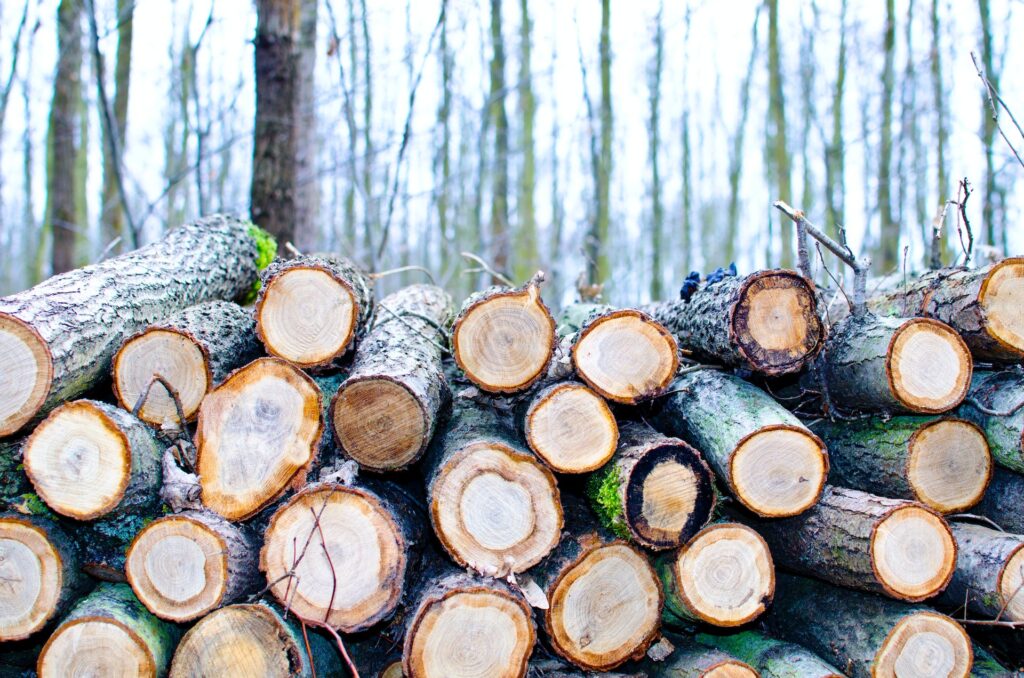
Here are some species suitable for UK conditions:
Ash: Ash is widely regarded as one of the best firewoods due to its excellent heat output. It grows at a moderate pace and, if you already have ash trees on your land, they can be coppiced on a rotation of approximately 7 to 10 years. However, due to the widespread ash dieback disease, planting new ash trees is generally discouraged; maintaining and harvesting from established specimens, on the other hand, remains a valuable option.
Oak: a traditional hardwood known for its long, slow burn and high heat output. While it grows slowly and requires at least two years’ seasoning before use, it’s a worthwhile long-term investment. If you choose to plant oak, you may need to wait 15–20 years to yield a substantial harvest, but the resulting firewood is of exceptional quality.
Birch: A fast-growing hardwood that’s great for firewood. Birch lights easily, burns hot and bright, and its papery bark can even serve as natural kindling. It doesn’t store as much heat as oak, but birch logs can dry in as little as 6 months due to lower moisture content. Planting birch gives you firewood in a shorter timeframe (possible to start thinning small logs within 5-7 years).
Sycamore (Maple): Sycamore grows quickly and seasons within about one year. It’s an adaptable tree (even tolerant of urban conditions) and produces moderate-heat firewood. Sycamore logs are easy to split and make a good all-rounder fuel (often mixed with slower-burning logs to keep a fire going).
Beech: Beech is a native UK hardwood known for its hot, long-lasting burn and clean flame, similar to oak. It typically requires about two years of seasoning to perform at its best. Beech grows more quickly than oak and can reach heights of 20–30 metres, making it an excellent option if you have sufficient space and want premium firewood slightly sooner than oak would provide.
Hazel: Ideal for small spaces and coppice systems. It grows as a multi-stem shrub/tree and can be coppiced on a 7-year cycle. While hazel logs are smaller, they dry quickly and are excellent for kindling or smaller stoves.
Willow & Poplar: These are technically hardwoods but are “soft” in wood density. They thrive in UK climates, including damp or marginal land. Willow is one of the fastest-growing trees in Britain, capable of reaching log size in just 4-5 years. Poplar can produce sizeable logs in about 5–8 years. Both have a reputation for being lower-quality firewood, but this issue is largely mitigated by proper seasoning. For example, willow is often criticised as “wet wood,” but when stacked under cover, it can air-dry to a burnable condition in as little as 3–6 months. Poplar, if seasoned off the ground and under cover, burns similarly to willow without the oft-quoted “putrid smell” (that only happens if burned wet). These trees are excellent for quick returns, as you can harvest usable logs in just a few years, which is perfect if you don’t want to wait decades for oak or beech to mature.
Conifers (Pine, Spruce, Larch): If you have space for some evergreens, they can provide earlier yields. Pine and spruce grow rapidly in the UK and can be cut in 10-15 years or less. Softwoods are less dense, so you’ll go through them faster (you might need around 25% more volume of softwood to get the same heat as hardwood). Larch, a deciduous conifer, is often cited as one of the best softwoods for firewood because it has relatively high heat output and less resin than pine. It’s a fast-growing and more sustainable option for harvesting than slow-growing hardwoods. If you plant a few larches or pines, they can act as a windbreak on your property and yield useful logs in a reasonable time frame.
By planting a diverse mix of species, you’ll gain a staggered supply of firewood: quick-growing willows or birches for early use, and dense hardwoods like oak, beech or hornbeam maturing for longer-term needs. Diversity also means greater resilience to pests and diseases, as well as a healthier woodland ecosystem.
Planting and Managing Your Firewood Trees
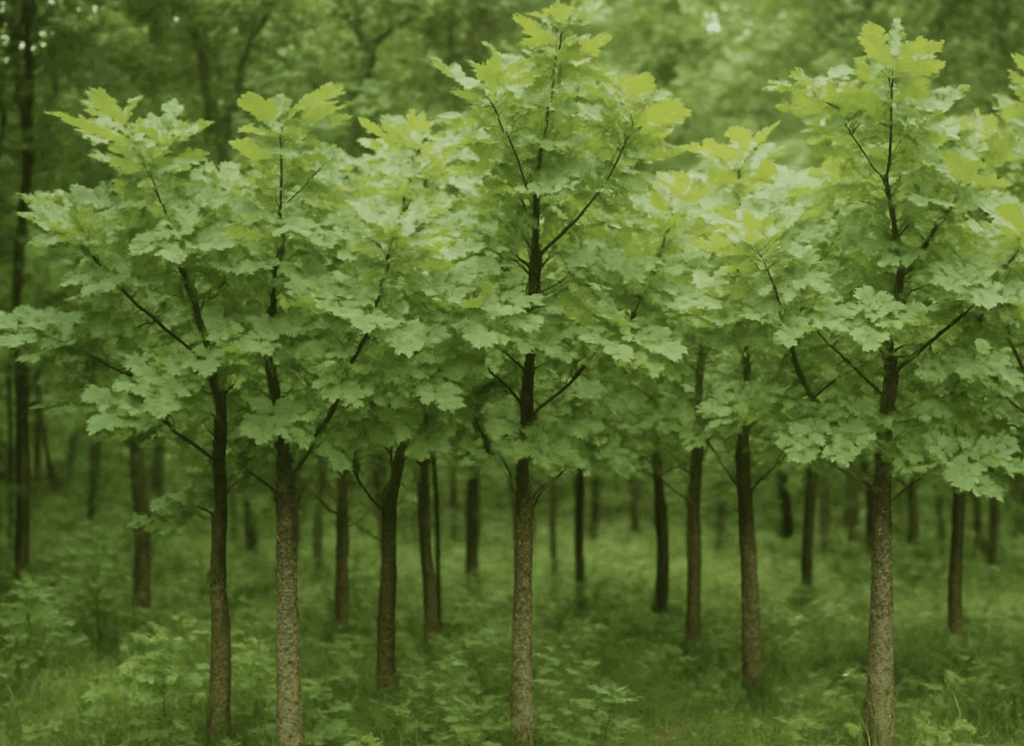
Once you’ve chosen your species, it’s time to establish your firewood plot. Even a small area can be productive; for example, a 10 × 10 m copse of about 100 willow cuttings can yield roughly one tonne of dry firewood every 5 years. Scale that up, and a quarter-acre (0.1 hectare) of fast-growing willow/poplar could produce around 2 tonnes of wood annually on a rotating harvest cycle.
Site Selection: Most firewood trees thrive in full sun and well-drained soil, although species like willow are well-suited to wetter conditions. Select a location with ample space to allow your trees to grow to maturity. On a smallholding or farm, you could allocate a section of a field to establish a small-scale plantation. Even in urban settings with limited room, it’s still possible to grow firewood trees. Consider planting along hedgerows or boundaries, such as a coppiced row of hazel or willow beside a fence. You can also integrate fruit trees, which not only provide seasonal produce but also offer prunings that make excellent kindling.
Planting Technique: For optimal results, plant during the dormant season (November to March in the UK). Use bare-root saplings for native hardwoods or cuttings/rods for willow and poplar. Spacing depends on the system: short rotation coppice (for willow/poplar) might be planted at around 1m apart in, whereas hardwood trees grown for larger logs may be spaced 2–3m or more apart. Tighter spacing can encourage straight, branch-free growth (useful for timber and easier processing) but will require thinning later.
Weed Control & Early Care: Young trees can easily get out-competed by weeds or grass. Keep a weed-free circle around each sapling or consider using a breathable weed suppressant membrane when planting rows. Mulching can help retain moisture. Protecting saplings from browsing animals, rabbits, and deer can decimate new growth. Use tree guards or fencing as needed, especially for tasty species like willow, ash, and oak.
Coppice or Not? It’s important to decide early on whether you intend to manage your trees through coppicing. For optimal results, plant during the dormant season, typically from November to March in the UK. Coppicing involves cutting a tree down to a low stump, known as a “stool,” once it reaches a certain size, allowing it to regenerate multiple new stems from the base.
This traditional method is ideal for a sustainable firewood supply, as it encourages rapid regrowth and eliminates the need for replanting. Most native broadleaf species, such as oak, sweet chestnut, hazel, and willow, respond well to coppicing. If you choose this approach, allow trees to establish for several years (generally 5–7 years after planting) before the initial cut. Once cut, be sure to protect the stool from browsing animals until the new shoots are well-established.
Pollarding in Small Spaces: If you have a small garden or want to combine trees with other land uses (like a meadow or livestock pasture), consider pollarding instead of coppicing. Pollarding is similar, but you cut the tree’s upper branches 6–8 feet above ground, rather than at the base. The tree then resprouts high up (out of reach of deer). Species like willow, ash, lime, and oak were traditionally pollarded. This yields firewood from the cut branches and keeps trees smaller in stature, ideal for urban settings or along boundaries. Just be sure to start pollarding when the tree is young (within the first 5-15 years) so it responds well.
Harvesting Strategies and Timing: When your trees have grown to a usable size, it’s time to harvest firewood. The strategy will differ if you are managing a coppice versus individual trees, but the goal is to create a sustainable cycle of cutting and regrowth.
How to Harvest:
When to Cut: The best time to fell or coppice trees is during the dormant winter months (late fall to early spring, roughly September to March). In winter, trees have less sap, which means lower moisture in the wood and easier seasoning. The wood is also lighter to handle when the leaves are off. Aim to cut on a dry day if possible, and avoid periods of heavy frost if using a chainsaw, as frozen wood is tough on tools.
Coppice Rotation: If you’re managing a coppice block, divide it into several sections, known as coupes, and cut one section each winter on a rotating schedule. For instance, a hazel coppice could be split into seven coupes, with one harvested annually, giving each section a full seven years to regenerate before it’s cut again. Faster-growing species, such as willow or alder, may be suited to a shorter 3–5 year rotation, while slower-growing trees, such as sweet chestnut or oak, might require a cycle of 15 years or more. This rotational approach ensures a consistent yearly supply of firewood without the need to fell the entire area at once. To help manage your rotation, clearly mark each coupe on a map or use corner “standard” trees, mature specimens left uncut, to identify each section and add structural diversity to the woodland.
Selecting Trees to Fell: In a mixed planting, you might start by thinning out some trees for firewood while allowing others to grow. For example, if you planted rows of hardwoods at close spacing, remove every second tree (as “thinnings”) once they reach 8-15 years old. These thinnings can be logged for firewood, and the remaining trees then have room to grow larger. Always prioritise removing any diseased or poorly formed trees first, and consider the impact on wildlife: leaving some deadwood or untouched areas can benefit biodiversity.

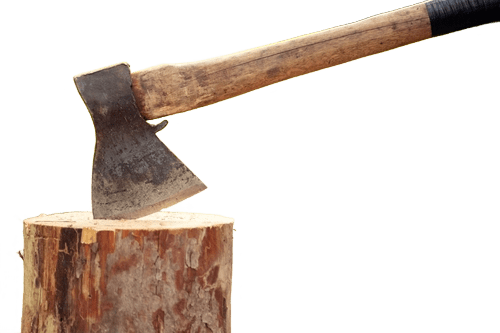
Harvest Yields and Tools: Expect yields to increase with tree age (older trees = more volume), but older hardwoods also become more difficult to split. Many smallholders use a chainsaw to fell and section logs, as well as axes or hydraulic splitters to split rounds into stove-sized pieces. Always wear proper safety gear and receive training, especially when using chainsaws. If you don’t have many trees, even a bow saw and a hand axe can suffice for small-diameter coppice poles. Work methodically and never fell trees near power lines or buildings unless you’re qualified or have professional help.
Example Timeline: To illustrate a timeline, assume you have planted a mix of willow, birch, and oak. Within 4-5 years, you could take a first harvest of willow logs. In 7-10 years, you might be thinning birches or hazels for smaller logs. The oaks you’d leave for perhaps 15+ years, meanwhile harvesting willow or poplar every few years in between.
This way, you get usable wood in the short term and superior wood in the long term. Eucalyptus is another interesting option in milder parts of the UK; species like Eucalyptus nitens can reach 10-12m in just four years in Cornwall! After approximately 4 years, you can conduct a thinning harvest in a eucalypt stand, and by year 8, you can have a full felling of mature trees. Just be cautious: some eucalypts don’t like severe frost, and some can be a bit challenging to split, but they do offer very dense, high-energy wood for those willing to try them.
Seasoning Firewood
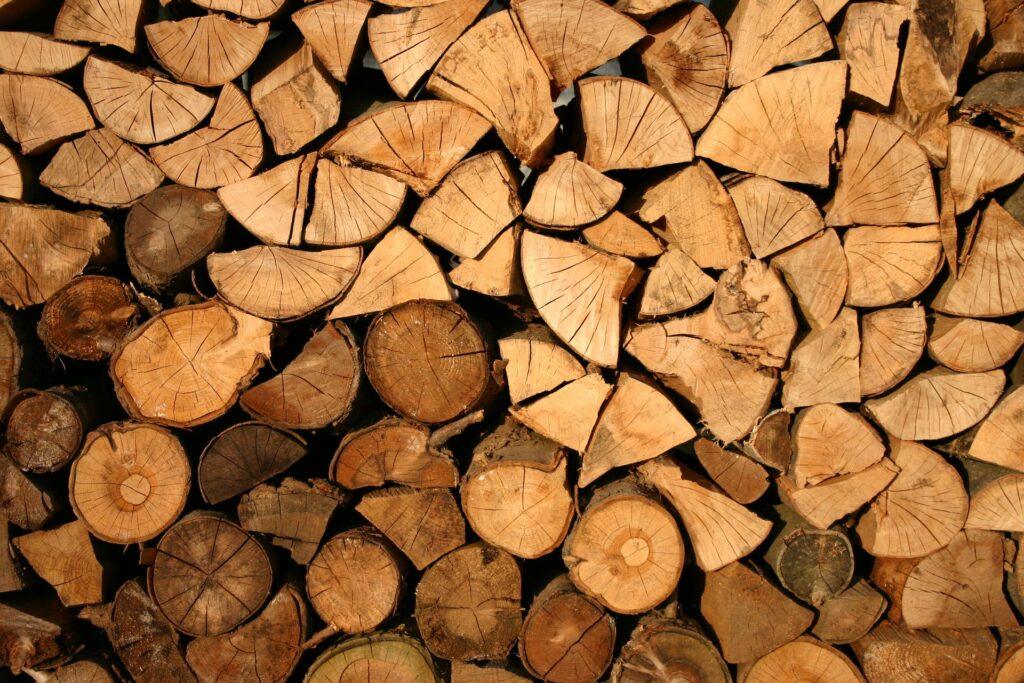
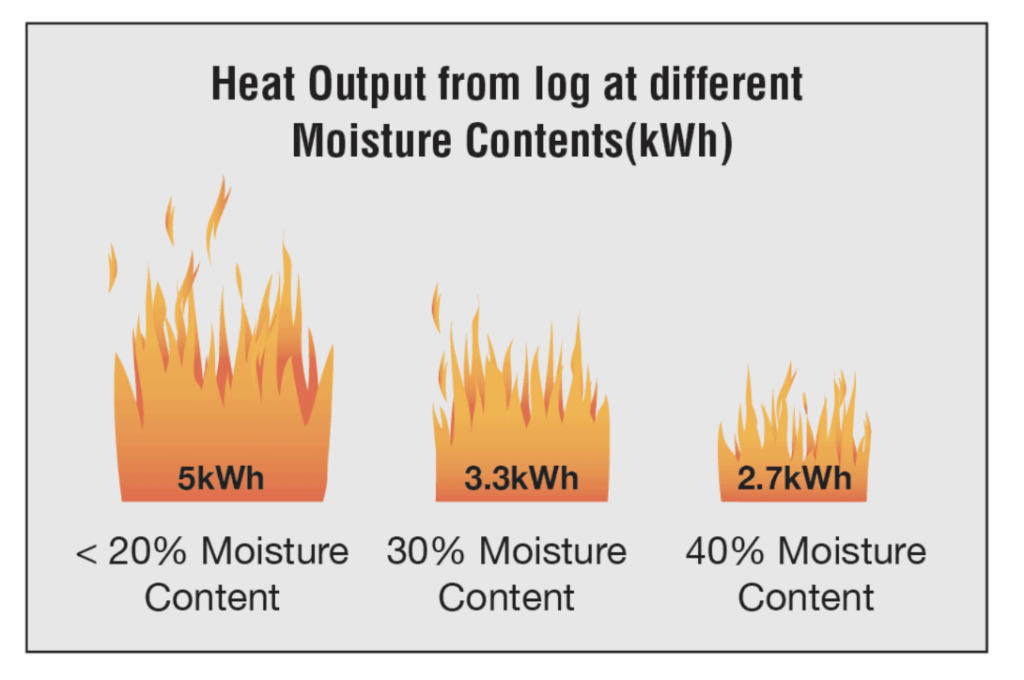
Seasoning refers to the process of drying out your cut wood so that it burns safely and efficiently. Fresh-cut “green” wood can have a moisture content ranging from 30% to 60% or more (willow and poplar are especially high in water when fresh). As we have mentioned many times before, burning wet wood wastes energy evaporating water, produces excess smoke and creosote, and can cause dangerous tar build-up in your chimney. For clean burning, logs should be dried to 20% moisture or below, which typically takes at least one full summer of seasoning for most types of wood. Here’s how to season your firewood effectively:
Split and Cut to Length: Right after felling, cut logs to your stove’s length and split them to expose the inner wood. Smaller pieces dry much faster. For example, split logs that are 5 inches (12 cm) thick or less; these will season more quickly and burn more efficiently. Splitting is far easier when wood is green and soft, so don’t wait until it dries. This is especially true for knotty woods or ones like eucalyptus that harden as they dry.
Stack off the Ground: Pile your split firewood in a well-ventilated stack, raised on pallets or rails so air can circulate underneath. Stack loosely in a single row or with some criss-crossed layers to allow airflow between logs. Good air circulation is the magic ingredient that carries moisture away.
Location and Cover: Choose a sunny, breezy spot for the stack. In the UK, a covered log store is ideal – open sides for wind, with a roof or tarp to keep rain off the top. One strategy is to leave the stack open to sun and wind for the first 4-6 months, then cover the top before autumn rains, while still leaving the sides open. Never completely wrap or fully tarp the woodpile; trapping moisture is worse than a bit of rain. An overhanging roof or just a sheet of metal or plastic on the top of the stack works well
How Long to Dry: Seasoning time depends on wood type and size of logs:
Fast-drying woods like birch can be ready in around 6-12 months
Willow and poplar logs, despite being very wet initially, also lose moisture rapidly, some claim well-ventilated willow can be burn-ready in as little as 3-6 months, though a year is a safer rule of thumb.
Medium-density hardwoods (e.g. ash, sycamore, cherry) usually need about one year after splitting.
Dense hardwoods, such as oak, beech, and hawthorn, as well as any very large pieces, are best given up to 2 years to dry. Oak in particular, if burned too wet, hisses and produces acrid smoke.
Softwoods like pine and spruce can often dry within 6-12 months since they’re of lower density. However, they contain sap/resin, so be sure they’re fully dry; their resinous sap can cause creosote if not combusted fully. Properly seasoned softwood will have opened cracks at the ends and feel significantly lighter.
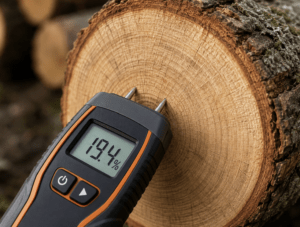
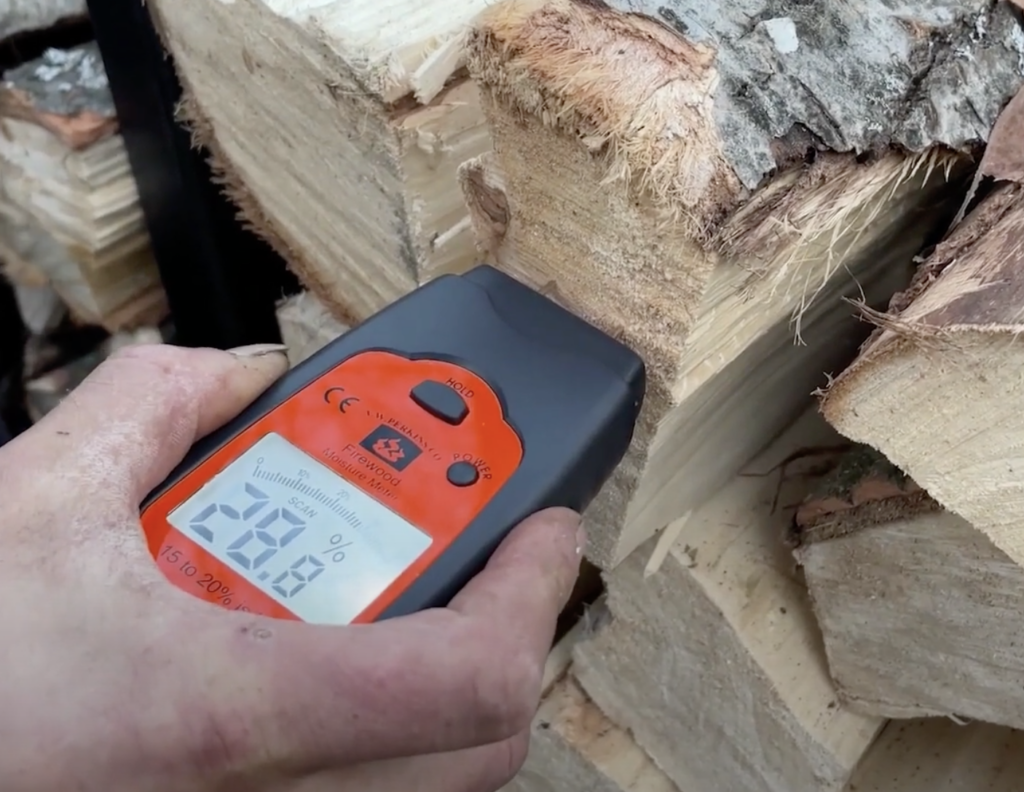
Check Moisture Content: It’s wise to invest in a moisture meter. Split a log and test the freshly exposed wood – remember, you’re aiming for 20% or lower, but no lower than 15% as a general rule.
Storage: Once your firewood is fully seasoned, store it in a convenient and accessible location, ready for use during winter. Protect it from rain and snow, but ensure there is still sufficient airflow to prevent moisture buildup. A purpose-built log store with slatted sides, ideally positioned near the house, provides excellent ventilation and easy access. Alternatively, you can continue using a well-ventilated stacked pile. Be sure to rotate your stock, burn the oldest, driest logs first, and stack freshly cut or newly seasoned wood separately to continue drying. With a well-organised system, you can move seasoned logs into storage each year while simultaneously restocking your drying pile, creating a continuous and efficient cycle.
Sustainable Replanting and Replenishment:
The true beauty of growing your own firewood is that it can form a renewable and sustainable cycle. To keep that cycle going, practice good woodland management and replant or encourage regeneration as you harvest:
Coppice Regrowth: If you’ve coppiced your trees, nature does the replanting for you; new shoots will emerge from the stool in the spring after cutting.
Replanting: For non-coppicing species (or if a stool dies), plant new saplings to fill the gaps. A good rule is to plant at least one tree for every tree you fell, keeping your woodlot’s yield continuous for you or even the next generation. Take the opportunity to diversify when replanting: if you lost an ash tree, consider replacing it with a disease-resistant species, such as small-leaved lime or hornbeam, to mitigate issues like ash dieback.
Natural Regeneration: You can also let your woodlot regenerate naturally. Birds and squirrels might plant acorns, or nearby trees might shed seeds that sprout. If seedlings pop up in convenient spots, protect and encourage them. This low-effort approach can gradually restock your wood supply, though it may require some selective thinning of saplings later on.
Wildlife and Ecology: A sustainably managed firewood plot can double as a haven for wildlife. A diversity of tree species provides varied habitats and food sources, and the act of coppicing allows light to reach the woodland floor, encouraging wildflowers and biodiversity. Piles of branch off-cuts can be used to create dead hedges around new coppice stools, which protect regrowth from deer while also providing shelter for insects and hedgehogs. Even as you harvest wood, you’re building a rich, dynamic ecosystem, far better than a fossil fuel heating system in a sustainability sense.
Rotation Planning: Think long-term with your planting. If you have the space, you could plan a 20-year rotation for hardwoods: plant a few new trees each year so that, in 15-20 years, you have a staggered age profile and can fell a couple of mature trees annually without depleting the stock. On smaller plots, focus on shorter rotations (3-10 years) with coppice or fast growers. Either way, keep records, note planting dates, species, and harvest dates. This will help you refine the number of trees you need in rotation to meet your household’s firewood demand.
Finally, remember that burning wood can be carbon-neutral when done sustainably. Burning quickly grown wood, such as willow, releases carbon that was absorbed over just the past five years, whereas burning fossil fuels releases carbon that has been locked away for millions of years. By replanting and regrowing your trees, you continually absorb carbon and then release it in a short cycle.
With careful species selection, good management, and sustainable practices, you’ll enjoy a home-grown heating supply that is economical, eco-friendly, and very satisfying.
Ask ChatGPT