At Charlton & Jenrick, we have always stressed that even the best wood-burning stove can only perform as well as the fuel put inside it. A modern, efficient Ecodesign stove needs clean, correctly sized, and properly seasoned firewood to provide a consistently good, efficient heat output.
As we approach another UK stove season, the quality and availability of that fuel deserves particular attention.
Wildfire activity has become increasingly prominent across the UK and Europe, with recent years seeing some of the most significant fire activity recorded in the UK in over a decade. Satellite monitoring has also shown that substantial areas have already been affected this year. While these systems use different methods and may include some intentional vegetation burns, the overall picture is clear: wildfire is becoming a more visible and significant feature of the UK landscape.
The wider trend is also important. Hotter, drier conditions can increase the scale, intensity, and frequency of destructive wildfires. UK health and climate assessments indicate that, at 2°C of global warming, the number of days with very high fire danger in the UK could double, with the wildfire season potentially extending further into late summer and autumn. That is important to the firewood industry as this period increasingly overlaps with harvesting, processing, stock-building and early-season deliveries.
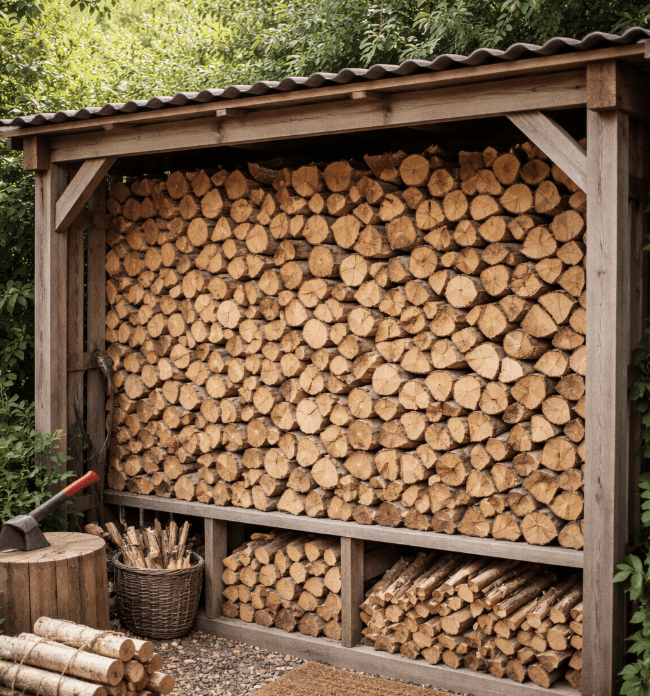
Burned land does not automatically mean firewood has been lost
It is important not to treat every hectare affected by wildfire as a hectare of productive firewood woodland.
Many UK wildfires burn across grassland, moorland, heath, scrub and peat rather than commercially managed forests. According to Forest Research, woodland fires accounted for only a relatively small proportion of the UK’s total wildfire-burned area, although fires that do enter forests can have disproportionately serious economic and environmental effects.
That said, the good news is that the UK wood supply entering the coming stove season is certainly not in a position of collapse or anywhere close. Figures for 2025, a year which suffered a growing number of wildfires, showed that total UK roundwood deliveries remained broadly unchanged at approximately 10.4 million green tonnes. Around 3.2 million green tonnes went to other uses, a category that includes woodfuel, round fencing, shavings and roundwood exports. Figures for 2026 have not yet been finalised.
That relatively stable national picture should offer some reassurance. However, national statistics can hide severe local disruption. A fire affecting one productive woodland, harvesting route, local processor or drying facility can still have a significant impact on nearby firewood businesses and their customers.
How wildfires can affect this stove season’s supply
1. Woodland operations may stop before any timber is lost
When wildfire risk becomes very high, forestry operations may be restricted or postponed. Chainsaws, machinery, hot exhausts and metal contact can all create ignition risks under extremely dry conditions. Responsible woodland managers may therefore delay felling, extraction or roadside processing until conditions improve.
If a fire has already taken place, access may remain restricted while emergency services work, hotspots are monitored, unstable trees are assessed and damaged roads are repaired. Smoke, falling branches, weakened roots and partially burned trees can create serious risks for forestry workers.
The result is a delay between the fire and any timber becoming available. A burned woodland is not immediately converted into a supply of retail logs.
2. Transport and extraction can become more difficult
A tree standing in a woodland is still a long way from becoming stove-ready firewood. It must be assessed, felled safely, extracted, transported, cut, split, dried, graded, stored and delivered.
Wildfire can interfere with every stage of that process. Roads may be closed, forest tracks may be damaged, and heavy vehicles may face access restrictions. Contractors, machinery and transport capacity can also be diverted towards emergency or recovery work.
These effects are likely to be felt most strongly by smaller regional suppliers that depend on a limited number of woodlands or contractors. A larger national market may absorb the loss of one source, while a local business may have few immediate alternatives.
3. Processing and drying capacity can become the real bottleneck
A large volume of fire-damaged timber does not automatically become a supply of dry firewood. Even where salvage harvesting is possible, processors still need sufficient space and equipment to handle the material. Timber must be cross-cut, split, cleaned and dried. Kilns have limited capacity, while natural seasoning requires time, plus airflow and substantial covered storage.
A large post-fire salvage operation can therefore create the unusual situation of plenty of raw timber but not enough stove-ready fuel. The constraint moves from woodland supply to processing capacity. This distinction is especially important as winter approaches. A processor may be able to obtain fire-damaged timber during autumn but may not be able to turn it into a consistent, correctly dried retail product before the coldest weather arrives.
4. European wildfires can affect the UK market too
The UK firewood market does not operate in isolation. The UK ss the largest importer by value of the specific HS 440110 fuel-wood category in 2024. That category includes fuel wood supplied as logs, billets and similar forms.
Some packaged and kiln-dried firewood sold in the UK is therefore exposed to conditions elsewhere in Europe. Major fires can affect forest access, sawmill output, kiln capacity, road transport, port operations and insurance costs in supplying countries.
A UK retailer may be many stages removed from the original forest, but disruption can still travel through the chain. A shortage in one country can also increase competition for suitable timber from another. This does not mean all imported firewood will become scarce. It means that relying heavily on one region, species or supplier can increase vulnerability.
5. Demand can tighten the market before physical supply does
Firewood availability is affected by consumer behaviour as well as forestry conditions. When households hear reports of wildfires, energy-price uncertainty or a severe winter forecast, many understandably try to order earlier. A sudden wave of orders can make a supplier appear to have a timber shortage when the immediate problem is actually delivery capacity, bagging, handling or stock allocation. We recommend sensible early purchasing rather than panic buying. Ordering before the first cold spell gives customers more choice while allowing suppliers to plan deliveries efficiently.
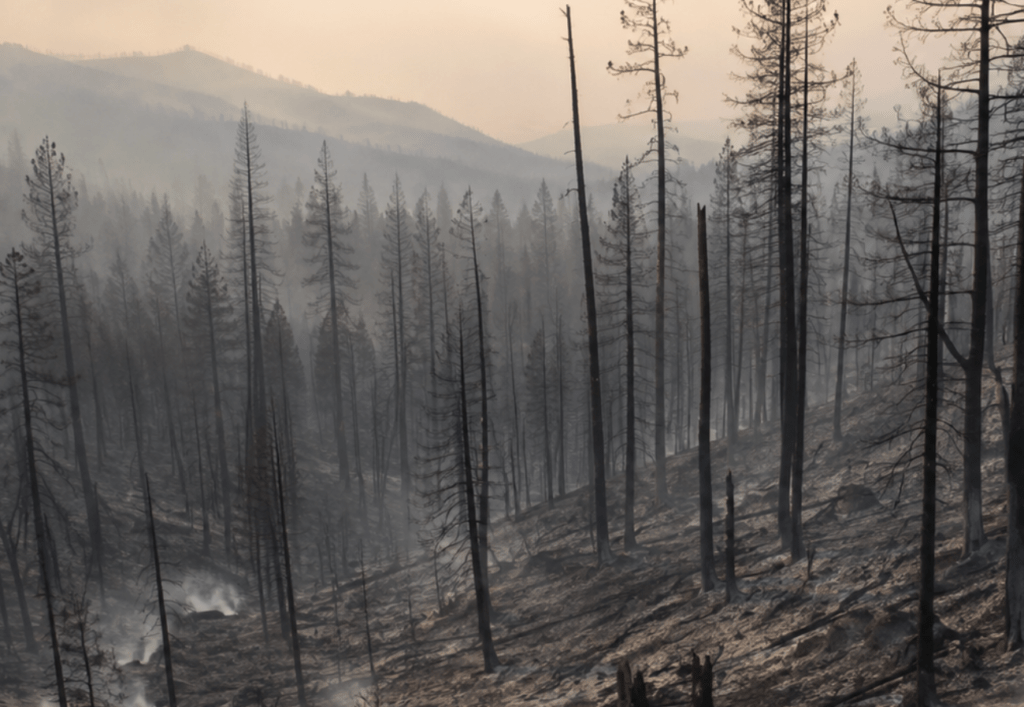
Why a fire-damaged tree is not necessarily ready to burn
A common misconception is that exposure to wildfire dries a tree to a stove-ready condition. This is not the case.
Fire affects different trees in different ways. The outcome depends on:
1. Tree species and density
2. Bark thickness
3. Tree diameter and age
4. Fire temperature and duration
5. Whether the crown, bark, roots or main stem were affected
6. The proportion of the tree’s circumference exposed to heat
7. The time between the fire and harvesting
8. Weather following the incident
9. Whether the tree survived initially but died later
Recent research examining three tree species after wildfire found that fire severity could significantly reduce stem moisture, but the effect varied considerably between species and within different parts of the tree. In other words, wildfire may accelerate drying, but it certainly does not create a uniform moisture content needed for wood to be classed as fully seasoned – and ready to burn. A log may look scorched and feel light while still retaining excessive moisture in its centre. Conversely, a small-diameter section may have dried rapidly and developed deep splits. The only dependable approach is to process the wood correctly and measure it.
Surface appearance tells us very little about internal moisture.
A moisture reading should be taken from the newly exposed centre of a freshly split log, not from the bark, end grain or charred exterior. We advise testing several logs from different parts of a delivery or store, inserting the meter pins firmly across the grain and averaging the readings.
For use in an Ecodesign wood-burning stove, the target remains 20% moisture content or a little less. We say a little less, as too low, such as below 15%, can cause the wood to burn too quickly.
Anything above the 20% level needs further drying, regardless of whether the wood came from a healthy woodland, a storm-damaged tree or a wildfire recovery site.
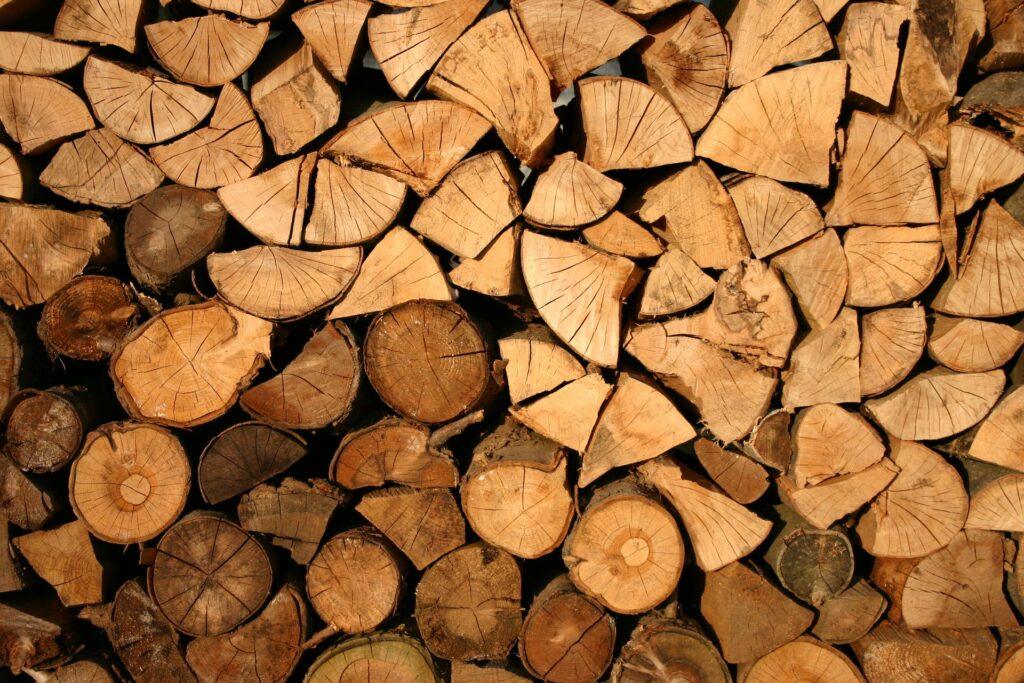
How wildfire can affect firewood quality
Wildfire recovery can produce useful woodfuel, but the resulting timber is likely to be more variable than wood obtained through a planned harvesting programme. Here are some points to consider:
1. Uneven moisture content
Some parts of a fire-affected tree may dry quickly while sheltered or thicker sections remain wet. Large rounds may also develop a dry outer layer while retaining moisture internally. This means a supplier cannot reliably assess an entire batch from a single surface reading. Representative sampling is essential, especially where different tree sizes or fire-severity zones have been mixed together.
Once processed, the logs must also be protected from rain. Wood can reabsorb moisture after drying if it is stored on wet ground, left uncovered or sealed in poorly ventilated conditions.
2. Cracks, checking and splits
As fire-damaged trees lose moisture, the timber can shrink and develop splits. These are not necessarily a problem for domestic firewood: splitting timber is part of the normal drying process, and smaller sections can season efficiently.
However, severe splitting can create very irregular pieces. Logs may become difficult to stack, package and load consistently. They may also burn more quickly than the customer expects if the batch contains a high proportion of small, fractured pieces.
For retail firewood, the processor still needs to create a reasonably consistent log length and cross-section suitable for the intended appliance.
3. Fungal decay and insect damage
Fire-stressed and fire-killed trees are more vulnerable to insects, staining fungi and decay. Reviews of post-fire timber have identified splits, insect galleries, blue staining, sapwood decay and deeper rot as deterioration that can increase over time, particularly when salvage is delayed.
Some staining or small insect holes do not automatically make a log unsuitable for burning. They do, however, indicate that deterioration has started. Heavily decayed wood is a different matter. A soft, spongy or crumbly log contains less sound wood fibre and therefore less useful energy. It may be acceptable as low-grade kindling in limited circumstances, but it should not be presented as premium firewood.
Timely recovery matters. Fire-damaged timber is not a permanent reserve that can simply be left standing for years and collected when convenient.
4. Char, ash, grit and soil contamination
A small amount of superficial charring does not automatically destroy a log’s fuel value. Research on fire-affected conifers has found that the wood can retain combustion heat within the expected range for conifer biomass, with most thermal changes concentrated near the outer surface. That does not mean every burned log is suitable; what it does mean is that properly assessed and processed fire-damaged wood can retain useful energy value.
The greater practical problem may be contamination. Salvage operations can introduce loose ash, mineral soil, small stones and grit, particularly when stems are dragged over burned ground. These materials do not provide useful heat.
Processors should therefore clean and inspect salvage material rather than simply cutting visibly burned stems into logs.
5. A changing species mix
Wildfires do not affect every woodland type equally. Some incidents may produce more evergreen/coniferous salvage material, smaller-diameter stems, or mixed-species loads than perhaps customers are used to buying. This is not automatically a reduction in quality either. Dry softwood can be excellent stove fuel. It generally lights readily and produces heat quickly, although less-dense pieces may burn faster than an equivalent-sized dense hardwood log. Customers may therefore need to refuel more frequently or adjust the size of each load.
The important questions are not softwood vs hardwood, but also:
1. Is the wood dry?
2. Is it clean and untreated?
3. Is it sound rather than heavily decayed?
4. Is it cut to the correct size?
5. Is the supplier clear about the species or mixture being supplied?
6. Is the load priced fairly for its density and volume?
6. Greater risk of unsuitable material being misrepresented
A genuine woodland-salvage log is very different from fire-damaged construction timber, fencing, furniture or pallets.
Customers should never burn painted, preserved, glued, laminated or chemically treated wood. Treated waste wood can release toxic pollutants and may damage the stove and flue. Defra guidance specifically warns against burning items such as old furniture, pallets and fence panels.
Responsible wildfire salvage should consist of legally sourced virgin timber from trees or woodland residues, with clear control over what enters the processing chain.
Can wildfire-damaged timber make good firewood?
Yes, but only after applying the same quality requirements as for any other fuel. Well-managed salvage wood can prevent usable material from being wasted. It may also provide an outlet for timber that is no longer suitable for higher-value products.
For us, acceptable wildfire-salvage firewood should be:
1. Legally sourced. The wood should come from an authorised woodland operation with the necessary permissions, landowner approval and environmental assessments.
2. Restricted to suitable virgin wood. It must not be mixed with treated timber, demolition material or unidentified waste.
3. Structurally sound enough for fuel. Excessively rotten, contaminated or degraded material should be removed.
4. Cleaned and processed. Loose char, ash, grit and mineral contamination should be minimised.
5. Cut and split consistently. Oversized rounds and uneven pieces should be processed to suit domestic appliances.
6. Dried correctly. Fire exposure must never be accepted as proof that the logs are ready to burn.
7. Tested at the centre. Representative logs should be freshly split and measured internally.
8. Stored properly after drying. Even dry logs can become wet again before delivery.
9. Accurately described. The customer should understand whether the load contains hardwood, softwood or a mixture, and whether it is kiln-dried, air-dried or still requires seasoning.
10. Compliant with the applicable sales rules. In England, smaller retail quantities must meet Ready to Burn requirements.
When these controls are in place, wildfire salvage can be a responsible source of woodfuel. Without them, it can produce inconsistent logs that burn poorly and undermine the performance of the stove.
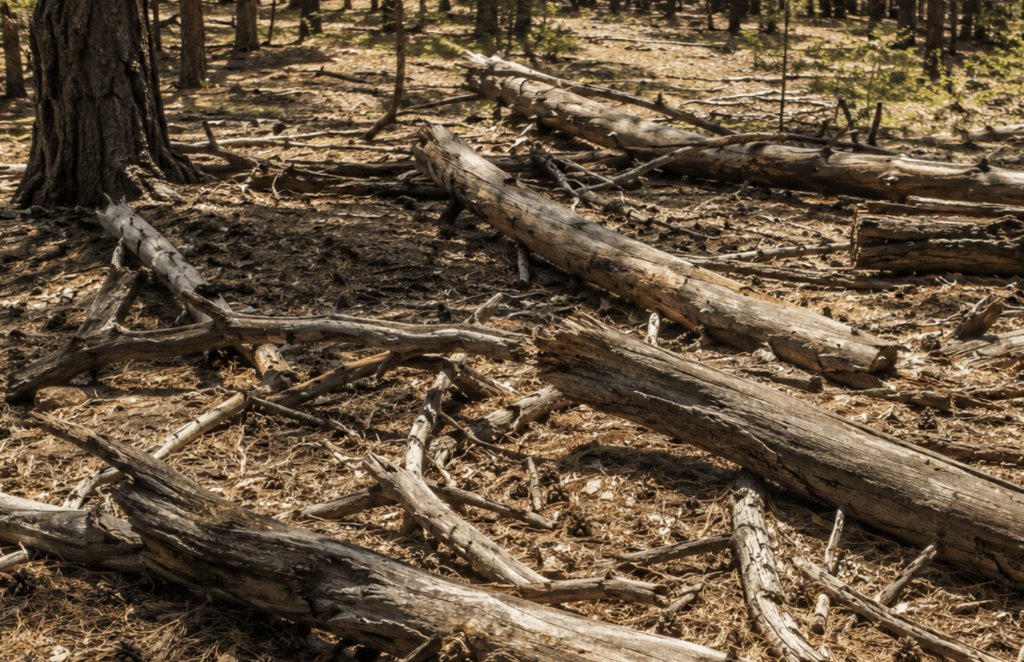
The Ready to Burn requirement remains essential
In England, firewood sold in volumes of less than two cubic metres must be certified as Ready to Burn, confirming a moisture content of 20% or less. Larger-volume suppliers must provide customers with information explaining how to dry the wood and when it will be suitable for burning. The specific sales requirement does not currently apply in the same way in Scotland, Wales or Northern Ireland. Nevertheless, the 20% moisture threshold remains sound practice wherever a stove is used.
This distinction will become increasingly important if more salvage wood reaches the consumer market. Descriptions such as seasoned, part-seasoned, forest-dried or naturally dried by fire, are not substitutes for a measured moisture content.
A log is either dry enough to burn or it is not.
Will firewood prices rise?
There is no reliable basis for predicting one uniform UK price movement. Wildfire creates several opposing pressures.
Factors that can push retail prices upward:
1. Loss of productive standing timber
2. Suspended harvesting during high-risk weather
3. Difficult and hazardous salvage operations
4. Additional cleaning, sorting and inspection
5. Greater transport distances
6. Competition for kiln and covered-storage capacity
7. European supply disruption
8. Higher insurance and contractor costs
9. Increased consumer demand at the start of winter
10. A premium for certified, consistently dry fuel
Factors that can reduce the raw timber price:
1. A sudden local volume of salvage material
2. Fire-damaged stems being unsuitable for sawlogs
3. A high proportion of mixed, small or irregular timber
4. Pressure to recover wood before decay progresses
5. Limited buyers capable of processing affected material
These downward pressures do not necessarily result in cheaper retail logs. Raw timber is only one part of the final cost. Cutting, splitting, drying, testing, packaging, storage and delivery may cost as much, or more, when salvage material is involved.
We therefore expect greater price variation rather than a simple national increase. High-quality, traceable and genuinely dry firewood may command a stronger premium, while less consistent mixed loads may appear at lower prices.
What should stove owners do before the coming season?
1. Order early, but avoid panic buying
Customers who rely regularly on their stove should arrange a sensible supply before the first sustained cold spell. Ordering early gives you more time to compare suppliers, inspect the fuel, and dry it further if needed. There is little value in buying more than can be stored properly. A large quantity left exposed to rain can quickly become a poor investment.
Choose a supplier that can answer detailed questions
Before placing an order, ask:
1. Is the wood Ready to Burn certified where required?
2. What moisture-content range should we expect?
3. Where is the moisture measured?
4. Is the load hardwood, softwood or mixed?
5. What is the average log length?
6. Is the stated cubic metre loose-filled or stacked?
7. Has any of the material come from wildfire salvage?
8. If it is salvage wood, how was it cleaned, processed and dried?
9. How has it been stored since drying?
10. Can the supplier provide traceability or certification details?
A reputable supplier should not object to these questions.
2. Test the delivery yourself
A basic moisture meter is one of the most useful accessories a stove owner can have. As mentioned, take logs from different parts of the delivery rather than selecting only the driest-looking pieces from the top. Split each test log immediately before taking the reading. Press the meter into the fresh central face, across the grain, avoiding knots and obviously irregular areas. Testing three or more representative logs provides a much better indication than one reading from an exposed end. If the result is above 20%, set the wood aside to dry. Do not assume that mixing wet logs with dry ones will solve the problem.
Inspect more than the moisture content…
Look for:
1. Excessive loose ash or soil
2. Embedded stones or grit
3. Strong signs of rot
4. Soft or spongy timber
5. Unidentified paint, coatings or preservatives
6. Pieces containing nails, screws or other fittings
7. Excessively large rounds
8. A high proportion of unusably small fragments
9. Mould caused by poor storage
10. Packaging that has trapped condensation
Some surface cracks, bark loss or light charring may be acceptable. The overall load should still consist of clean, solid and usable logs.
3. Store the wood correctly
Our recommended principles remain straightforward:
1. Raise logs off the ground.
2. Protect them from direct rain.
3. Leave the sides sufficiently open for air to circulate.
4. Avoid wrapping an outdoor stack completely in plastic.
5. Stack loosely enough for air movement.
6. Keep vegetation away from the store.
7. Rotate stock so older fuel is used first.
8. Recheck moisture after prolonged wet weather.
9. Bring only a modest quantity indoors at one time.
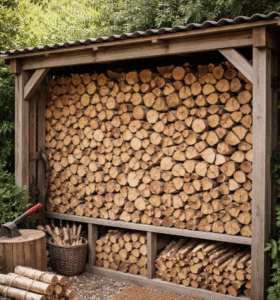
A covered store with an overhanging roof and ventilated sides is usually far better than a sealed container where condensation can build.

4. Do not collect wood from a burned site without permission
A burned woodland is not public firewood.
Trees and fallen timber remain the property of the landowner. Woodland may also be closed because of unstable trees, hidden hotspots, ecological damage or active recovery work. Felling and timber movement may require licences, permissions or plant-health controls. In England, Forestry Commission guidance confirms that felling normally requires permission and that licences provide evidence of legally felled timber entering the market.
Unauthorised collection can be dangerous, environmentally damaging and unlawful. Prepare the appliance as carefully as the fuel
5. Before regular seasonal use:
1. Arrange for the chimney to be swept.
2. Check the door rope seals and firebricks.
3. Make sure air controls move freely.
4. Remove accumulated ash in accordance with the appliance instructions.
5. Test the carbon monoxide alarm.
6. Review the lighting and refuelling guidance for the specific stove.
7. Confirm that the fuel type is permitted for the appliance.
In an English smoke control area, wood may only be burned in an appropriately exempt appliance, following the manufacturer’s fuel instructions. Local requirements should always be checked because smoke-control arrangements differ across the UK.
Beyond this stove season: the longer-term effect on UK firewood
The most significant consequences of wildfire may not appear this winter. They may emerge over the following decade. Productive timber can take years to replace. A mature tree represents years, or decades, of accumulated growth. If a productive woodland area is killed, replanting does not immediately restore the lost volume. Young plantations can be particularly vulnerable because their crowns are close to ground vegetation and they may not yet have developed thick protective bark. A fire that destroys young trees can remove a future harvest before it has produced usable timber.
This creates a delayed supply effect. Current log stocks may be adequate, but the thinning, coppice or harvest expected several years later may no longer exist. Future woodlands may contain a different mix of species. Woodland planners are increasingly considering species diversity, drought tolerance, pest resistance, forest structure and fire behaviour when planning new woodland.
That may gradually change the firewood reaching the market. Customers used to one traditional hardwood may encounter more mixed native species, faster-growing coppice wood or responsibly sourced softwood. This should not be viewed negatively. A resilient fuel market should be able to use a range of suitable species, provided the logs are clean, dry, and correctly processed.
Active management can support both resilience and fuel supply
Reducing wildfire risk does not necessarily mean removing all vegetation or deadwood. It means managing fuel loads intelligently. Forest Research guidance highlights measures such as firebreaks, access routes, vegetation management, species selection, contingency planning and the targeted handling of brash and dead material. These measures can reduce the probability that a small ignition becomes a severe forest fire.
Thinning, coppicing and selective management may also produce useful lower-grade timber for woodfuel. This creates the potential for fire prevention and sustainable firewood production to support one another. However, not every dead tree should be removed. Deadwood is important for fungi, insects, birds, soil formation and nutrient cycling. Up to a fifth of woodland species depend on dead or dying trees for at least part of their lifecycle.
Local supply chains may become more valuable
Shorter, transparent supply chains make it easier to understand where wood originated, how it was harvested and how it was dried. Local does not automatically mean sustainable, however, and imported does not automatically mean poor quality. Nevertheless, strong regional networks of woodland owners, processors, installers and customers can improve resilience when one part of the wider market is disrupted. Our previous guidance on sustainable firewood explains how coppiced woodlands, selective thinning and responsibly managed plantations can provide renewable supplies while maintaining woodland health.
Our outlook for the coming stove season
We do not believe wildfire headlines in the press should cause stove owners to panic or assume that suitable firewood will disappear.
The more realistic expectation is:
1. Some regional suppliers may experience delays or reduced choice.
2. Dependable dry logs may sell earlier in the season.
3. More mixed-species and salvage-derived wood may enter the market.
4. Quality differences between suppliers may become more noticeable.
5. Imported supply may remain exposed to European weather and transport disruption.
6. Certified and carefully stored fuel may carry a stronger premium.
7. Moisture testing and supplier traceability will become increasingly important.
For customers, the best response is straightforward: order in good time, buy from a reputable source, measure the fuel and store it properly.
For the industry, the priority should be equally clear: recover useful timber responsibly, never confuse fire exposure with proper drying and maintain the quality standards modern stoves require.
A well-designed wood-burning stove is engineered to deliver efficient, controllable heat. It should not be expected to compensate for wet, contaminated or poorly processed fuel.
View our range of Ecodesign wood-burning stoves here
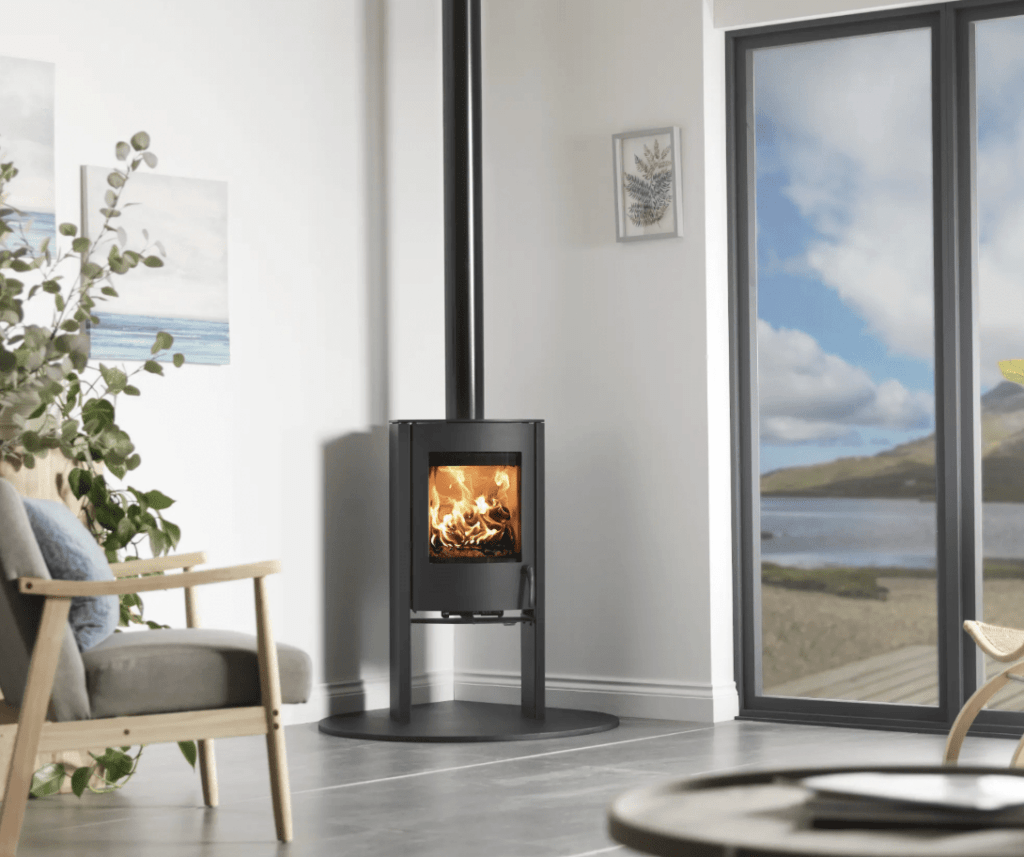
Our Go Eco Circulus Wood-Burning Stove: