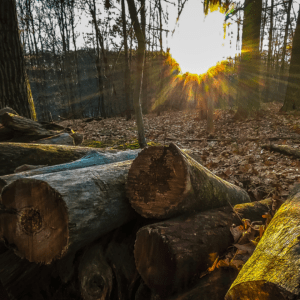
The countryside currently looks very dry across large parts of the UK. Lawns are fading, soils are hardening, river levels are falling, and woodland paths that would normally require sturdy boots can be crossed in trainers without immediately disappearing into the mud.
For anyone who owns a wood-burning stove, this may appear to be great news for the winter log supply. Surely all this hot, dry weather must mean more dry wood, easier collection and beautifully seasoned logs ready for October?
Up to a point…
Dry weather can be very useful when preparing firewood. It can improve access, increase natural drying and give stove owners a great opportunity to sort out their log stores. However, a prolonged dry spell can also stress and kill trees, increase wildfire risk, interrupt forestry work, worsen pest and disease problems and reduce the amount of timber that woodlands produce in future years.
Currently in the UK, the dry conditions are significant but uneven. The Environment Agency reported that England had received only 3% of its long-term average July rainfall by 21 July. River flows were below normal or lower at 84% of monitored sites, while soil moisture deficits had reached record levels for the time of year in several regions. A number of areas were classified as being in prolonged dry weather, although none was formally classified as being in drought in the latest report.
Across the wider UK, conditions vary considerably. By the middle of July, England and Wales had each received approximately 34% of their average summer rainfall, while parts of northern and western Scotland had been considerably wetter. The Met Office’s latest outlook at the end of July continued to forecast dry, fine and increasingly warm weather for many areas, particularly in England and Wales.
So, what does the current dry spell mean for sourcing firewood? More importantly, if hotter, drier summers become more common, will collecting logs become easier or harder?
The honest answer is both…
First, Dry Weather Does Not Automatically Mean Dry Firewood
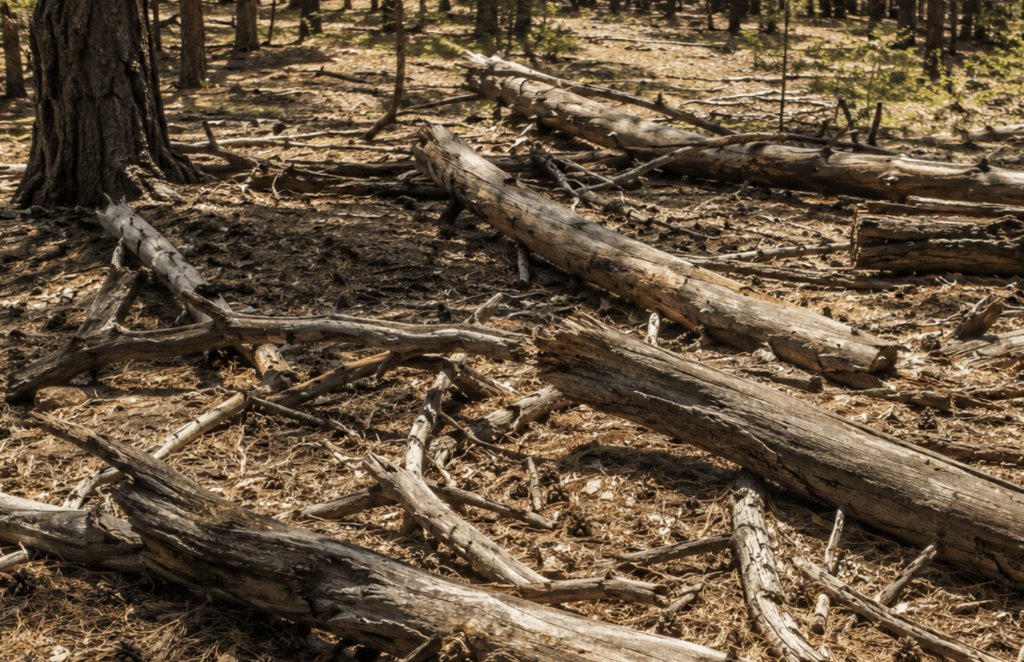
The most important point is also one of the easiest to misunderstand: a dry woodland is not the same thing as dry firewood.
A branch lying on sun-baked ground may look thoroughly dry on the outside while still containing a great deal of moisture inside. A freshly felled tree can contain around 50% moisture, sometimes more, depending on the species and the time of year it was cut. Even species such as ash, which may contain less water when freshly felled than oak, poplar or spruce, still require drying before they are suitable for a stove.
A week or two of strong sunshine may dry the bark and end grain, but it will not necessarily remove the moisture held deep within a large round log. That requires time, airflow and, usually, splitting.
For a domestic stove, the target is a moisture content of 20% or less, but ideally no lower than 15%. Moisture should ideally be checked by splitting a sample log and placing a calibrated moisture meter against the newly exposed inner face. Testing only the dry outer surface can produce a misleadingly low reading.
The weather can assist the drying process, but it cannot remove the need for time-based seasoning.
Dry Summers Can Create a Better Seasoning Window
One clear advantage of a warm, dry summer is that it provides favourable conditions for air-seasoning firewood. Heat encourages evaporation, while moving air carries moisture away from the surface of the logs. Long daylight hours also give the stack more time to warm up, particularly when it is positioned in a sunny, exposed location.
This can be especially helpful if you have purchased green wood in bulk or have legally sourced timber elsewhere. Logs processed in late spring or early summer can benefit from several months of relatively favourable drying conditions before autumn.
However, airflow is at least as important as sunshine. Logs should be:
1. Cut to the correct length for the stove
2. Split, particularly when they are more than approximately 10–15cm in diameter
3. Raised above the ground
4. Stacked loosely enough for air to pass through
5. Exposed to the prevailing breeze
6. Protected from rain from above
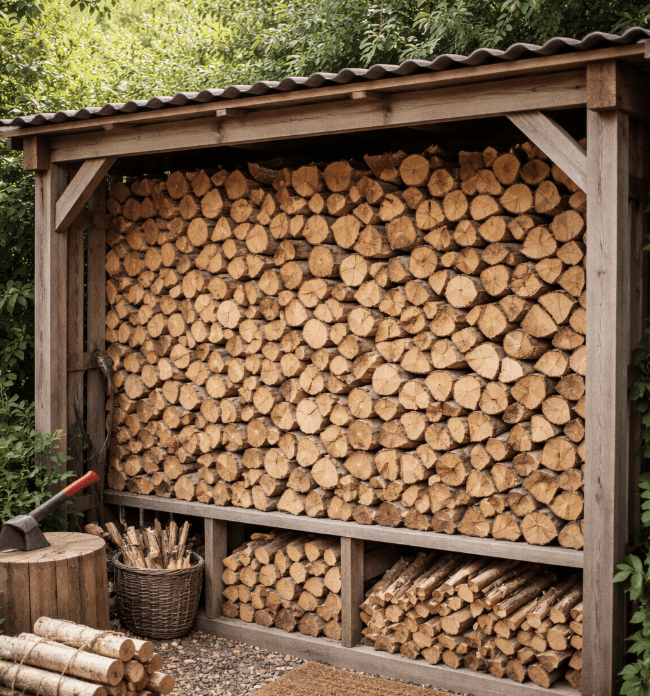
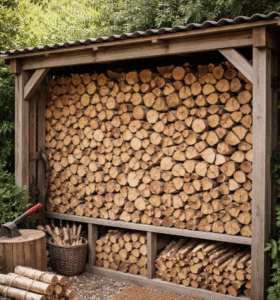
We recommend stacking wood on bearers with the cut ends exposed, and airflow kept unobstructed. HETAS similarly advises splitting and stacking logs promptly rather than leaving newly felled wood in a heap on the ground, where mould, insects and decay may become a problem.
A good log store should have a roof over the top, but open or well-ventilated sides. Wrapping the entire stack tightly in plastic may keep rain out, but it can also trap moisture inside.
The benefit of a dry summer is real, but it should be viewed as a useful head start rather than a shortcut. Depending on the species, log size and initial moisture content, passive seasoning commonly takes between 12 and 24 months. Dense hardwoods such as oak may need around two years.
Harder Ground Can Make Extraction and Delivery Easier
Anyone who has watched a vehicle navigate a wet forest in winter will understand the appeal of hard, dry ground. Dry conditions can make it easier for woodland owners, contractors and private individuals to:
1. Reach timber stacks
2. Use extraction tracks
3. Operate vehicles without becoming bogged down
4. Reduce rutting and soil disturbance
5. Move logs to roadside collection points
This can be a genuine benefit, particularly on heavy soils and sites that are difficult to access in winter.
Wet ground is vulnerable to compaction and damage from heavy machinery, and official woodland guidance advises avoiding heavy equipment on waterlogged ground where possible. Climate projections suggest that UK winters are likely to become warmer and wetter, which may make winter access increasingly difficult on some sites.
A longer dry-weather operating window could therefore help move firewood more efficiently over a longer period.
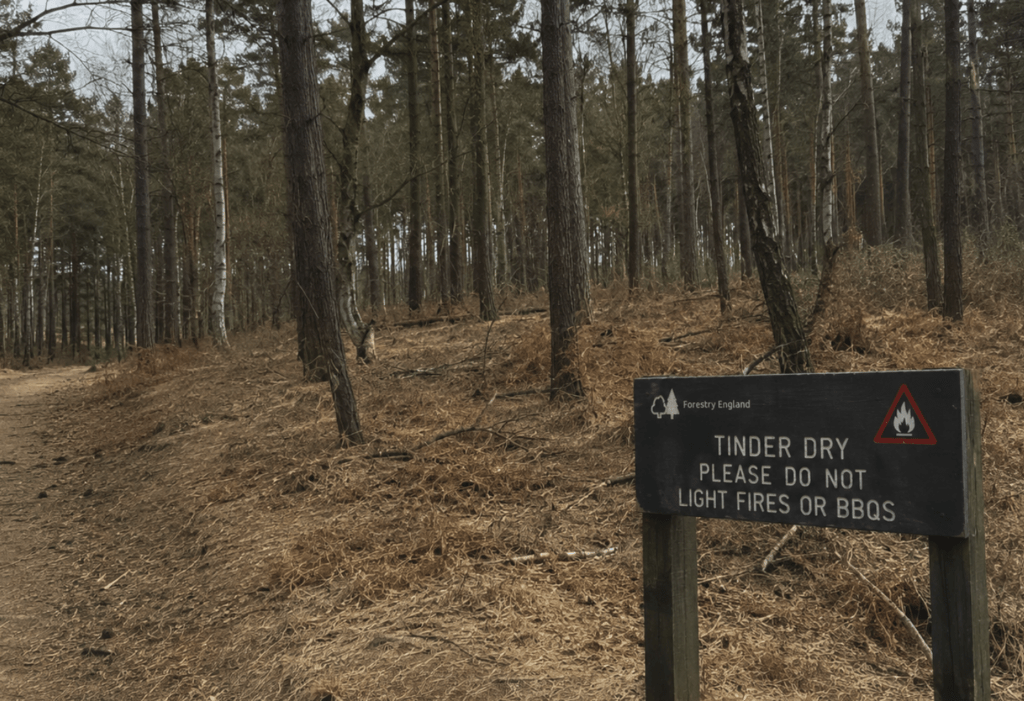
There is, however, a big catch. Once conditions become extremely dry, the advantage can disappear. Forestry operations may have to be restricted or postponed because machinery, vehicles and cutting equipment can create heat or sparks. Woodland operations should be timed to avoid periods of high wildfire risk where possible. The wildfires in France and Spain are good examples of how terrifying and destructive wildfires can be. Although a private individual legally sourcing firewood may not be using large machinery, they should still take note, as even chainsaws will cause heat and possibly sparks.
Dry ground may make the track easier to use, but if the surrounding vegetation is tinder-dry, the safest forestry vehicle may be the one that remains parked.
Some Woodlands Could Produce More Timber
Climate change will not affect every UK woodland in the same way. In cooler and wetter parts of the country, warmer temperatures and a longer growing season could increase tree growth, provided that water and nutrients remain available. Forest Research has identified the potential for increased productivity in some northern and western upland forests, particularly where moisture is not limiting.
This could have several positive effects on future firewood supplies:
1. Trees may reach thinning size sooner
2. Managed woodland may produce more low-grade timber
3. Coppice regrowth may accelerate on suitable sites
4. Forestry businesses may have more residues available for woodfuel
5. A broader range of tree species may become commercially viable
Increased growth is most likely where the site remains sufficiently moist. A longer growing season is of limited benefit if the trees spend much of it short of water. The likely result is greater regional variation. Cooler, wetter parts of northern and western areas could experience improved growth in certain species and locations, while parts of southern and eastern England may experience increasingly severe water stress.
The future firewood map may therefore become less uniform. One region could have healthy growth and reliable thinning material while another experiences declining yields and drought-related losses.
Drought Can Temporarily Put More Wood on the Market
A prolonged dry spell can create more dead, damaged or declining trees. These may need to be removed for public safety, particularly beside roads, buildings, car parks, footpaths and other well-used areas.
Some of that timber can be processed into firewood. This can create a temporary increase in local supply through:
1. Council tree works
2. Highway maintenance
3. Estate management
4. Arboricultural work
5. Woodland safety operations
6. Removal of diseased or structurally unsound trees
Drought can also cause stem cracking and reduce the commercial quality of timber. Wood that is no longer suitable for furniture, joinery or construction may instead enter the woodfuel market.
This is one of the positive effects from a firewood buyer’s perspective, but it is not a genuinely positive outcome for the woodland. It represents the conversion of damaged trees into usable fuel, not an improvement in the health or productivity of the forest. It is also usually temporary. A sudden volume of wood from tree removals may increase supply for a season or two, but once those trees are gone, they are no longer growing, storing carbon, supporting wildlife or producing future timber.
More dead trees can mean more firewood today and less firewood tomorrow.
Repeated Drought Can Reduce Future Firewood Production
The more serious long-term effect of hotter, drier summers is reduced tree growth. Trees lose water through their leaves. During dry weather, many species close the tiny pores in their leaves to conserve moisture. This reduces water loss but also slows photosynthesis and growth. If drought continues, trees may suffer crown dieback, branch loss, root damage or death.
Forest Research identifies several effects of drought on UK trees and woodlands:
1. Reduced growth and productivity
2. Greater vulnerability to pests and disease
3. Increased tree mortality
4. Lower carbon sequestration
5. Stem cracking and reduced timber value
6. Increased windthrow risk
7. Greater wildfire risk
The effects can also be cumulative. A tree that survives one dry summer may enter the following year with reduced reserves. Repeated droughts can produce growth reductions and decline several years after the original event. Southern England is expected to face the greatest overall drought risk.
For firewood users, this could eventually mean:
1. Lower volumes from local managed woods
2. More variable log sizes and species
3. Greater competition for suitable wood
4. Longer transport distances
5. Higher production costs
6. More volatile prices
It does not necessarily mean that the UK will run out of firewood. Woodland managers can adapt by changing species, adjusting thinning practices, improving soil and water management and creating more diverse stands (groups of trees in an area). Nevertheless, a woodland under repeated water stress cannot be expected to produce fuel at the same rate as a healthy, actively growing one.
Tree Disease May Create a Short-Term Supply and a Long-Term Shortage
Climate change can also affect the pests and diseases that attack trees.
Warmer temperatures may allow some insect pests to remain active for longer, produce more generations in a year or expand into areas that were previously too cold. At the same time, drought-stressed trees are often less able to resist attack.
Changing temperature and moisture patterns are likely to increase risks from several groups of tree pathogens. Hotter, drier summers can weaken trees, while warmer or wetter periods at other times of year may help some diseases survive, spread or infect new hosts.
Ash dieback, shown in the photo below, demonstrates how this can affect firewood supply;
Ash accounts for approximately 11% of Britain’s broadleaved woodland and is under severe threat from ash dieback. Safety felling and woodland management can produce significant amounts of ash timber, some of which may be sold as firewood once properly processed and seasoned. That can give the impression that ash is becoming more plentiful. In reality, much of this supply is arriving because the standing resource is declining.
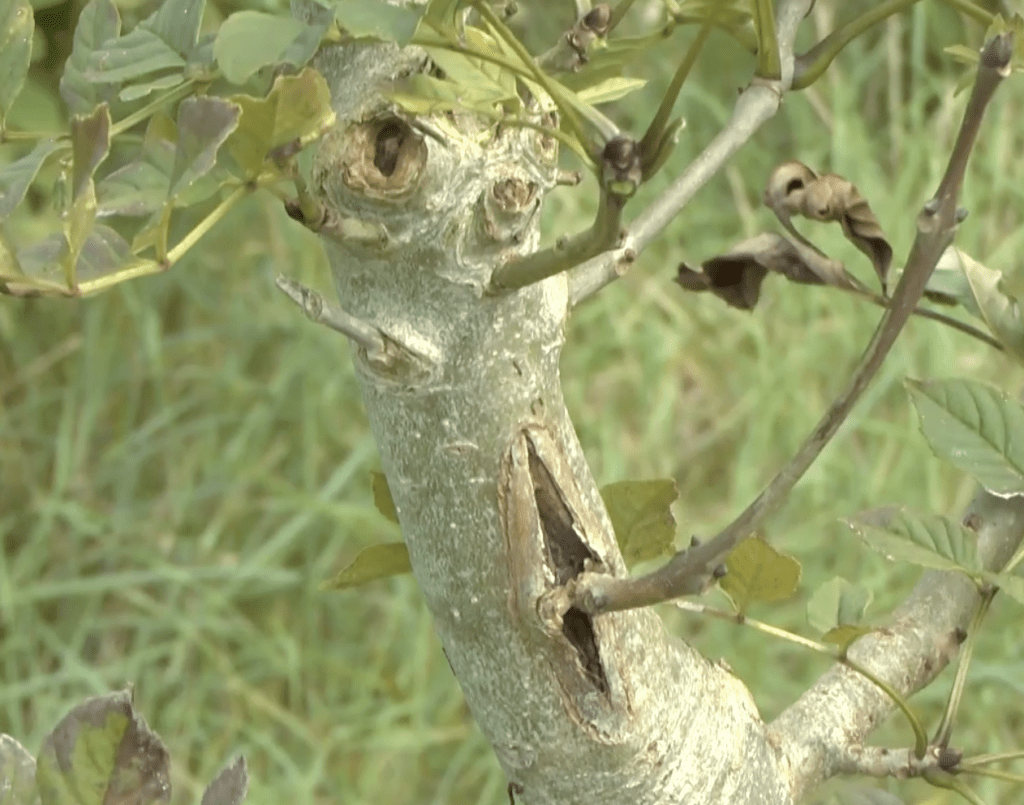
Responsible management does not mean removing every infected ash. Forest Research advises retaining living trees where it is safe to do so because some may possess useful tolerance or recover. Deadwood should also be retained in suitable quantities because it provides valuable habitat.
There are also occasions when diseased wood should not be taken for fuel. For example, Forest Research advises that sycamore infected with sooty bark disease should not be retained for firewood because of the fungal spore hazard. Movement restrictions can apply to timber affected by certain regulated pests and diseases. Do not assume that any dead or diseased tree is automatically safe, legal or sensible to turn into logs. Seek advice from the landowner, arborist or woodland manager.
Wildfire Could Become a Major Firewood-Supply Problem
The irony of a very dry summer is that it can make future winter fuel more difficult to obtain. Climate change is expected to produce warmer, drier spring and summer conditions and more frequent or prolonged droughts. These conditions do not start fires by themselves, but they allow vegetation to ignite more easily and fires to spread more rapidly once an ignition occurs.
Forest Research, drawing on the UK Climate Change Risk Assessment, states that wildfire risk could approximately double in a world that is 2°C warmer and quadruple at 4°C of global warming.
A woodland fire can affect firewood supply in several ways:
1. Destroying standing timber
2. Damaging stored logs and equipment
3. Closing forests and access roads
4. Interrupting harvesting and deliveries
5. Making trees unstable and dangerous
6. Increasing insurance and management costs
7. Damaging soils needed for future tree growth
8. Reducing biodiversity and natural regeneration
Fire can also consume the organic matter in woodland soils. On peat, it may continue smouldering underground and reignite after appearing to have been extinguished.
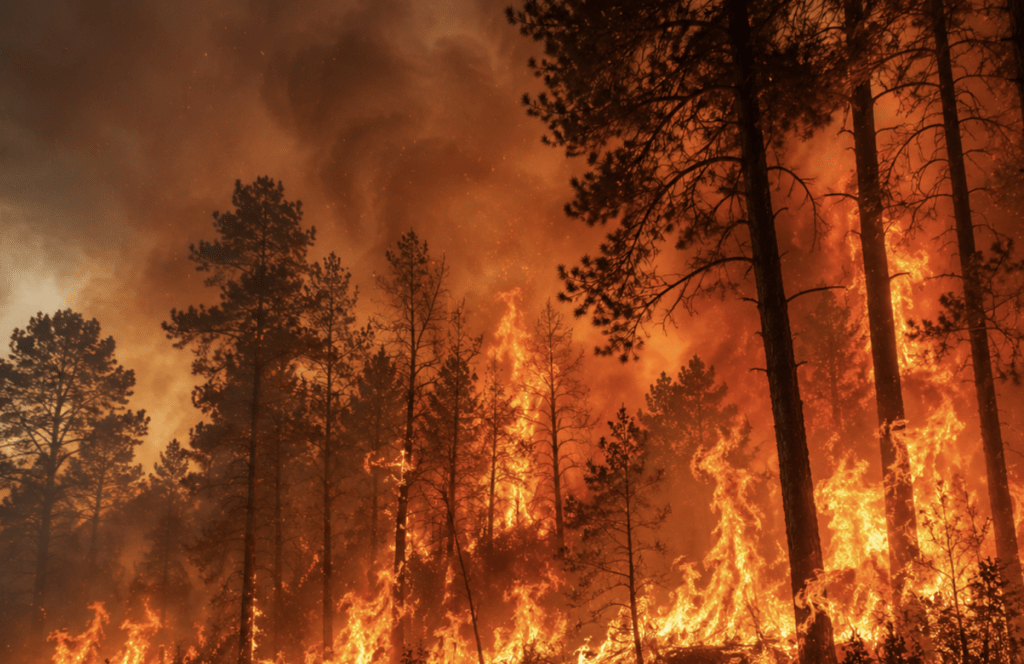
During the current dry spell, official advice has repeatedly warned against campfires, barbecues and bonfires in or near dry woodland, heath and grassland. The Met Office Fire Severity Index is used by authorities to assess how severe a wildfire could become and, in exceptional conditions, can inform temporary restrictions on open-access land.
For anyone sourcing their own wood, this means paying close attention to:
1. Local wildfire warnings
2. Temporary woodland closures
3. Restrictions imposed by landowners
4. Use of vehicles or powered equipment
5. Smoking and naked flames
6. Hot exhausts near dry vegetation
7. Safe storage of fuel and machinery
Fire and rescue services continue to deal with wildfires started by human activity.
Wetter Winters Could Undo Some of Summer’s ‘Good’ Work
UK climate projections point not simply towards drier weather, but towards a more seasonal pattern: generally hotter, drier summers and warmer, wetter winters, combined with more extreme events.
Under a high-emissions scenario, the Met Office projects that by 2070 UK summers could be between 1°C and 6°C warmer and up to 60% drier, while winters could be between 1°C and 4.5°C warmer and up to 30% wetter. These are scenario-based projections rather than a precise forecast for every place and year.
This creates an awkward cycle for firewood:
1. Summer weather may help logs dry
2. Autumn storms may soak poorly protected stacks
3. Wet winter ground may prevent woodland extraction
4. Mild, damp air may allow stored wood to reabsorb moisture
5. A sudden cold spell may then create an immediate spike in demand
Even wood that was originally sold as Ready to Burn can become wet again if it is badly stored. Suppliers are required to protect certified fuel from moisture, and householders should do the same once it has been delivered. A stack that is open to wind-driven winter rain may lose much of the advantage gained during July and August.
The Mix of Firewood May Change
Many buyers ask for hardwood logs, often expecting oak, ash or beech. In a changing climate, the mixture of species available locally may gradually change.
Woodland managers are increasingly being encouraged to diversify forests and choose species and provenances suited to future conditions. Mixed stands can help spread the risk: if one species performs badly during a drought or becomes vulnerable to a disease, others may remain healthy.

For stove owners, this could mean becoming more flexible. Dry softwood is not automatically a poor choice. Softwoods are generally less dense, so a log may burn more quickly and provide less heat by volume than a dense hardwood log. However, they can be easy to light, useful for kindling and perfectly suitable when dry, clean and approved for the appliance. Softwoods can also have a slightly higher calorific value by weight because of their lignin content.
The key qualities are:
1. Suitable moisture content
2. Clean, untreated material
3. Correct log size
4. Compatibility with the appliance
5. Responsible and legal sourcing
A well-seasoned mixed load from a nearby managed woodland may be a more sensible purchase than a hardwood transported a very long distance. As climate conditions alter the species grown in different regions, judging firewood by performance and moisture may become more useful than insisting on one familiar tree species.
Local, Managed Supply Chains Will Become More Valuable
The strongest response to a less predictable climate is not to collect as much wood as possible whenever the sun appears. It is to develop reliable relationships with people who manage, process and supply wood properly.
Local suppliers, woodland owners, estates, farmers and arborists can turn lower-grade timber and management residues into useful fuel. When this is done within a proper woodland management system, firewood income can, among other things, contribute towards thinning overcrowded stands, maintaining tracks and access, managing dangerous trees, and controlling invasive vegetation.
This is likely to become more important as climate change increases the need for woodland adaptation. Firebreaks may need to be maintained, diseased trees may require attention, stands may need thinning and some sites may need to be replanted with a more resilient mixture of species.
Those operations can produce useful woodfuel, but they must be balanced against soil protection, wildlife needs and the retention of appropriate deadwood habitat. Forest Research specifically notes that deadwood is an important part of a functioning woodland ecosystem, even though it may need to be managed in high-risk wildfire zones.
What Should You Buy During the Current Dry Spell?
For most stove owners, the simplest option remains purchasing properly prepared fuel from a reputable supplier. In England, wood sold in quantities of less than two cubic metres must be certified as Ready to Burn, confirming a moisture content of 20% or less. The logo should be accompanied by the supplier’s details and certification number.
Wood sold in quantities of two cubic metres or more can be supplied for further drying, but the seller must provide information explaining that it is not suitable for immediate use and needs to be seasoned and checked before burning.
Ask the supplier:
1. Is the wood ready to burn now or being sold for seasoning?
2. What moisture content is guaranteed?
3. How is the volume measured?
4. Is it loose-filled, stacked or bagged?
5. What species or mixture is included?
6. Is the wood clean and untreated?
7. Where has it come from?
8. How should it be stored after delivery?
To Conclude: Planning Is More Useful Than Predicting
Nobody can say exactly what the weather will do during every future summer or when the first cold evening will arrive each autumn. What stove owners can do is become less dependent on last-minute decisions.
Buy or source wood legally. Build relationships with reputable local suppliers. Allow realistic seasoning time. Improve storage. Learn to use a moisture meter. Be flexible about species. Do not strip deadwood from woodlands. Pay attention to wildfire warnings and never assume that sun-bleached timber is ready to burn.
Most importantly, purchase and prepare fuel long before it is needed.
The present dry spell is a useful opportunity to inspect the log store, improve ventilation, split any waiting timber and arrange a winter supply. As the UK climate changes, sourcing firewood may become more complicated, but good planning, responsible woodland management and properly dried fuel will remain reassuringly simple principles.
When October eventually arrives, the ideal log is not merely the one that looked driest during July. It is the one that was legally sourced, correctly processed, carefully stored and measured at 20% moisture or less before it went anywhere near the stove.