A modern gas fire should do more than simply warm a room. It should create atmosphere, complement the interior, offer dependable performance and give homeowners confidence every time it is used. That is why glass-fronted gas fires have become such a popular choice for people looking to upgrade an existing fireplace, create a new focal point or enjoy the character of a real flame without the everyday work that comes with solid fuel.
Charlton & Jenrick – Celebrating 40 Years in 2026:
Since 1986, we have been developing gas fire technology that combines efficiency, safety, design flexibility, and realistic flame pictures. We are celebrating 40 years in business this year.
Our 16″ glass-fronted gas fire range is a strong example of how far gas fires have progressed. These appliances can suit everything from traditional chimney breast installations to contemporary hole-in-the-wall designs, and selected balanced flue models make it possible to enjoy a real gas flame even in homes without a chimney.
In this guide, we look at why glass-fronted gas fires are such a practical and attractive choice, explore some of the standout models in our range, and share important gas fire safety advice that every homeowner should keep in mind.

Why choose a glass-fronted gas fire?
Glass-fronted gas fires offer a different experience from older open-fronted fires. The sealed glass panel helps retain more heat in the room while also giving the flame picture a clean, framed appearance. For homeowners, this means a fire that looks refined, performs efficiently, and is easier to live with day-to-day.
One of the biggest benefits is heat retention. Traditional open fires can lose a significant amount of warm air through the chimney. A glass-fronted design reduces that loss, helping the appliance convert more of the gas it uses into useful room heat. This makes it an appealing option for anyone who wants the comfort of a real flame while keeping performance and running costs in mind.
There is also the convenience factor. A gas fire provides warmth at the press of a button or the movement of a control. There is no need to store logs, clean out ash or wait for a fire to establish itself. For busy households, this makes gas a practical heating choice, especially in living rooms, snug rooms, dining spaces and other areas where quick, controllable warmth is appreciated.
Design flexibility is another major advantage. Our glass-fronted gas fires can be styled in a wide range of ways, from classic hearth-mounted looks with trims and frets through to sleek four-sided fascias and contemporary wall installations. Whether a homeowner prefers a traditional fireplace surround or a more architectural finish, there is scope to create a fire that feels right for the property.
A real flame, with modern performance
The appeal of a gas fire is not just about heat. It is about the atmosphere it brings into a room. A carefully designed fireplace can change the whole feel of a living space, especially during the colder months, when a fire becomes a natural gathering point.
Our glass-fronted gas fires are designed to deliver that sense of realism. Depending on the model, homeowners can choose from detailed log fuel beds, glowing ember effects, coal-effect layouts and reflective liners that add depth to the flame display. The result is a fire that can look inviting both when it is on and when it is off.
A modern gas fire also allows more precise control than many traditional heating methods. Instead of building and managing a solid fuel fire, the user can adjust the heat output to suit the room and the moment. This is particularly useful in British homes, where the weather can shift quickly, and a full central heating cycle is not always necessary.
The benefits of balanced flue and conventional flue options
Not every home has the same fireplace setup, which is why installation flexibility matters. Some properties have a traditional chimney or Class 1 flue. Others, particularly modern homes, extensions and renovations, may have no chimney at all.
That is where the choice between conventional flue and balanced flue gas fires becomes important.
A conventional flue gas fire is designed for homes with an existing chimney or suitable flue system. It can be an excellent way to modernise an older fireplace opening while keeping the familiar layout of a hearth or surround. For many homeowners, this is the natural upgrade route from an older gas fire.
A balanced flue gas fire works differently. It is room-sealed and vents directly outside through an external wall. This means selected balanced flue models can be installed in homes without a chimney, opening up many more design possibilities. For new builds, apartments, extensions, and properties where a chimney is unavailable or unsuitable, balanced flue technology can make a real-flame gas fire possible.
Both approaches have their place. The right choice depends on the property, the room, the desired look and the technical requirements of the installation. A qualified Gas Safe registered engineer should always be involved when specifying, installing or servicing any gas appliance.
Our Paragon Core BF Balanced Flue
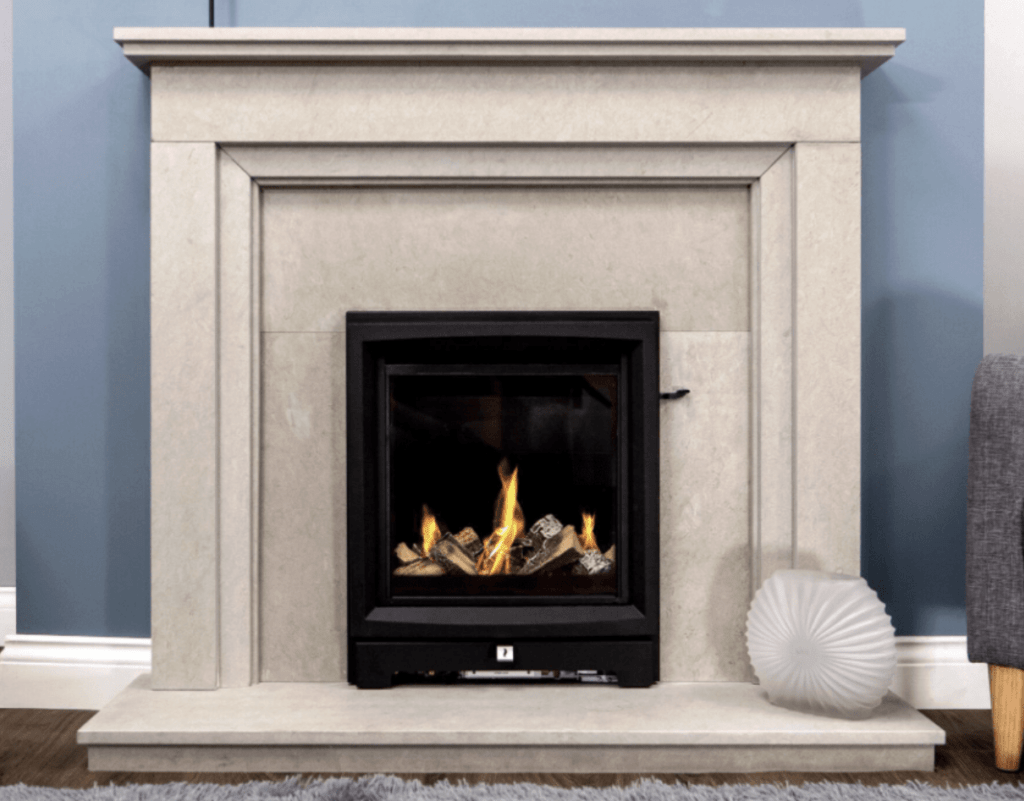
The Paragon Core BF is a balanced flue gas fire designed for homes where a conventional chimney is not available. It is an excellent option for homeowners who want the comfort and appearance of a real gas flame but need a room-sealed appliance that vents directly outside.
One of the key strengths of the Core BF is its combination of realistic flame effect and strong efficiency. The appliance uses our Core burner technology to create a convincing flame picture with glowing embers and a detailed fuel bed. Because it is glass-fronted and balanced flue, it also keeps performance at the centre of the design.
With a heat output suited to everyday living spaces, the Core BF can bring warmth and atmosphere to rooms that may previously have seemed unsuitable for a gas fire. It is especially useful for modern properties, conversions and spaces where an outside wall is available but a chimney is not.
The styling options are also broad. Homeowners can tailor the look with our range of trims, frets and fascias, allowing the same appliance to sit comfortably in either a classic or contemporary setting. For added convenience, control options may include a remote control or manual slide control, depending on the chosen model specification.
For anyone who loves the idea of a traditional inset gas fire but does not have a chimney, the Core BF offers a practical and attractive route forward.
Paragon Core HE (Conventional Flue)
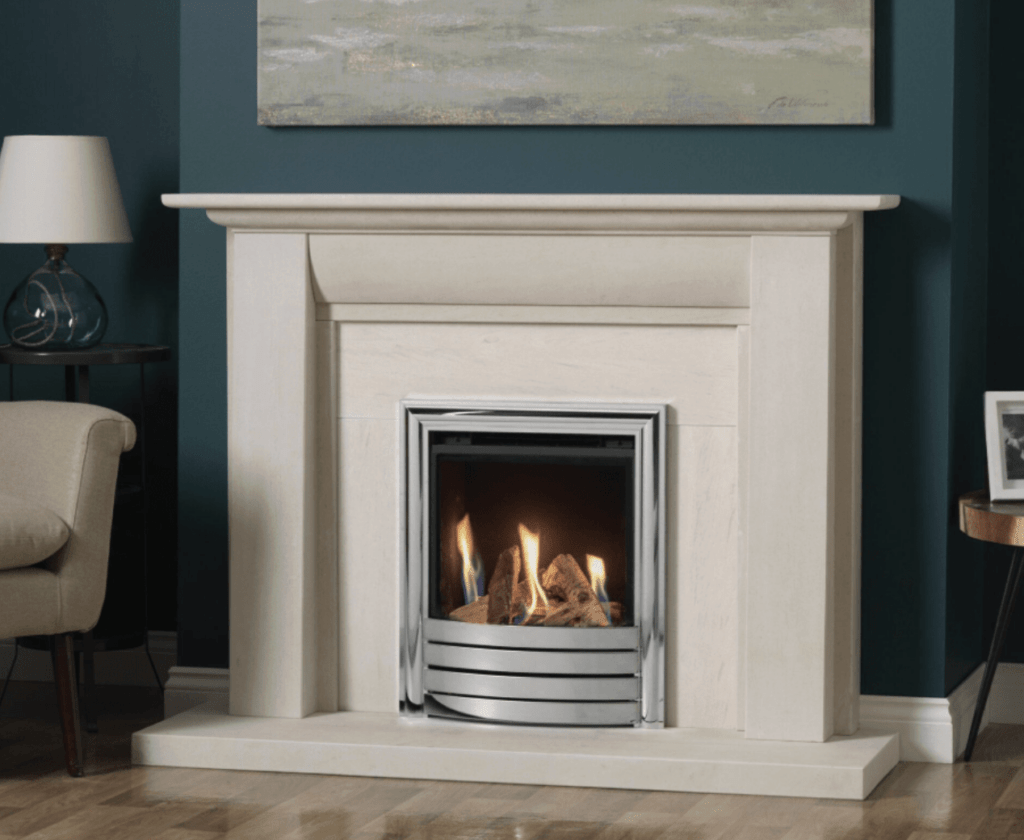
The Paragon Core HE is designed for conventional flue installations and is ideal for homeowners with a suitable chimney or flue. It combines the familiarity of an inset gas fire with the improved performance expected of a modern glass-fronted appliance.
This model is a strong choice for those who want a generous heat output and a realistic flame picture in a classic fireplace setting. The glass-fronted design helps retain heat, while the fuel bed and flame effect create the visual appeal that makes a fireplace feel like the heart of the room.
The Core HE can work especially well as part of a living room refurbishment. It can be styled with a traditional surround and fret for a timeless look, or paired with a more contemporary fascia for a cleaner, updated finish. This flexibility makes it useful for homeowners who want performance without sacrificing the room’s character.
The appliance also offers convenient control options, helping users enjoy warmth without the fuss. Whether it is used as the main focal point on a cold evening or simply to add ambience, the Core HE provides the reliable, controllable comfort modern households expect.
Paragon Focus HE (Conventional Flue)
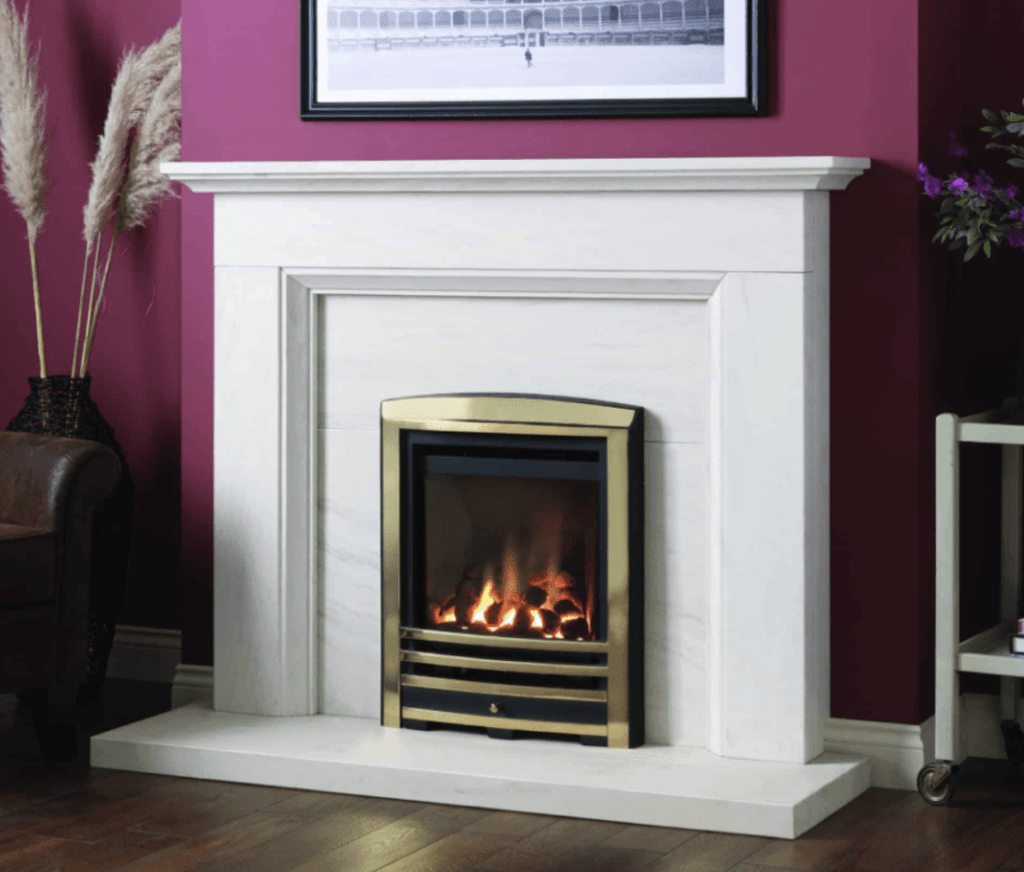
For rooms that need a little more heat, the Paragon Focus HE is a compelling option. This conventional flue gas fire is designed to deliver impressive heat output while maintaining the style and realism homeowners want in a feature fireplace.
A wider glass window gives the Focus HE a broader flame picture, helping the fire feel visually generous within the room. This makes it a particularly good choice for larger living spaces or for homeowners who want the fire to have real presence.
The Focus HE also offers flexibility in appearance. Depending on the desired interior style, homeowners can choose between traditional and modern looks, with fuel bed and trim options that help the fire blend into its surroundings. A coal-effect layout can suit a period-style room, while a log-effect finish can create a softer, more contemporary feel.
Another benefit is that the Focus HE can suit a range of flue situations, making it a versatile replacement option for many existing fireplaces. As with all gas fire installations, the final specification should always be confirmed by a suitably qualified professional.
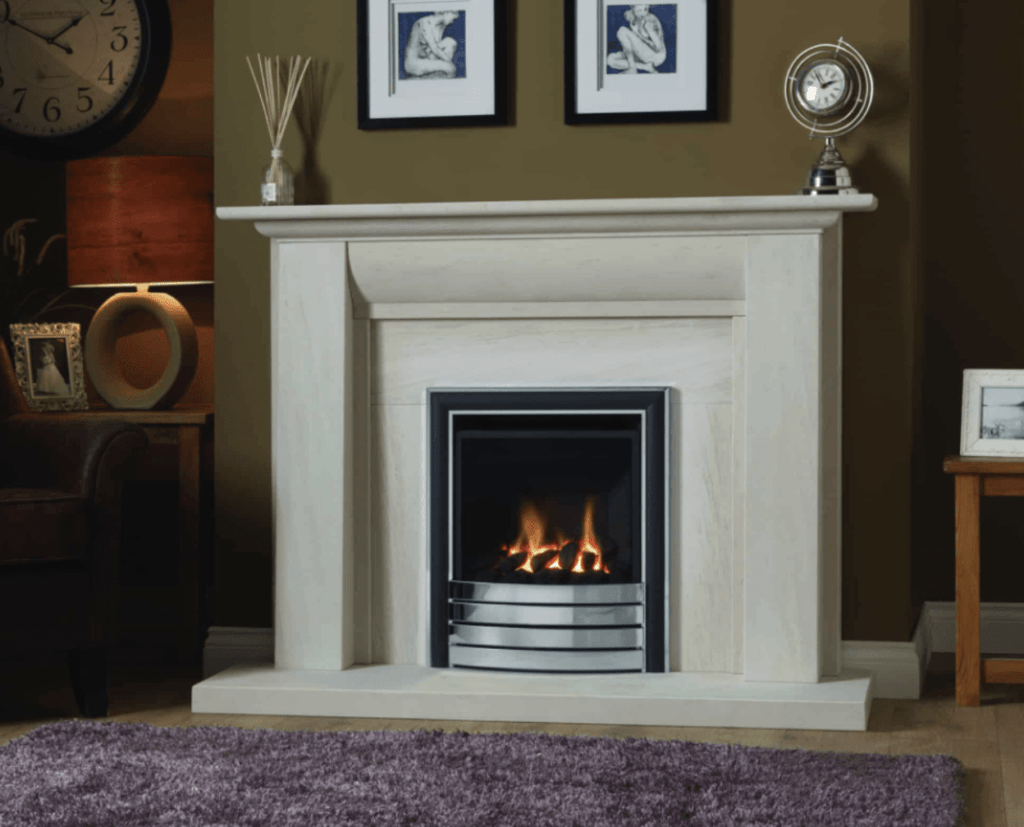
The Paragon Focus RS Plus BF is a balanced flue model designed for homeowners who want a modern appearance, strong performance and exceptional efficiency. Because it is a balanced flue appliance, it can be installed in suitable rooms without a chimney, provided the correct external wall and installation conditions are met.
This model works particularly well in contemporary interiors. It can be installed in a hole-in-the-wall style and paired with sleek fascia options to create a clean, architectural focal point. For homeowners planning a full renovation or building a feature media wall or modern fireplace wall, the Focus RS Plus BF can offer a real flame without the need for a traditional chimney breast.
Performance is one of its standout strengths. The room-sealed balanced-flue design helps achieve impressive efficiency while still delivering the comfort and visual appeal of a gas flame. It is a good example of how modern gas fire engineering can combine warmth, design and energy-conscious performance.
For properties where a chimney is not available, or where the homeowner wants a more minimal and contemporary fireplace, the Focus RS Plus BF is a strong option within our 16″ glass-fronted range.

Gas fires – Key Considerations:
Gas fires continue to appeal because they offer a practical balance of warmth, control and atmosphere. For many households, a gas fire is not intended to replace the entire heating system. Instead, it can provide targeted warmth in the room being used most, such as a lounge or family room.
This can be useful during milder periods when the whole central heating system may not be needed, or on colder evenings when the main living space needs an extra boost. The ability to turn a gas fire on quickly and adjust it easily makes it a convenient part of a wider home heating setup.
Gas also avoids many of the everyday tasks associated with solid fuel. There is no stacking, seasoning or carrying wood. There is no ash to clear after each use. There is no need to build the fire from scratch. Many love doing this of course, but for homeowners who want the look and feel of a flame but prefer lower-maintenance living, gas remains a highly practical choice.
It can also be a helpful option in smoke control areas. While wood burning is subject to specific rules in many parts of the UK, gas fires are not used in the same way and do not require the same fuel storage or solid fuel management.
Future-ready thinking and hydrogen blend readiness
Home heating is changing, and consumers are increasingly interested in products that are designed with the future in mind. As part of our ongoing development, selected Charlton & Jenrick gas appliances have been tested to operate with a 20% hydrogen blend without requiring future upgrades to the appliance.

This does not mean homeowners need to do anything differently today. Rather, it shows how modern gas fire technology is evolving as the energy landscape changes. For customers investing in a new appliance, future-ready design can provide extra confidence.
Efficiency, clean operation, safety testing and installation flexibility are all part of this wider picture. A gas fire is no longer simply a decorative appliance. When chosen correctly and installed properly, it can be a well-engineered part of a comfortable, modern home.
Respect gas: why safety matters
While modern gas fires are designed and tested to high standards, gas must always be treated with respect. A gas fire should be installed, serviced and repaired only by a Gas Safe registered engineer who is qualified to work on that specific type of appliance.
Poorly fitted or badly maintained gas appliances can pose serious risks, including gas leaks, fires, explosions, and carbon monoxide poisoning. Carbon monoxide is particularly dangerous because it cannot be seen, smelled or tasted. This is why regular servicing, proper installation, and functioning alarms are so important.
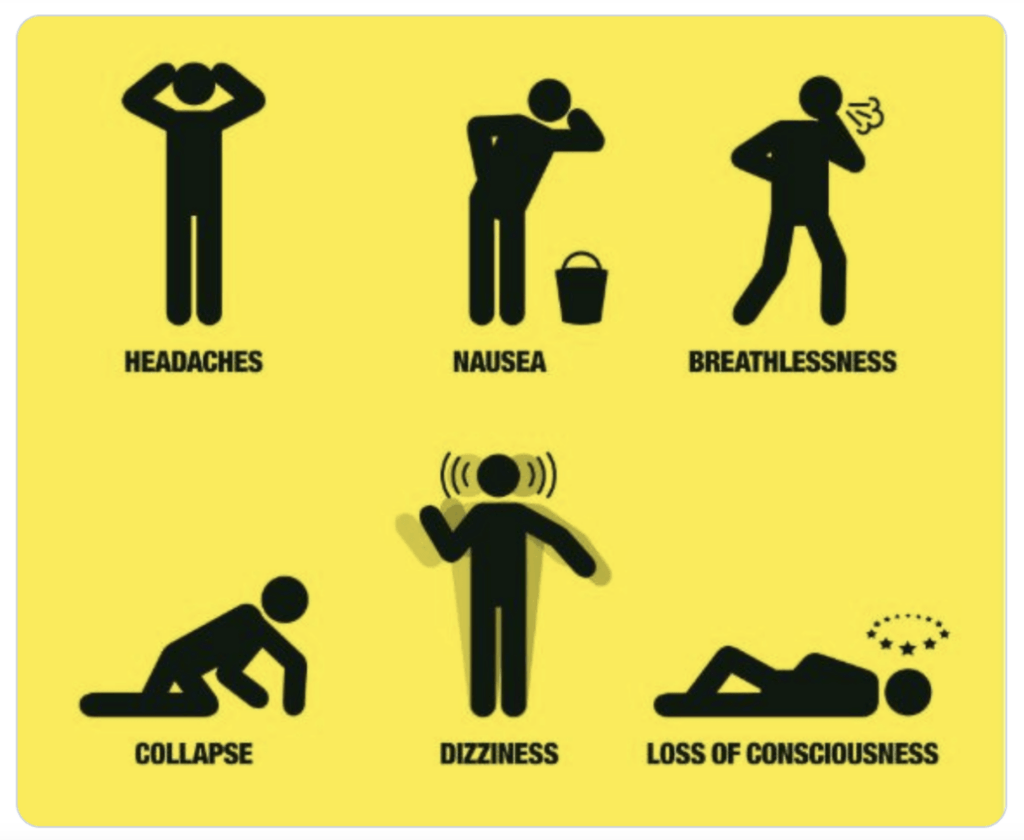
Symptoms of carbon monoxide poisoning:
Homeowners should never attempt to repair, modify or service a gas fire themselves. Even if a problem appears minor, it should be checked by a competent professional. The safest approach is always to stop using the appliance if something seems wrong and arrange an inspection.
Warning signs to look out for
There are several warning signs that can suggest a gas appliance needs attention. A lazy yellow or orange flame, rather than a crisp and stable flame pattern, may indicate incomplete combustion. This can lead to soot, reduced performance and an increased risk of carbon monoxide production.
Soot marks, staining around the appliance, unusual smells, repeated pilot light problems, excessive condensation or a fire that behaves differently from normal should all be taken seriously. A gas fire should operate cleanly and consistently. If it does not, it is time to stop using it and seek professional advice.
Physical symptoms can also be a warning sign. As the image above outlines, headaches, dizziness, nausea, breathlessness, collapse or loss of consciousness can all be associated with carbon monoxide exposure. If symptoms improve when leaving the property and return when going back inside, this should be treated as urgent.
In the event of a suspected gas leak or carbon monoxide issue, the appliance should not be used. Ventilate the area where safe to do so, leave the property if necessary and follow emergency gas safety advice.
Fit and maintain a carbon monoxide alarm
A carbon monoxide alarm is an essential safety measure in any home with fuel-burning appliances. It should be positioned according to the manufacturer’s instructions and tested regularly. When buying an alarm, choose one that meets the appropriate recognised standard and replace it when it reaches the end of its working life.
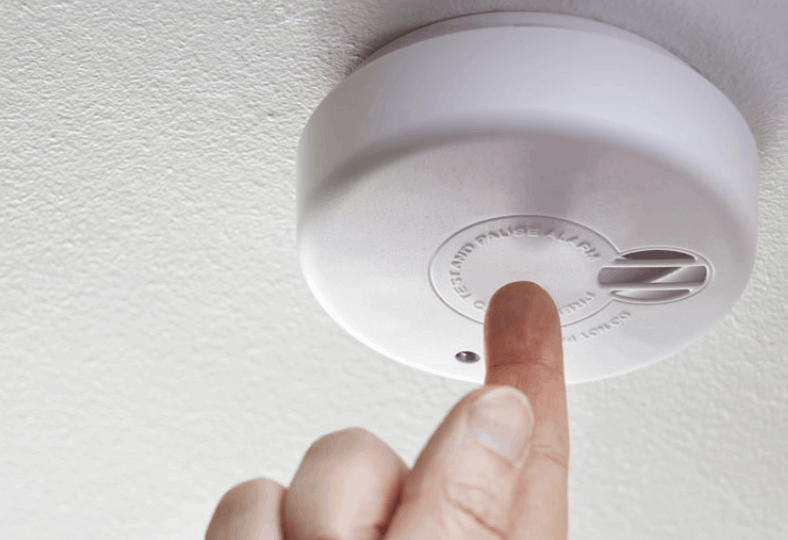
An alarm is not a substitute for servicing, but it provides an important additional layer of protection.
Think of it in the same way as a smoke alarm: it is there to warn you when something may be wrong, but the best protection comes from preventing the problem in the first place.
For landlords, gas safety responsibilities are especially important. Rental properties must meet the relevant legal requirements, and tenants should know when gas appliances have been checked and who to contact if they notice a problem.
Book regular servicing
A gas fire should be serviced regularly by a Gas Safe registered engineer. Regular servicing helps confirm that the appliance is operating correctly, safely and efficiently. It can also help identify wear, blocked components or ventilation issues before they become more serious.
Servicing is particularly important before the main heating season, when a fire may be used more frequently after several months of little or no use. A check at the right time can give homeowners reassurance before winter and help keep the appliance performing as intended.

When booking an engineer, always check that they are Gas Safe registered and qualified for the work required. It is not enough for someone to be generally experienced with heating; they must be registered and competent for the specific appliance and fuel type.
Additional tips include……
Do not block ventilation
Some gas appliances require ventilation to work safely and correctly. Vents are there for a reason and should never be blocked, covered or sealed up to reduce draughts. Blocking ventilation can affect combustion and increase the risk of unsafe operation.
It is understandable that homeowners want to keep rooms warm, especially in winter, but safety must come first. If a room feels draughty or uncomfortable, the solution should be discussed with a qualified professional rather than interfering with ventilation that may be required for the appliance.
Use the appliance only as intended
A gas fire should be used only for its intended purpose: heating the room in accordance with the manufacturer’s instructions. It should not be used to dry clothes, heat objects placed too close to the appliance or operate in a way not described in the user guide.
Furniture, soft furnishings and decorative items should be kept at a safe distance. Children and pets should be supervised around any heating appliance, and a suitable fireguard may be appropriate in some homes.
The user instructions supplied with the appliance should always be retained and followed. They provide important information about safe use, cleaning, ventilation and what to do if a fault is suspected.
Choosing the right Charlton & Jenrick gas fire
The right gas fire depends on several factors: the property, the flue, the room size, the desired heat output, the preferred style and the way the fire will be used.
For homes without a chimney, a balanced-flue model such as the Paragon Core BF or Paragon Focus RS Plus BF may be the best option. These appliances can create a real flame focal point in rooms where a conventional fireplace would not be possible.
For homes with a suitable chimney or flue, conventional flue models such as the Paragon Core HE or Paragon Focus HE can provide an attractive and efficient upgrade to an existing fireplace. They can retain the familiar feel of a classic fireplace while improving performance and controllability.
Style is just as important as specification. Some homeowners want a traditional coal-effect fire with a decorative trim and fret. Others prefer a log-effect fuel bed, reflective liners and a minimal fascia. Our range allows customers to create a look that suits the room rather than forcing the room to suit the appliance.
A better fireplace experience
A glass-fronted gas fire can transform how a room looks, feels and functions. It can provide instant comfort on a cold evening, create a natural focal point and add the visual warmth of a real flame without the daily work of solid fuel.
At Charlton & Jenrick, our approach is to combine design, performance and safety. Our 16″ glass-fronted gas fire range shows what is possible when advanced burner technology, efficient glass-fronted design and flexible installation options are brought together.
Whether you are replacing an older fire, renovating a living space or planning a new focal point from scratch, there is a Charlton & Jenrick gas fire to suit a wide range of homes and interiors.
To explore our 16″ glass-fronted gas fires in more detail, view our range online, download a brochure or visit your nearest Charlton & Jenrick showroom.