The last few years have pushed our climate into a new area, one where record-breaking heat is no longer an occasional occurrence. The headline above is not just that 2025 was hot, but it marks yet another year of high temperatures that have become the norm.
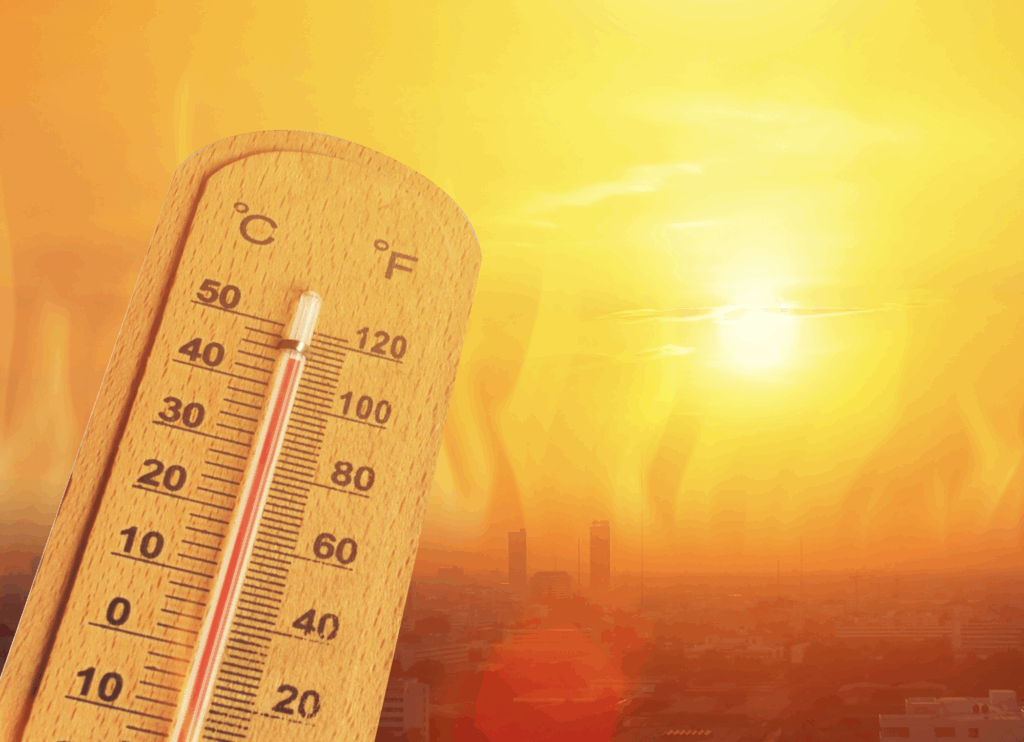
2025 was one of the hottest years ever recorded.
Statistics – Different Sources, Similar Results:
NASA’s annual analysis says the hottest year in its record remains 2024; 2025 was cooler than 2024, and only slightly warmer than 2023. NOAA’s (National Oceanic and Atmospheric Administration) global analysis ranks 2025 as the third-warmest year since records began in 1850. In its dataset, 2025 sits just behind 2024 and 2023, which aligns with NASA’s analysis, and NOAA estimates that 2025 was about 1.34°C above the pre‑industrial (1850–1900) average. It also notes that the 10 warmest years in its record have all occurred since 2015.
The World Meteorological Organisation (WMO), which consolidates multiple datasets, estimates 2025 was about 1.44°C above the 1850–1900 average, so a little higher than what NOAA estimates, and confirms 2023–2025 are the three warmest years across all eight datasets, with a three‑year average around 1.48°C above pre‑industrial levels.
2025 didn’t need to be the single hottest year to be alarming. It was still among the hottest ever measured, and it arrived as part of a multi‑year surge that should indicate how serious climate change is.
The oceans made 2025’s warning more serious
Air temperatures get attention, but what is happening in the ocean is also vital, but often not thought about. NOAA reports that upper-ocean heat content reached a record high in 2025, a critical indicator because the oceans store most of the excess heat in our planet’s system.
WMO similarly stresses that about 90% of excess heat from global warming ends up in the ocean. Warmer oceans expand, which raises sea levels, influences rainfall, and helps set the conditions for more disruptive extremes.
NOAA also reports that 2025’s Arctic sea ice coverage (also known as ‘extent’) was the second-lowest on record, and Antarctic sea ice extent was the third-lowest, a reminder that record heat is intertwined with changes in the cryosphere, whuch is an area of the Earth’s surface, where water is made from snow or ice, and the wider climate system.
Why this is urgent: climate change is an impact amplifier.
A warmer baseline temperature increases the risks that are inherent with ongoing higher temperatures. Heatwaves become more dangerous; droughts occur more quickly; heavy rainfall can intensify as warmer air holds more moisture. WMO (World Meteorological Organisation) notes that high land and ocean temperatures have helped fuel extreme weather in 2025.
So what can households do that’s big enough to matter?
Essentially, lowering your carbon footprint helps. Lowering your carbon footprint works best when you focus on the largest sources first. Home heating is one of them.
A Parliamentary Public Accounts Committee report notes that heating the UK’s 28 million homes accounted for about 18% of UK greenhouse gas emissions in 2021, mainly from burning natural gas.
Globally, heating is also significant: the International Energy Agency says space and water heating account for almost half of global energy use in buildings. That’s why heating upgrades, especially those that reduce the amount of fuel needed for the same comfort, are essential in lowering your carbon footprint.
The climate-smart hierarchy for home heating
1) Use less heat (reduce demand).
Insulation, draught-proofing, sensible thermostat settings, and smart controls cut both bills and emissions. These measures also improve comfort (less draughty, more stable indoor temperatures) and make any heating system, old or new, run more efficiently.
2) Use cleaner heat where feasible (reduce carbon intensity).
Low‑carbon electricity, highly efficient systems (such as heat pumps where suitable), and a cleaner energy supply all reduce the emissions per unit of heat delivered. Even if you can’t make the perfect switch immediately, planning upgrades around natural replacement cycles, such as when a boiler fails, when you renovate a room, is a practical way to keep moving forward.
3) If you use a gas/electric fire or a wood-burning stove, choose high‑efficiency, lower‑emission options.
This is where the appliance you choose, and how you operate it, can make a meaningful difference compared with older, less efficient models. In the UK, domestic inefficient wood burning is under scrutiny for its contribution to PM2.5 levels. Indoor wood burning, mostly on inefficient non-Ecodesign wood-burning stoves and open fires, accounted for 11% of total UK PM2.5 emissions in 2023.
PM2.5 is a public health issue; these fine particles can penetrate deep into the lungs and bloodstream and are linked to conditions including asthma and heart and lung disease. Historically, discussions of air pollution focused on vehicle exhaust and industrial emissions. However, as cleaner car technology and industrial controls have advanced, the relative contribution of home heating, especially burning wood on open fires and burning unseasoned wood, has become more evident. Domestic wood burning on inefficient open fires and burning unseasoned wood has now emerged as a key source of particulate pollution.
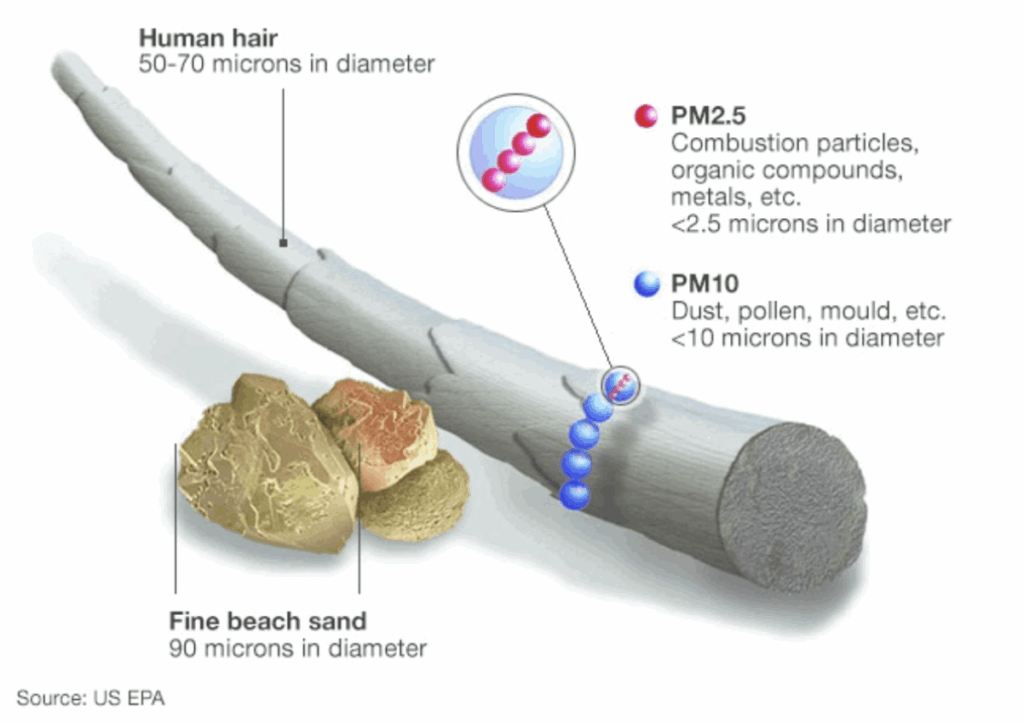
Public health experts emphasise that there is effectively no safe level of PM2.5; even low concentrations can incrementally harm health. This is why governments and the World Health Organisation set strict guidelines for air quality. For example, the WHO recommends an annual average PM2.5 limit of just 5 µg/m³ to minimise health risks. By comparison, the UK’s current legal limit for annual PM2.5 is 25 µg/m³, with plans to tighten it. Reducing fine particle pollution has become a priority for environmental and health policy due to these impacts.
How to make your heating choices genuinely climate-smart
1. Treat electric/gas fires and Ecodesign wood-burning stoves as intelligent and efficient zone heating appliances.
2. Prioritise insulation and controls first, then your next heating upgrade will deliver bigger savings.
3. Choose key performance credentials (Ecodesign, clearSkies, DEFRA exemption where relevant).
If you burn wood: burn dry, burn hot, burn less, and maintain the appliance, because emissions are heavily affected by real-world use.
More about burning wood:

Modern Ecodesign wood-burning stoves are a game-changer for reducing emissions and thus helping tackle climate change on a user-by-user level. Unlike old-fashioned open fires, essentially just a fire in a hearth, or earlier-generation stoves, the latest models are engineered for efficient combustion. They feature improved insulation, airflow design, and secondary burn systems that help ignite the smoke and volatile gases before they exit the flue. The result is more heat extracted from each log and far less particulate matter and smoke released.
The UK’s National Atmospheric Emissions Inventory report in 2025 noted that PM2.5 and PM10 emissions fell by an additional 7–8%, attributing part of this decline to the uptake of cleaner stoves. Upgrading to a modern stove is making a measurable difference in air quality statistics.
One reason wood-burning stoves remain attractive is that wood fuel can be a sustainable, renewable energy source. Unlike natural gas, oil, or coal, which are fossil fuels releasing carbon that was long stored underground, wood is part of the biocarbon cycle. Trees absorb carbon dioxide as they grow; when wood is burned, that CO2 is released, but new trees can take it up again. If managed responsibly, this creates a carbon loop that can be neutral over the span of tree regrowth.
In principle, heating with wood harvested from sustainably managed forests or waste wood has a much lower net greenhouse gas impact than heating with fossil fuels. In fact, UK climate strategy acknowledges biomass, including wood, as a component of renewable energy.