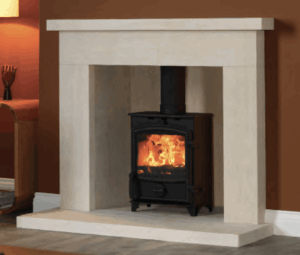
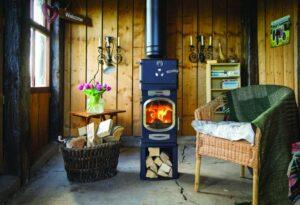
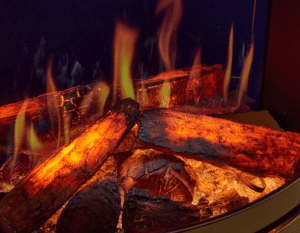
We have looked at the importance of reducing emissions from wood burning in many of our previous articles. This time, we are looking more closely at the air inside the home: what happens when you light your stove, add another log, adjust the controls or clear away the ash.
For anyone using an Ecodesign wood-burning stove, responsible operation starts with understanding the whole installation. The appliance, fuel, chimney and air supply all have a part to play. Good habits can significantly reduce pollution and exposure.
The NHS advice on responsible wood burning
In advice published for Clean Air Night on 17 November 2026, University Hospital Southampton highlights three priorities: maintaining a sufficiently hot fire, choosing dry fuel and keeping the stove clean and maintained. Dr Thomas Cromarty, a consultant in paediatric emergency medicine and paediatrics and a stove owner himself, also mentions that modern Ecodesign stoves produce pollutants which can remain indoors.
The following practical steps explain how to limit pollutants inside your home when using an Ecodesign wood-burning stove.
Understand what Ecodesign means for indoor air
Ecodesign requirements set minimum efficiency standards and limits for appliance emissions, including particulate matter and carbon monoxide, under defined test conditions. For homeowners, compliance describes appliance performance; it does not certify air quality in an individual living room.
Real homes differ in their ventilation, chimney performance, stove condition, fuel and operating habits. Refuelling and ash removal are times when pollution can enter a room, so a good door seal is vital during operation. Test conditions may also differ from conditions in people’s homes.
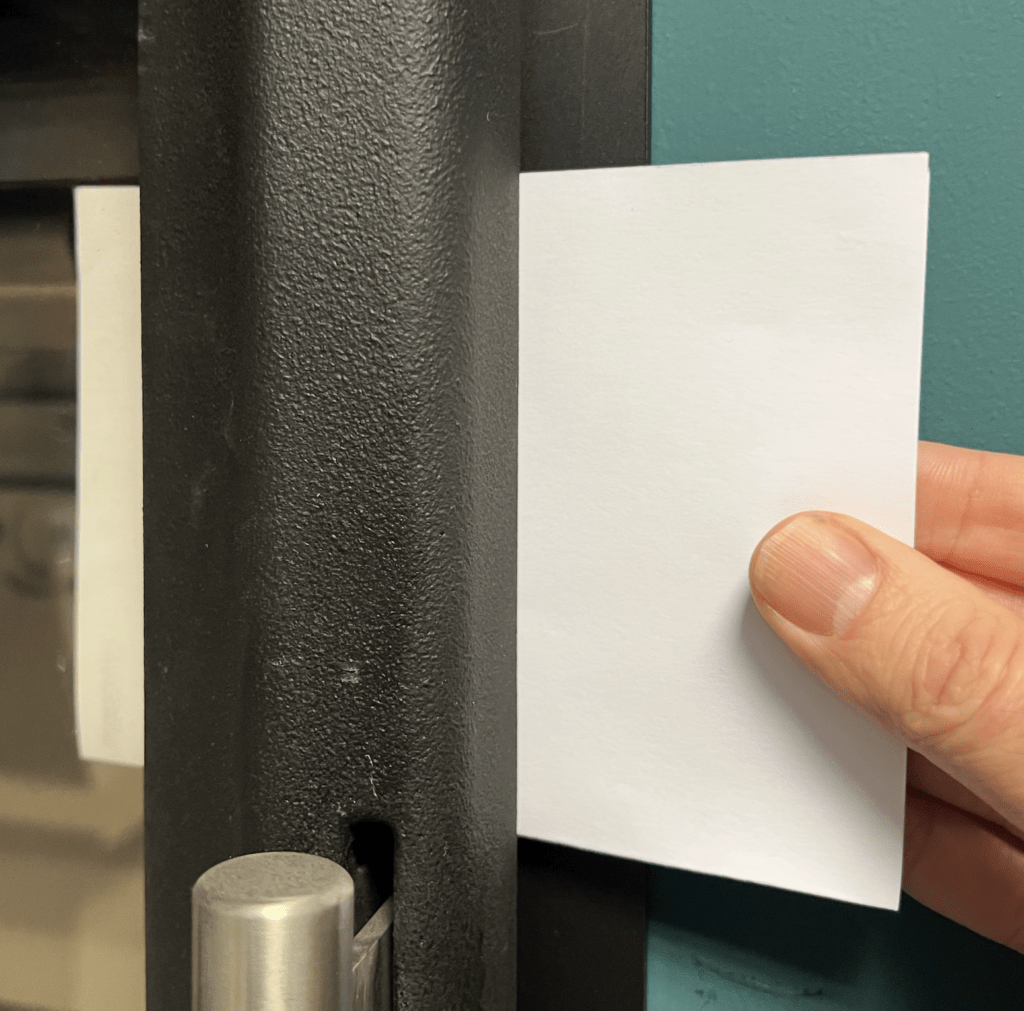
If you’re unsure how good your door seal is, do a simple paper test, as outlined in the picture below. If you can easily pull the paper out once the door is closed, the seal needs attention. Fine particles known as PM2.5 can reach deep into the lungs. Children, older people and those with existing heart or lung conditions are particularly vulnerable to wood smoke. Reducing exposure therefore matters even when smoke is not visibly filling the room.
Dry fuel and sensible storage
The condition of the logs affects how the fire burns. We recommend firewood with a moisture content of 20% or less. Wet wood produces more smoke, particles, and tar, and uses heat to evaporate water that could otherwise warm your home. Ready to Burn certification helps identify firewood that meets the moisture requirement.
A bag labelled kiln-dried still needs to be kept dry after purchase. Properly seasoned wood can also be suitable when it meets the moisture requirement and the stove manufacturer’s fuel specification. Store logs under cover with ventilation, and check their condition before use.
Use a moisture meter on the freshly exposed internal surface of a split log, following the meter’s instructions. Check several representative logs, rather than relying on one reading from the driest-looking piece. Our guide to moisture meters explains the method and why readings can vary.
Only burn fuel suitable for the appliance. Painted timber, treated wood, MDF, old furniture and household rubbish can release harmful pollutants. A stove is not for disposing of waste. Keep stored logs and kindling at the clearances specified by the manufacturer.

Make sure the stove suits the room
If you are choosing a stove, discuss the room’s heating needs with a competent installer. A stove that produces more heat than the space needs may encourage you to restrict the air too much to make the room comfortable. Prolonged low-output burning can lead to incomplete combustion and poorer flue draught.
For an existing installation, ask for a demonstration of the controls and the correct lighting and refuelling procedure. Know which manual belongs to your exact model. Instructions for another stove, even one that looks similar, may not be appropriate.
The installation should also be assessed as a system, including the chimney, combustion-air supply and any mechanical ventilation in the home. Proper installation and commissioning help control indoor exposure.
Establish a good fire when lighting
A slow, smoky start needs quick attention. Prepare suitable dry logs, kindling and firelighters before you begin, and use the lighting settings specified in the manual.
For suitable appliances, top-down lighting, as in the picture below, can help establish the fire and warm the flue. Logs sit underneath smaller kindling, with the fire lit from above. This can also reduce the need to reopen the door shortly after lighting to add larger pieces of wood. Our top-down lighting guide explains the approach in more detail.
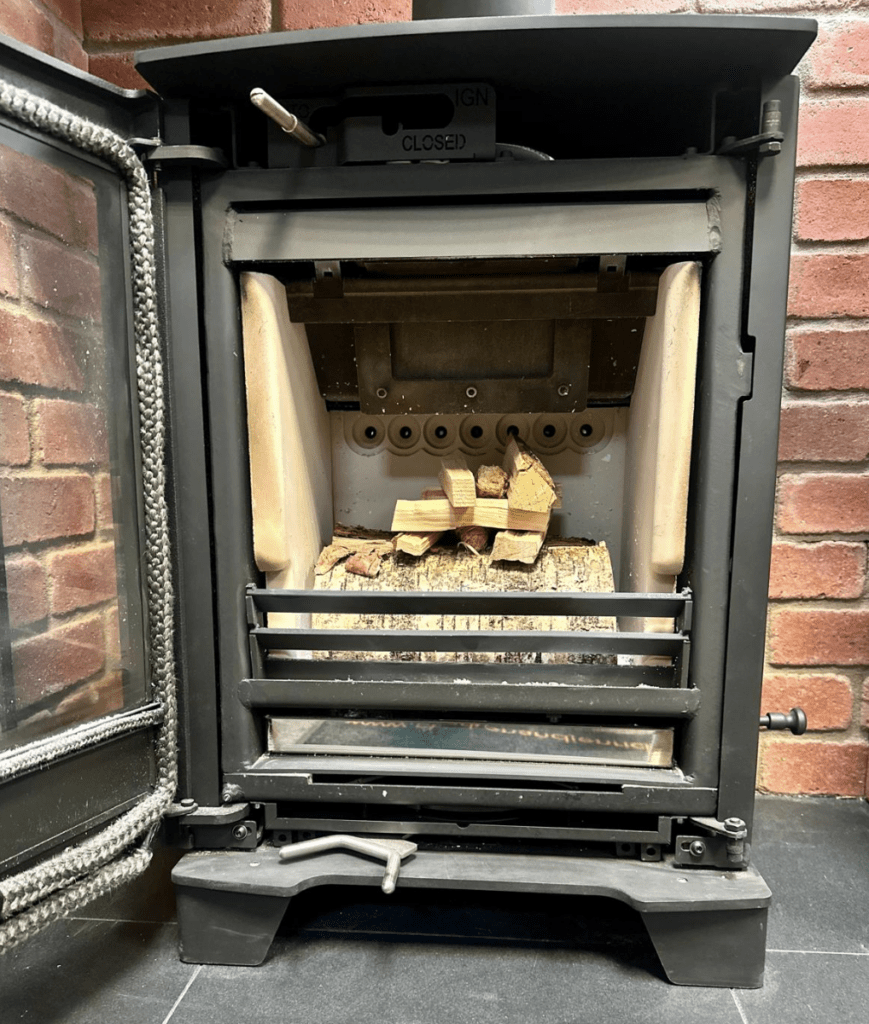
Use the technique recommended for your stove. Some models have particular requirements for the air controls or door position during ignition. Close and latch the door at the point specified in the instructions, and keep it closed during normal operation. Do not leave it open simply to make a reluctant fire burn faster.
If the stove repeatedly struggles to establish a draught or spills smoke into the room, stop using it and have the cause investigated. Repeated smoke spillage is a reason to seek professional help.
Maintain the intended operating temperature
Understand the advice to maintain a hot fire alongside the appliance’s operating limits. Aim for the combustion conditions described in the manual. Adding excessive fuel or leaving air controls fully open indefinitely can overfire the stove.
Avoid deliberately starving a fire of air to keep it smouldering for hours. Restricted combustion can increase particles and carbon monoxide, while a cooling flue can become less effective at carrying combustion products away. Follow the manufacturer’s operating guidance, including how to let the fire burn out.
Use the recommended log size and fuel load, and stay within the manufacturer’s operating settings.
Refuel carefully and avoid unnecessary door opening
Opening the firebox is a point at which combustion products can enter the room. Having everything ready helps you make the operation controlled and brief. Follow the appliance manual; general refuelling advice includes these steps:
1. Have the next fuel load, suitable gloves and tools ready before opening the door.
2. Refuel at the recommended stage, generally while a hot bed of glowing embers remains.
3. Follow the manual’s air-control instructions. Open the door a little, pause, then open it slowly.
4. Add the permitted quantity of fuel, leaving space for air to circulate.
5. Close and latch the door, then allow the new fuel to establish before returning the controls to their normal setting.
Avoid opening the door repeatedly to rearrange logs or check the fire. However, do not overload the stove to reduce the number of refuelling points. Aim for correct fuel loads and careful timing.
Keep children away from the hearth while refuelling. If smoke enters the room, do not assume this is an unavoidable part of using a stove. Seek advice from a competent installer or chimney professional.
Focus on ventilation
A wood-burning stove needs an adequate air supply. Keep the permanent ventilation provided for the installation unobstructed, including after moving furniture or undertaking draught-proofing work. If you replace windows or change a ventilation system, ask whether the stove’s air supply needs reassessment.
Extractor fans require particular care. England’s Approved Document J outlines that extraction can lower a building’s pressure and draw combustion products from an open-flued appliance into the home. The fan and appliance can be in different rooms. Ask the installer to assess cooker hoods, bathroom extraction and other ventilation equipment alongside the stove.
The aforementioned NHS article discusses extractor fans as part of wider advice about household pollution. For a home with a wood-burning stove, extraction must match the installation. Simply switching on a powerful fan is not a reliable way to deal with stove fumes.
Appropriate ventilation can help dilute indoor pollutants when outdoor air is cleaner. Nevertheless, repeatedly opening a window to compensate for smoke spilling from a stove leaves the underlying problem unresolved. Have the installation checked.
Remove ash without spreading it through the room
Indoor pollution can arise after the flames have gone out. Ash removal can disturb fine material, so take the same care with cleaning as you do with lighting and refuelling.
Let the stove and ash cool sufficiently, keeping the door closed while they cool. Use suitable tools and gloves, and transfer ash slowly into a metal container with a close-fitting lid. Keep the container close enough to avoid dropping ash from a height. Take it outside promptly to a safe location away from combustible materials. Do not leave a bucket of ash indoors.

Avoid vigorous brushing that sends dust into the air. Do not use a conventional household vacuum to clean out stove ash. If using a specialist ash vacuum, wait until the ash is completely cold, check for hidden embers and follow its instructions.
Some wood-burning stoves operate with a shallow ash bed. Follow the manual’s advice about how much to remove, and keep air openings clear. Unnecessary disturbance creates extra cleaning without improving operation.
Keep the appliance and chimney maintained
Cleaning the glass is only one part of maintenance. Door rope seals, catches, firebox components, air controls and the flue all need attention. Assess and repair worn seals or damaged components with parts specified for the appliance.
Arrange regular professional servicing. We recommend servicing at least once a year, while also following the manufacturer’s schedule. Agree a chimney-sweeping programme with a qualified sweep that reflects the fuel, use and condition of the installation. Frequent wood burning may require several sweeps during the burning season.
Sweeping and servicing do different jobs: one clears and checks the flue pathway; the other examines the appliance and its components. Keep records of both, and note changes such as poor lighting, unusually rapid glass blackening, persistent smells, or smoke spillage. These observations can help a professional identify a problem.
Use carbon monoxide alarms and understand their role
Carbon monoxide is a poisonous gas that cannot be seen or smelt. Fit an audible CO alarm in the room with the stove, position it according to the alarm manufacturer’s instructions, and test and replace it as directed. The NHS recommends alarms in each room containing a fuel-burning appliance.
If an alarm sounds or you suspect carbon monoxide exposure, get everyone outside and seek urgent help. Do not re-enter until advised it is safe. Contact NHS 111 for suspected poisoning symptoms; call 999 for serious symptoms such as difficulty breathing, sudden confusion or loss of consciousness.
Treat air filtration as an additional measure
A suitable portable air cleaner can reduce airborne particles. If you use one, choose a HEPA model with a clean air delivery rate appropriate for the room, run it as directed and maintain the filters. Avoid devices that deliberately generate ozone, which is a lung irritant.
Filtration has limits. HEPA filters capture particles; they do not protect against carbon monoxide. An air cleaner cannot make a faulty stove or unsuitable ventilation arrangement safe, and it cannot remove every pollutant produced by combustion. Source reduction and appropriate ventilation remain the priorities.
Check symptoms
Keep children away while loading or cleaning the stove, and take persistent coughing, wheezing, or irritation seriously. A change in symptoms should prompt attention to the heating environment and appropriate medical advice.
Make responsible use part of the routine
Before the next fire, check the fuel, controls, ventilation and condition of the stove. During use, follow the recommended fuel loads and refuelling method. Afterwards, handle ash carefully and keep servicing and sweeping up to date.
At Charlton & Jenrick, we encourage owners to keep the correct appliance manual readily available and ask their retailer or installer whenever operation is unclear. A well-chosen Ecodesign stove needs informed use throughout its life. Paying attention to the air inside your home makes responsible wood burning a practical, everyday commitment.