A winter power cut can quickly turn a warm home into a difficult place to keep warm and make it impossible to cook. The lights go out, the kettle stops working and, in many properties, the central heating stops too. Even a gas or oil boiler usually needs electricity for its controls and circulating pump.
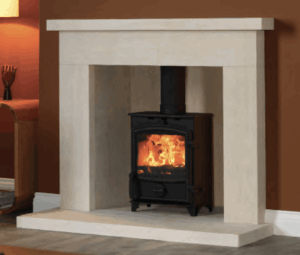
We believe there is a strong case for planning an independent source of heat well before you need it. For a suitable property, a professionally installed Ecodesign wood-burning stove can provide valuable backup room heating without relying on the electricity grid.
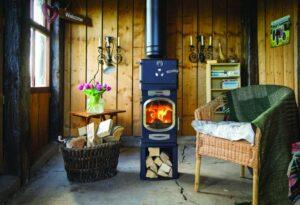
Our Go Eco Adventurer, for example, offers this backup off-grid heating plus an added practical benefit on top: a purpose-designed top for cooking. This stove can be the perfect answer for people who want off-grid heat plus off-grid cooking options too.
With Clean Air Night taking place on 17 November 2026, this is also the right moment to discuss what better wood burning means, and also what it does not mean.
It’s also a good time to look at the differences between specific Ecodesign wood-burning stoves, which can keep you warm and cook food, and simple disposable gas stoves, which have become very popular recently and are really the only viable mainstream option for most if they want to cook food off-grid.
Why emergency preparedness requires our attention
The Government’s Be Ready guidance encourages households to prepare for three days of disruption. Its checklist includes non-perishable food, drinking water and other essentials, with three litres of drinking water per person per day suggested. The advice is to build supplies gradually and consider your household’s particular needs.
This is sensible preparation for different emergencies which may occur at any time. Storm damage, local equipment failures and other interruptions can disrupt an individual home even when the wider energy system has sufficient capacity.
There is an important difference between concern about energy security and the likelihood of a power cut. NESO’s winter outlook for 2026/27 expects sufficient electricity supplies in Great Britain. So we should take preparedness seriously but without thinking blackouts are inevitable.
For homeowners, the useful question is straightforward: if our normal heating and cooking facilities were unavailable, what safe arrangements would we already have in place?
If you want to take preparation beyond a camping gas stove and an electric heater plugged into a power bank, please read on…
What off-grid energy can offer a home?
An independent room heating appliance adds another option when electrically dependent heating is interrupted. A conventional manually operated wood-burning stove uses the chimney or flue’s natural draught and does not need mains electricity to burn logs. That can make one room a practical gathering place during an outage. But it does not mean a single stove will heat every room or replace a central heating system. The benefit is more specific: it provides useful warmth where the appliance is installed; this is known as zonal heating.
Backup heating also needs a backup fuel supply. A stove with no suitable dry logs available is not much help! Preparing the appliance and ensuring adequate fuel supplies in advance is much more useful than trying to get organised after the electricity fails.
The same goes for cooking options. What options will you have in the event of a power outage? Many people have decided to invest in a simple camping gas stove, but there are risks.
The risks of camping stoves in outages
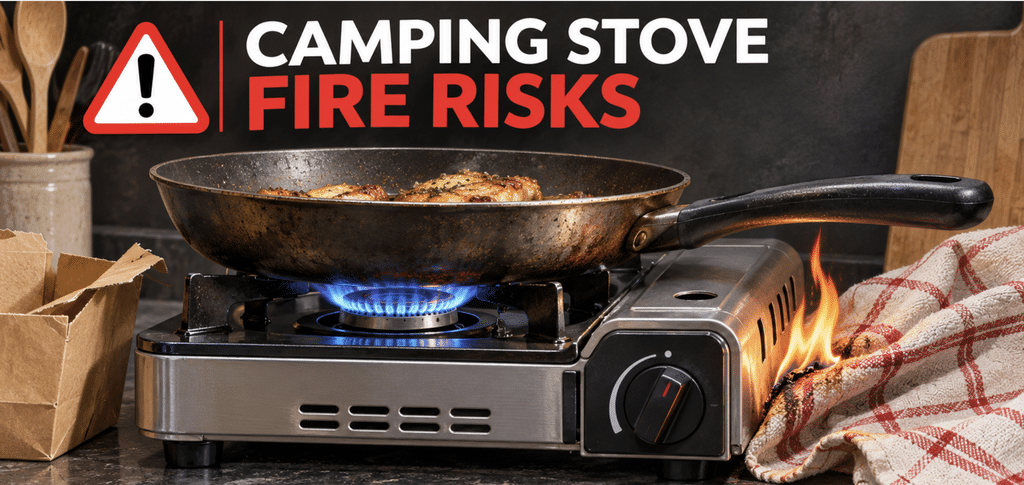
Small camping cookers using disposable gas cartridges can look ideal when people are building emergency supplies, and sales of these have no doubt rocketed in recent months as people prepare following government advice. They are compact and convenient for their intended outdoor purpose. However, they are absolutely not a substitute for a properly installed combined indoor heating and cooking appliance.
The most important instruction when using a camping stove is simple: never use a camping gas stove or barbecue indoors, including in a garage, or in a tent or other enclosed space
Carbon monoxide is a potentially fatal risk. Fuel-burning equipment can produce this colourless, odourless gas, allowing dangerous concentrations to develop in enclosed spaces. Opening a window does not make an outdoor-only camping cooker suitable for indoor use. A carbon monoxide alarm is essential protection where required, but it does not permit the use of an unsuitable appliance.
Naked flames, unstable cooking arrangements, and nearby combustible materials also create burn and fire risks. These risks become harder to manage when people work in poor light or improvise during an emergency.
Disposable cartridges need careful handling
The gas cartridge is a pressurised fuel container and must be compatible with the appliance. Incorrect fitting, damaged seals and escaping gas can create a fire hazard. Excessive heat is another concern: oversized pans or griddles can reflect heat towards a cartridge and cause it to overheat.
Use outdoor cooking equipment only as its manufacturer directs, with the specified fuel and cookware. Never use a camping cooker as a room heater or improvise arrangements to keep a canister warm. For basic emergency preparation, food you can eat without heating is a useful choice.
Our Go Eco Adventurer combines heating with cooking
While significantly more expensive than a disposable gas stove, our Go Eco Adventurer 5 Multi-Fuel Stove pictured below combines room heating with a dedicated cooking surface. Its standard stainless-steel top accommodates pans up to 28- 30 cm, giving owners a practical way to prepare food using the stove’s heat.
With an 86% efficiency and an A+ energy rating, Ecodesign compliance, clearSkies certification and DEFRA-exempt status for use in smoke control areas, this stove is an example of just how efficient modern stoves can be, and why some should consider one if they want to enjoy off-grid warmth and cooking.

An optional insulated lift-off oven and warming shelves increase its cooking options. Heat-shield options also allow different installation configurations.
For suitable homes, these features make the Adventurer an attractive option for planned backup warmth and cooking. The efficiency figure is a tested appliance performance figure, rather than a guarantee that every fire will achieve the same result.
Ecodesign makes a meaningful difference to wood burning
When a household needs or chooses solid-fuel heating, the appliance is key. Ecodesign requirements set standards for efficiency and emissions. More effective combustion can extract useful heat from the fuel while limiting pollutants compared with older, less efficient ways of burning.
The practical message we want to communicate is that the stove, fuel and user must work together. An advanced appliance cannot compensate for unsuitable fuel, poor installation, or deliberately smouldering a fire.
An honest conversation on Clean Air Night
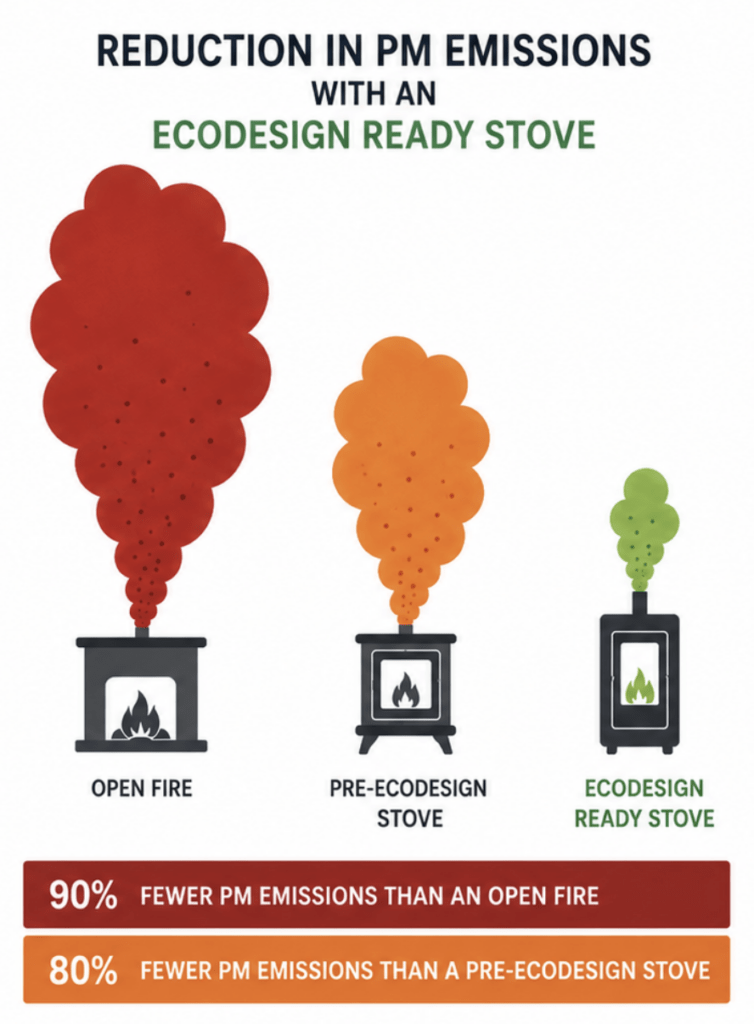
Clean Air Night highlights the health effects of wood smoke and encourages people to avoid burning when other heat sources are available. Its organisers also raise concerns about Ecodesign appliances. We share their objective of reducing avoidable air pollution, but some of their information is misleading and often fails to distinguish between old, inefficient wood-burning stoves and open fires vs Ecodesign stoves using correctly seasoned wood. This is important because the emission differences are huge, as the diagram below demonstrates:
Buying correctly seasoned wood is essential
Log quality is central to successful stove operation, including models with cooking options, like our Adventurer. Wet wood is harder to burn effectively because energy is used to evaporate water. Poor combustion can produce more smoke and deposits, while delivering less useful heat.
We recommend wood with a moisture content of 20% or less. Look for the Ready to Burn certification when buying logs intended for immediate use.
Seasoned describes a drying process; it does not, by itself, tell you the moisture content of every log. Similarly, kiln-dried logs still need proper storage after delivery. Either naturally seasoned or kiln-dried wood can be suitable when it meets the required moisture level and your stove’s instructions.
Choose a supplier who can explain what they sell, how they dry it, and how to store it. Buying a dependable supply before cold weather arrives is part of making your backup heating genuinely useful.
Check the inside of a log
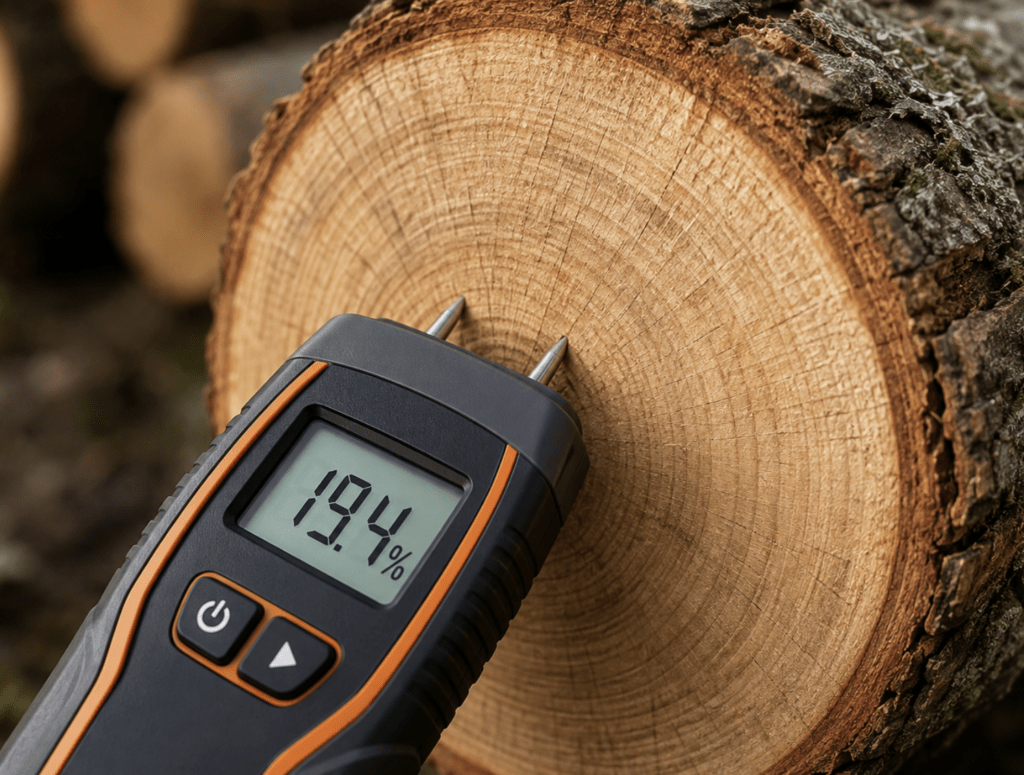
A moisture meter is a useful addition to a stove owner’s equipment. Testing only the bark or an exposed end can give an incomplete picture because the inside may remain wetter.
Following the meter’s instructions, split a representative log and test the freshly exposed internal surface. Check several logs from the delivery rather than relying on one reading.
Our guide to moisture meters offers further practical advice. A modest investment in checking fuel can help avoid wasting money on logs that are not ready to burn.
Keep dry fuel dry
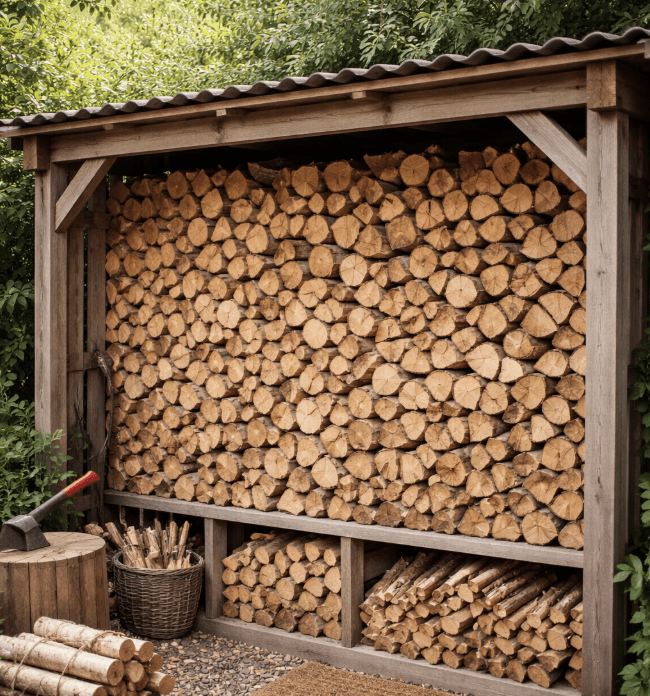
Store logs under a weatherproof cover with airflow around the stack and keep them off damp ground. A tightly sealed, damp space will not help wood season.
Keep your main fuel supply away from the stove and respect the installation’s combustible clearances. A decorative log pile must never obstruct ventilation or create a fire risk.
Use only the fuels permitted in the appliance instructions. Painted or treated timber, MDF, household rubbish and other waste are not substitutes for suitable firewood. Multi-fuel capability does not mean that every combustible material is acceptable.
Responsible sourcing matters too. Ask about where the timber comes from and how woodland is managed. We do not describe wood burning as automatically carbon neutral: its wider climate impact depends on factors including forest management, processing, transport and the timescale of regrowth.
Installation and everyday operation
A stove is a fixed heating installation that needs professional planning. It is not something to bring indoors and connect temporarily when a power cut begins. This is the big difference between those who want a more permanent off-grid heating (and cooking) source and those who just need an emergency fix.
Before purchase, an appropriately qualified installer should assess the room’s heat requirement, chimney or proposed flue, hearth, ventilation and distances from combustible materials. Oversizing can encourage owners to restrict the fire excessively to avoid overheating the room.
You must also check smoke control requirements for the property. Ecodesign compliance and DEFRA exemption address different matters; neither removes the need to follow the relevant fuel and operating restrictions.
We recommend discussing the full installation with a competent installer and following the applicable local requirements. Fit and maintain appropriate smoke and carbon monoxide alarms. Have the stove serviced and the chimney swept at intervals appropriate to its use and the professional advice you receive.
Once installed, learn the lighting and refuelling procedure before relying on the stove during an outage. Follow the specified fuel loads and air-control settings. Do not close the air controls down simply to make a load smoulder for longer.
A clear flue, sound door seals and correct combustion air supply all support dependable operation. Never block ventilation to retain warmth. If smoke spills into the room or an alarm activates, stop using the appliance and follow the appropriate emergency advice.
Plan for warmth (and cooking options) before you need it
A useful household plan combines several measures:
1. Keep three days of suitable food and drinking water, alongside essential medicines and other household necessities.
2. Have torches, charged power banks and a way to receive information.
3. Consider the needs of children, older relatives and anyone dependent on powered medical equipment.
4. If you have a stove, keep suitable dry fuel available and maintenance up to date.
5. Practise safe operation and stove cooking in normal circumstances, following the instructions.
6. Know when to seek help or move somewhere warmer if staying at home becomes unsafe.
A stove is one part of that plan.
Explore independent warmth with Charlton and Jenrick
For a suitable property, a modern Ecodesign stove can be a valuable investment in independent room heating. Our Adventurer adds purposeful cooking capability, making it particularly relevant to households who want more practical use from their stove and want more cooking options than a disposable gas stove!
Our approach combines that independence with responsibility: choose the right appliance, install it correctly, buy properly dried fuel and burn only what you need. That is how we believe the benefits of modern stove ownership should be realised, whether you opt for one with heat and cooking or just heat.
Explore our Go Eco Adventurer or our general range of stoves, then speak to our network of showrooms about what is right for you and your home. Planning now gives you time to make a considered decision and have your installation and fuel supply ready before you need them.