When the UK is enjoying long, sunny days, blue skies and temperatures more suited to the Mediterranean, home heating is probably not the first thing on your mind. Yet the heatwaves we have already seen in 2026 offer a timely reminder: weather is changing, seasons feel less predictable, and the best time to prepare for colder days is often when nobody else is thinking about them.
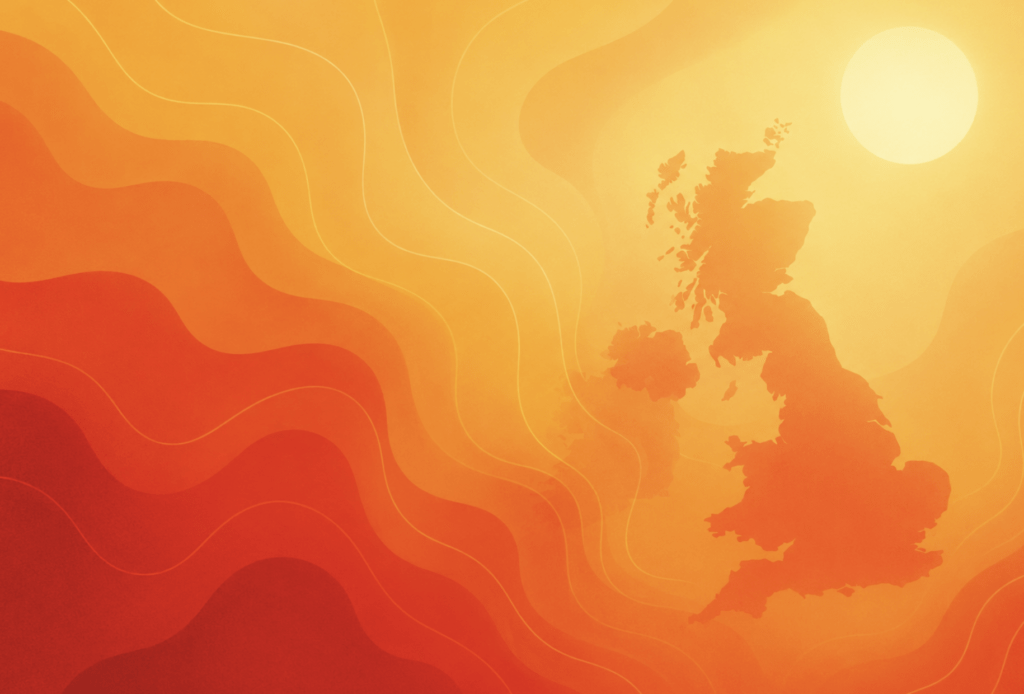
A UK heatwave is officially recorded when a location reaches or exceeds its local heatwave temperature threshold for at least three consecutive days; those thresholds vary by county because what counts as hot in one part of the UK is not the same as hot in another. This year, overly hot days arrived early. The Met Office verified a new UK May daily maximum temperature of 35.1°C at Kew Gardens on 26 May 2026, while spring 2026 was the warmest on record for England and Wales and the third warmest for the UK overall.
June then raised the stakes again. Provisional Met Office figures show England reached 37.7°C at Lingwood, Strumpshaw Hill on 26 June, breaking the previous June record of 35.6°C set in 1976, while Wales reached 35.9°C at Cardiff Bute Park. June 2026 was also England’s warmest June on record for mean temperature, with the UK and Wales recording their second warmest June in a series dating back to 1884. At the start of July, UKHSA yellow heat-health alerts were in place for the East Midlands, East of England, London, South East, South West and West Midlands from 4 July to 11 July.
Why is the UK getting this hot?
There are two parts to the answer: weather and climate. The immediate cause of a heatwave is usually a weather pattern, often involving high pressure. In June, the Met Office described a shift around mid-month as high pressure built over continental Europe, drawing much warmer air northwards towards the UK. High pressure can slow the normal procession of Atlantic fronts, reduce cloud and rain, and allow sunshine to build heat day after day.
What is important to understand is that we are no longer experiencing these weather patterns against the same climate baseline as previous generations. The Met Office says the frequency and intensity of heatwaves have increased worldwide; that hot spells are projected to become more frequent in the UK’s future climate, especially in the south-east; and that it is virtually certain that human influence has increased the occurrence and intensity of extreme heat events.
This is also why warm nights have become such an important part of the story. June 2026 was not only about daytime highs; the Met Office reported exceptionally warm nights and record-average June minimum temperatures for the UK, England, and Wales. When buildings do not cool overnight, heat stress increases. It is uncomfortable in summer, but it also reminds us that our homes need to work well across extremes: keeping heat out when it is hot and providing safe, efficient warmth when cold, damp weather returns.
What might the autumn and winter bring?
No responsible forecast in July can say exactly what the coming autumn and winter will bring. Long-range outlooks are useful, but they work differently from the short-term forecasts we use to plan the next few days. Instead of predicting whether a particular November morning will be wet, frosty or mild, they highlight broader probabilities, such as whether the season is more likely to be warmer, colder, wetter or drier than average.
This is why seasonal forecasts should be treated as guidance, not guarantees. A winter that is warmer than average can still include sharp cold snaps, icy mornings and short periods of snow. Likewise, an unsettled winter can still bring calm, dry and mild spells. The UK’s colder months are rarely one thing from start to finish. They are usually a changing mix of Atlantic rain and wind, damp mild days, clear frosty nights and occasional wintry outbreaks, especially in northern areas, on higher ground, or when colder air moves in from the north or east.
What we can say with more confidence is that the UK’s long-term climate trend points towards warmer, wetter winters, hotter, drier summers and more frequent weather extremes. For householders, this creates a slightly different way of thinking about heating. Some people may delay switching on their main heating if autumn starts mild, but when colder, wetter or windier weather arrives, the change can feel sudden. A gas fire, electric fire or wood-burning stove is therefore not just about deep winter. It can provide flexible, room-by-room warmth on cool October evenings, stormy November days and those damp periods when one living space needs comfort without necessarily heating the whole home.
That uncertainty is exactly why summer is such a sensible time to prepare. Whether the first real need for your fire or stove comes in September, October or later, it is far better to have the appliance checked, the chimney swept, the logs seasoned, and any installation plans arranged before the seasonal rush begins. Then, whatever shape autumn and winter eventually take, your home is ready.
Here are a number of tips to help you make the most of summer, preparing for the autumn and winter…
Use the sunshine to prepare your firewood
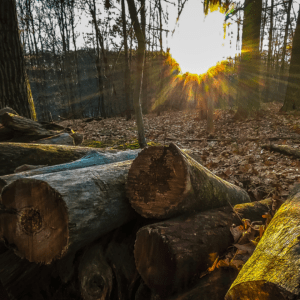
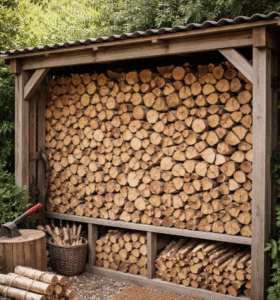
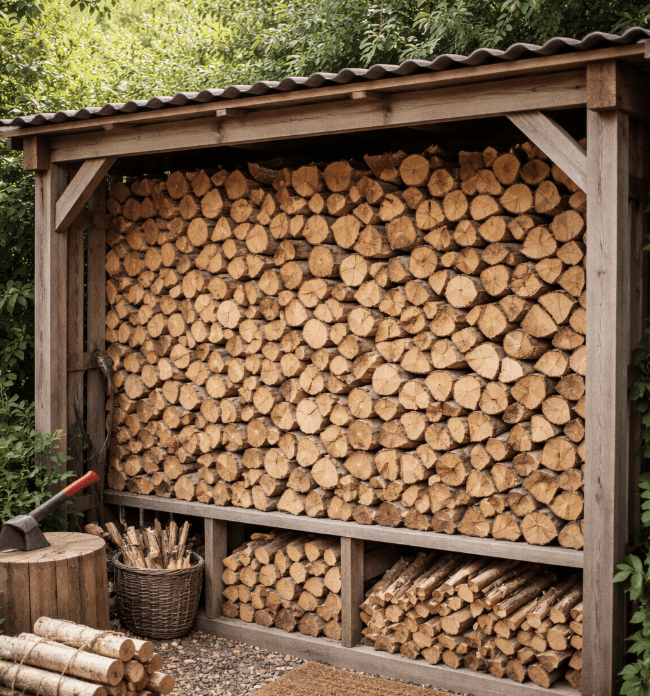
Fine, dry weather is a useful ally for anyone who burns logs. If you already have seasoned wood, summer is the time to check it, tidy the stack and improve airflow. If you are preparing your own wood, split it, stack it off the ground, keep the sides open to the breeze and protect the top from rain. Sunshine helps, but airflow is just as important.
The key number is 20%. In England, wood fuel sold in volumes under two cubic metres must be certified as Ready to Burn, confirming a moisture content of 20% or less. HETAS gives the same practical target for stove users: burn aged, dried wood at 20% moisture or less, use a moisture meter to check logs, store the main stack dry and ideally in sunlight, keep logs elevated, and do not stack combustible materials on or against the appliance.
Wet wood wastes heat because energy is used to boil off water before the log can burn properly. It also creates more smoke, more soot on the glass and more deposits in the flue. Good firewood planning starts months before the first match is struck.
Book chimney, stove or flue work before the rush
A sunny week is also a good time to look up. Chimneys, cowls, flashing, pots, brickwork and terminals take a beating from winter weather. Small issues are easier to inspect and repair in summer, and tradespeople may have more availability before the autumn rush begins.
For solid fuel appliances, arrange a chimney sweep before the heating season starts, especially if the stove or open fire has not been used for months and you have not had an end-of-season sweep in March/April. HETAS encourages chimney sweeping at least twice a year when burning wood and at least once a year when burning smokeless fuels, with the best times being just before the heating season and after a prolonged period of non-use.
Use the same opportunity to check rope seals, firebricks, baffle plates, stove glass, air controls and the condition of the hearth. A wood-burning stove is a hardworking appliance. A little maintenance in July or August can prevent smoke problems, poor performance or avoidable call-outs in October.
Don’t forget gas and electric fires
Gas fires should be checked by a suitably qualified Gas Safe registered engineer. The Gas Safe Register is the official list of businesses legally permitted to carry out gas work, and homeowners should check that the engineer is registered and qualified for the specific appliance before work begins. Summer is a sensible time to arrange a service, check ventilation, confirm the flue is working properly and test carbon monoxide alarms.
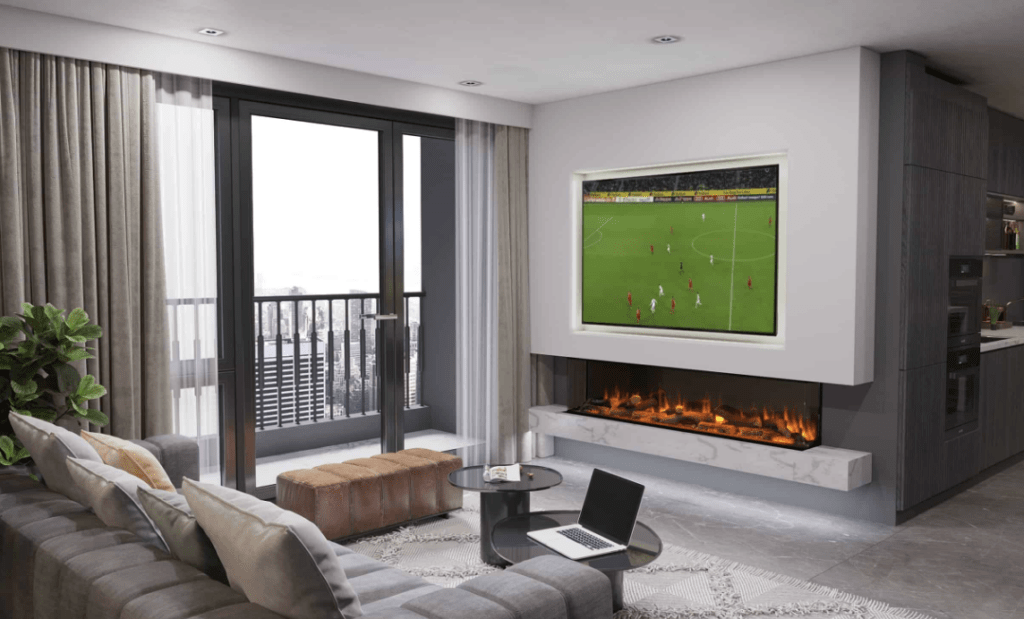
Electric fires need less seasonal maintenance, but they should still be treated as appliances. Check cables, plugs, sockets, controls, vents and clearances. If you are planning a media wall or a new built-in electric fire, summer gives you time to coordinate with the fireplace retailer, electrician, and decorator, and to handle any building work without rushing decisions.
Our iRange 1500e Deep electric fire
Visit a showroom when everyone else is out buying fans
One of the best practical tips is also the simplest: visit a fire showroom during hot weather. When the sun is blazing, fewer people are thinking about flames, stoves and winter interiors. That can mean more time to ask questions, compare fuel types and think properly about the room.
A showroom visit helps you understand flame picture, heat output, installation requirements and design choices in a way that online browsing cannot. Our showroom locator is designed to help customers find local showrooms, with options by fuel type.
Plan now – relax later
Heatwaves and hearths may feel like opposites, but they are part of the same household conversation: how do we make our homes comfortable, efficient and ready for changing weather? The answer is not just about reacting to the temperature outside. It is about preparing the home in advance, so it performs well through both extremes: staying manageable during hot spells and becoming warm, welcoming and efficient when the cooler months return.
Summer offers several advantages that are easy to overlook. There is more daylight for checking the condition of the chimney, roofline, flue terminal, hearth and fireplace area. Drier weather can make external repairs easier to carry out, while longer days give homeowners more time to tidy log stores, improve ventilation around firewood stacks and assess whether their current appliance still suits the way they use the room. It is also a good time to think clearly, without the pressure of a cold snap already being here.
There is a practical benefit, too. Once the first chilly evenings arrive, demand for chimney sweeps, installers, service engineers and showroom appointments naturally increases. By planning during the warmer months, homeowners may have more choice, more time to compare products and a better chance of arranging work before the seasonal rush. That can be especially useful for anyone considering a new wood-burning stove, gas fire or electric fire, where decisions about heat output, style, installation requirements and fuel type should never feel rushed.
Fine weather can also be used to get the basics right. As we have mentioned, logs can be split, stacked and protected so they are ready to burn cleanly and efficiently. Chimneys can be swept after a period of non-use. Gas fires can be serviced before they are needed daily. Electric fires and media wall plans can be measured, discussed and installed without trying to coordinate trades in the middle of winter. Even small jobs, such as checking seals, cleaning glass, reviewing carbon monoxide alarms or making sure vents are clear, can make a real difference to safety and performance.
A showroom visit in summer may feel counterintuitive, but it can be one of the smartest steps of all. When many people are thinking about garden furniture, barbecues and cooling fans, there is often more space to consider heating properly. Seeing appliances in person helps with scale, flame picture, finish and overall design. It also allows homeowners to ask the right questions before deciding what will work best in their property, whether that is a highly efficient wood-burning stove, a realistic gas fire or an electric fire that adds atmosphere and warmth at the touch of a button.
So while the weather is fine, use it. Stack the logs, check the chimney, book the service, measure the room and visit a showroom. Think about the spaces you use most, the level of warmth you actually need and the type of appliance that will make your home more comfortable when the seasons change. When the first cool evening arrives, you will not be rushing to catch up. You will be ready, prepared and able to enjoy the simple comfort of warmth exactly when it is needed.