Conservatories, garden rooms, log cabins, mobile homes and flats explained.
Whether you want to make a conservatory more comfortable in winter, turn a garden office into a year-round retreat or bring the warmth of a real fire to a compact home, the same question often arises: Can I install a wood-burning stove here?
In many cases, the answer is yes. However, the suitability of a location depends on much more than whether there is enough space for the stove itself. The hearth, chimney, ventilation, heat output, surrounding materials and any planning or ownership restrictions all need to be considered.
Our wood-burning stove ranges include models for traditional homes, contemporary interiors and more compact or unusual settings. All our wood-burning stoves meet Ecodesign emissions and efficiency standards, and also achieve clearSkies certification.
Here is what to consider before installing a stove in a conservatory, garden room, log cabin, mobile home or flat.
What Does Every Wood-Burning Stove Installation Need?
A stove cannot be treated in the same way as an electric heater. The appliance, hearth, chimney, and room work together as a single combustion system.
Before choosing a model, your installer should assess the following:
The Correct Heat Output
A stove should be selected based on the room’s calculated heat requirement rather than on floor area alone. Insulation, glazing, ceiling height, draughts and how frequently the room is used can all affect the amount of heat required.
This is particularly important in small garden rooms, log cabins and mobile homes, where an oversized stove could make the space uncomfortably hot. Conversely, a highly glazed conservatory may lose heat rapidly on a cold evening, even though it feels very warm in direct sunlight.
A Suitable Chimney Route
Where there is no existing masonry chimney, an insulated factory-made chimney system, often referred to as a twin-wall system, is usually required. It must be correctly supported, kept away from combustible materials and positioned so that the products of combustion can discharge safely.
For a conventional natural-draught solid-fuel stove, the flue outlet normally needs to finish above the roof. Approved Document J states that the outlet should be positioned where combustion products can discharge freely without presenting a fire hazard. The required chimney height will depend on the building, roof, surrounding structures and local wind conditions.
Approved Document J is a UK building regulations guide. It outlines the rules for safely installing, operating, and maintaining combustion appliances (such as boilers, stoves, and fireplaces) and their associated flues, chimneys, and fuel storage systems. It is designed to prevent fires, toxic pollution, and carbon monoxide poisoning.
Protection from Heat
The stove requires a suitable non-combustible hearth, along with the clearances specified for the specific appliance and installation arrangement. Timber walls, floors, roof members, furniture and decorative finishes must all be considered.
Approved Document J requires a hearth to prevent the appliance from setting fire to the building fabric or furnishings. A thinner decorative hearth may be possible where the appliance has been tested and certified not to raise the hearth surface above the specified temperature; otherwise, more substantial construction may be required. There is no universal safe distance that applies to every stove. Always follow the appliance manual, including the instructions for any approved heatshield or shielding package.
Combustion Air and a Carbon Monoxide Alarm
A stove needs a reliable air supply to burn safely. The ventilation requirement depends on factors such as the appliance’s output, the room, and the building’s airtightness. Approved Document J sets out permanent ventilation provisions and also requires the manufacturer’s instructions to be followed where they call for a larger air supply.
When a new or replacement fixed solid-fuel appliance is installed in a dwelling, a suitable carbon monoxide alarm should be installed in the same room. The alarm is an additional safeguard, not a substitute for correct installation, commissioning and maintenance.
Building Regulations and Certification
In England and Wales, most domestic solid-fuel installation work is notifiable under the Building Regulations. A HETAS-registered installer who is registered for the relevant category of work can normally self-certify the installation through HETAS. Otherwise, the appropriate Building Control route must be followed. Keep the installation certificate, appliance manual and chimney or hearth notice plate. This information can be important for insurance purposes and when the property is sold.
Smoke-Control Area Rules
If the property is in a smoke-control area, wood can generally only be burned in a DEFRA-exempt appliance and in accordance with the appliance’s exemption conditions and operating instructions. Alternatively, an authorised fuel must be used. Your local council can confirm whether the address is within a smoke-control area.
Can You Install a Stove in a Conservatory?
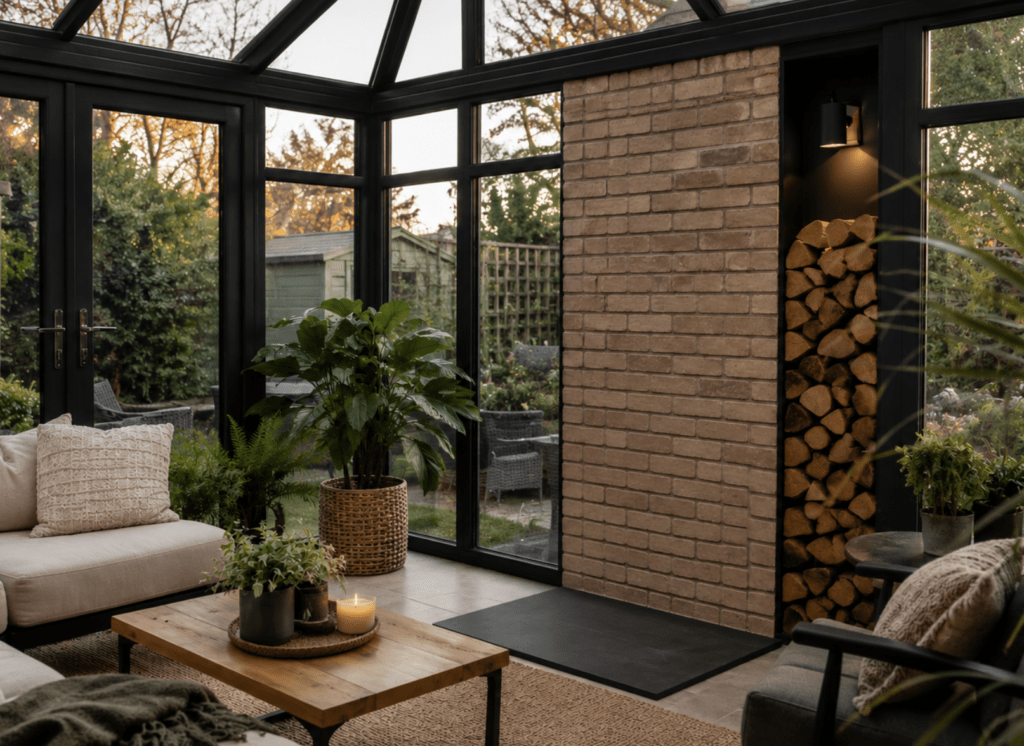
Yes, installing a stove in a conservatory is often possible, but the chimney route, heating demand, and the conservatory’s regulatory status must all be checked.
Choosing the Right Output
Conservatories present an unusual heating challenge. A room with large areas of glass can lose heat quickly during winter, yet warm up rapidly when the sun comes out. Selecting an unnecessarily large stove based only on the coldest conditions could leave the conservatory overheating during milder weather.
A professional heat-loss assessment should consider:
* The type and area of glazing
* The roof construction
* Insulation in the floor and solid walls
* Whether the conservatory remains separated from the house
* How and when the room will be used
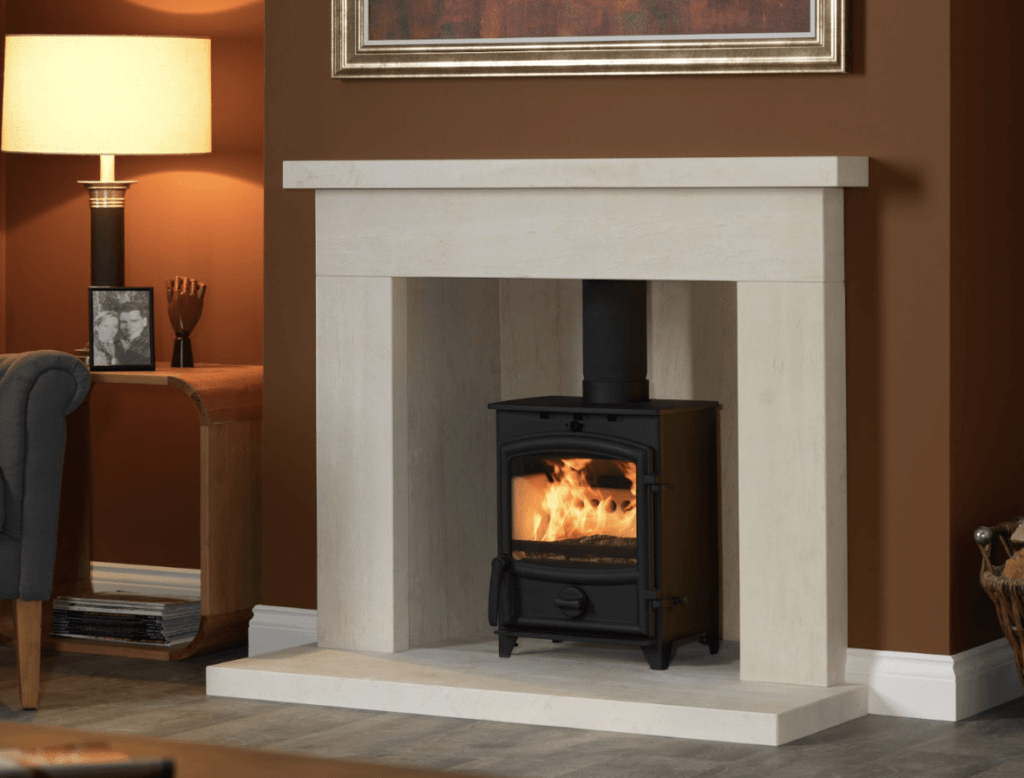
A smaller, controllable stove may be more appropriate than assuming that a highly glazed room automatically needs a large appliance. Our Fireline stove range includes 4kW, 5kW and larger models, providing options for different calculated heat requirements. Fireline efficiencies range from 78% to 82%; every model is SIA Ecodesign certified and DEFRA exempt, while the vast majority are clearSkies certified.
Below is our Fireline 5 FX5
Installing the Chimney
Most conservatories do not have a conventional chimney, so an insulated chimney system will normally be needed. Depending on the design, this might travel vertically through the conservatory roof or pass through a suitable wall before rising externally. The roof penetration must be designed for the particular glass, polycarbonate, tiled or insulated roof system. The flue must not rely on lightweight roof panels for structural support, and the required separation from combustible materials must be maintained throughout the complete roof construction.
Planning permission and Building Regulations are separate considerations. External flues on houses may be permitted development when certain conditions are met, but listed buildings, designated areas and local planning restrictions can change the position.
Does a Conservatory’s Building Regulations Exemption Cover the Stove?
Some conservatories are exempt from parts of the Building Regulations. In England, this normally depends on conditions, including the conservatory being at ground level, no more than 30m², maintaining thermal separation from the house and not extending the building’s main heating system into the conservatory. The final decision rests with the relevant Building Control body.
Additional work can affect that exemption. For example, removing the thermal separation or extending the house heating system may mean the conservatory no longer qualifies. A stove may be an independent heat source, but its installation should not automatically be assumed to be exempt or non-notifiable. Confirm the appropriate route with Building Control or a suitably registered installer before work begins.
Can You Install a Stove in a Garden Room?
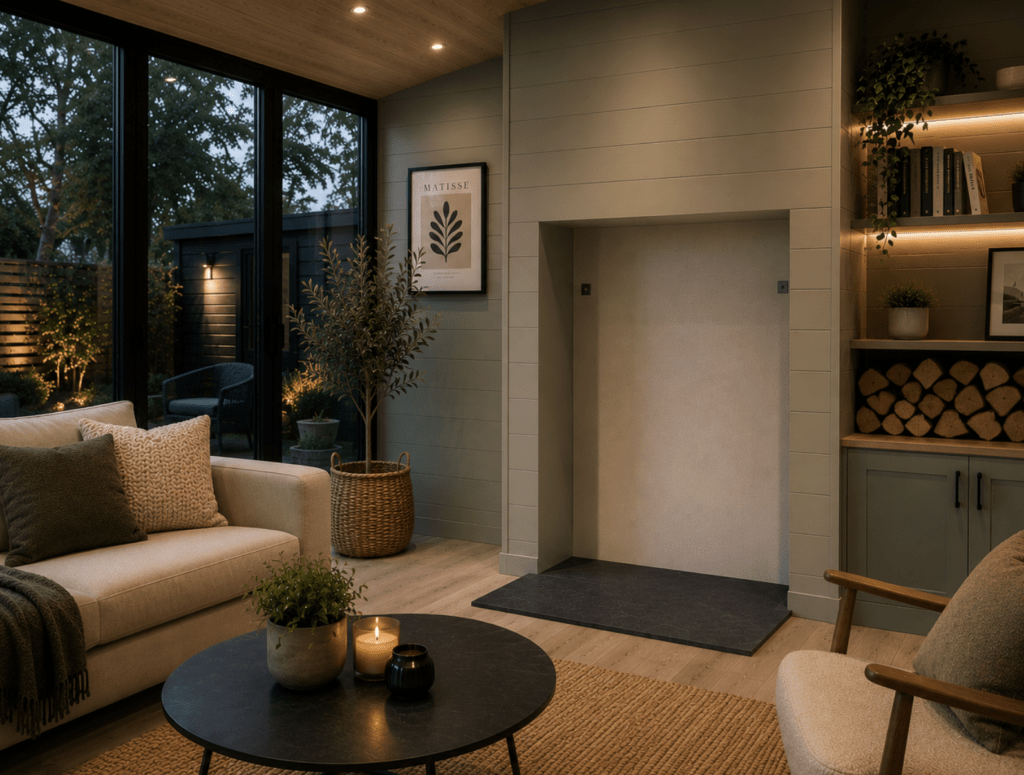
Yes, a wood-burning stove can be installed in many garden rooms, but compact dimensions and combustible construction make careful stove selection particularly important. A well-designed stove can turn a garden office, studio, or hobby room into a space that can be enjoyed year-round. However, many garden rooms are highly insulated and relatively small, so their heat requirement may be considerably lower than expected.
Check Whether the Garden Room Is Exempt
In England, a detached building with no sleeping accommodation and a floor area of no more than 15m² may be exempt from the Building Regulations. Between 15m² and 30m², it must normally contain no sleeping accommodation and either be at least one metre from the boundary or be built substantially from non-combustible materials to qualify for the small-building exemption.
A garden room used as an office is therefore different from a garden annexe or guest bedroom. Once sleeping accommodation is introduced, the exemption does not apply in the same way, and wider fire-safety, insulation and building-control requirements may arise.
An exemption covering the garden-room structure should not be regarded as automatic technical approval for a stove. The installation should still be designed around the principles of Approved Document J and the appliance manufacturer’s instructions, with its regulatory status confirmed before work starts.
Pay Particular Attention to Timber and Insulation
Even when a garden room looks contemporary, its walls and roof may contain timber studs, battens, insulation membranes and other combustible components. Decorative plasterboard or tiles do not necessarily make the construction behind them non-combustible.
Your installer will need to establish:
* The exact wall, floor and roof construction
* The stove’s declared distances to combustible materials
* Whether an approved heatshield arrangement can be used
* How the chimney will pass safely through the roof or wall
* Whether a permanent air vent is required
* How the stove and chimney will be structurally supported
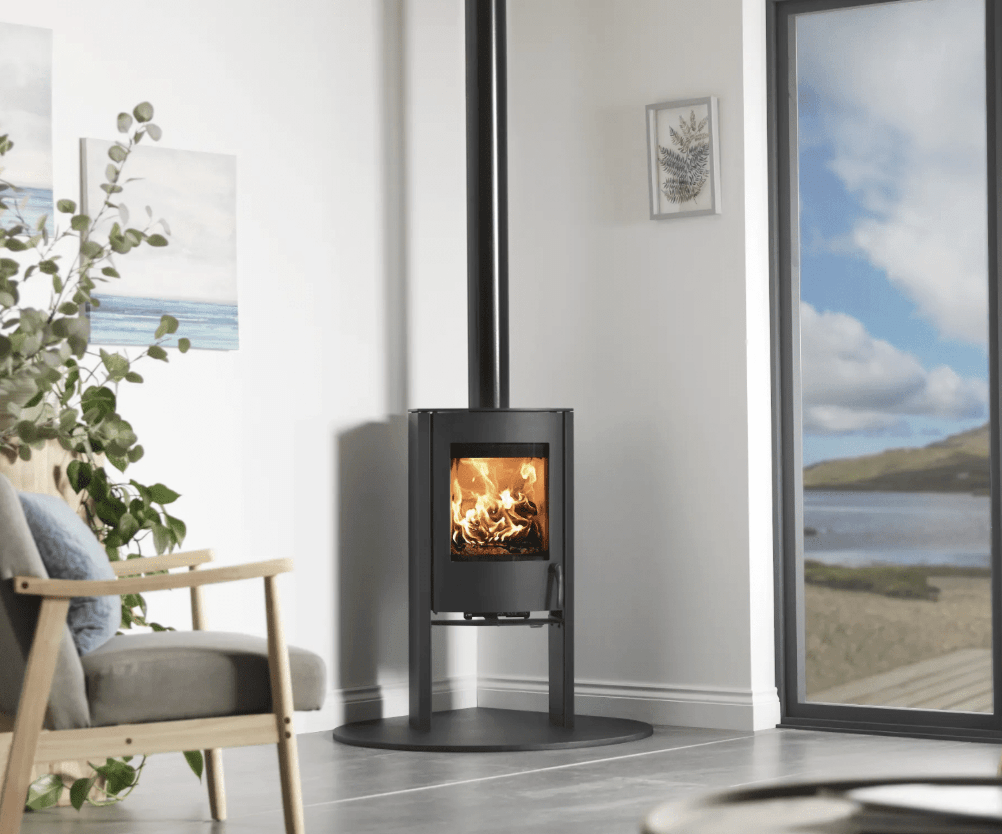
Our diverse Go Eco stove range includes traditional, contemporary, low-lintel, circular, cooking and glamping options. Every model in the range is SIA Ecodesign certified, DEFRA exempt and clearSkies certified. The appropriate model must still be chosen through a room-specific heat-loss calculation and installation survey.
Our Go Eco Circulus stove:
Can You Install a Stove in a Log Cabin?
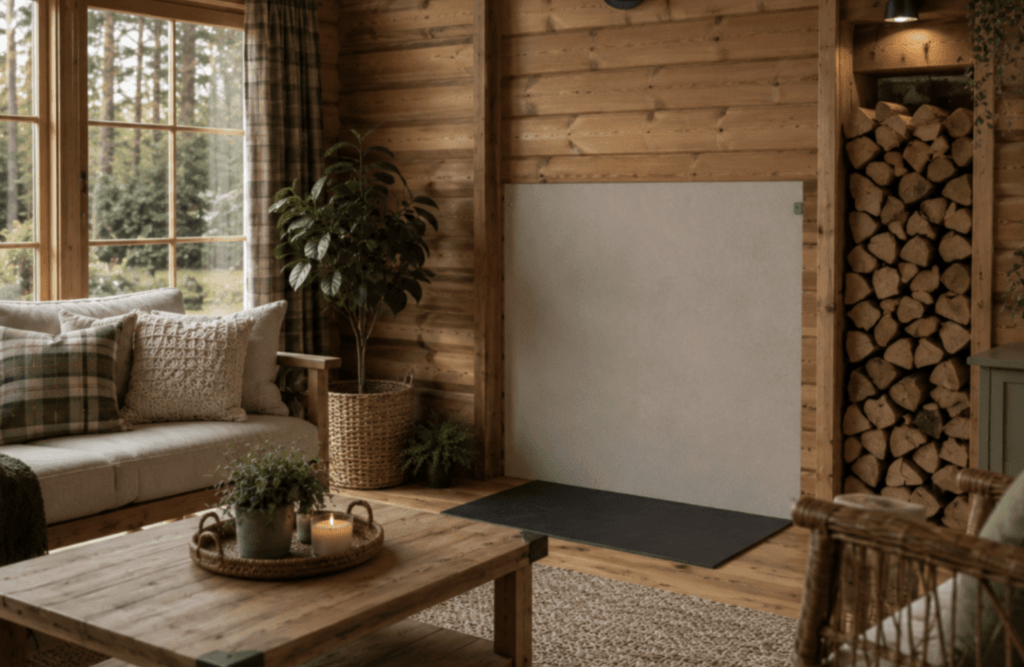
Yes, but a log cabin should be treated as an installation surrounded by combustible material on almost every side. The walls, floor, roof, and sometimes even the furniture may all be timber. This does not prevent a stove from being installed, but it makes the manufacturer’s clearances and the installer’s design especially important.
Clearances and Heatshields
The safe distance from the stove to a log wall must be determined by the appliance manual. Where an approved heatshield package is available, it may reduce the required distance, but only when the shield is installed in the tested configuration.
A generic sheet of metal fixed directly to a timber wall should not be assumed to provide adequate protection. The shield material, air gap, ventilation around it, fixings and clearance beyond its edges can all form part of the tested arrangement. The hearth must also protect the timber floor and support the stove. Where the chimney is not independently supported, the combined weight of the stove and chimney may need to be considered.
Allow for the Cabin’s Construction
Log cabins can move as their timber dries and responds to seasonal humidity. The chimney design should not restrict that movement or place excessive force on the roof penetration. A specialist installer can select suitable supports, flashing components and fire-stopping details for the cabin’s construction. A permanent supply of combustion air and a carbon monoxide alarm are also essential considerations, particularly in a modern cabin with well-sealed doors and windows.
A Stove Designed with Cabins in Mind
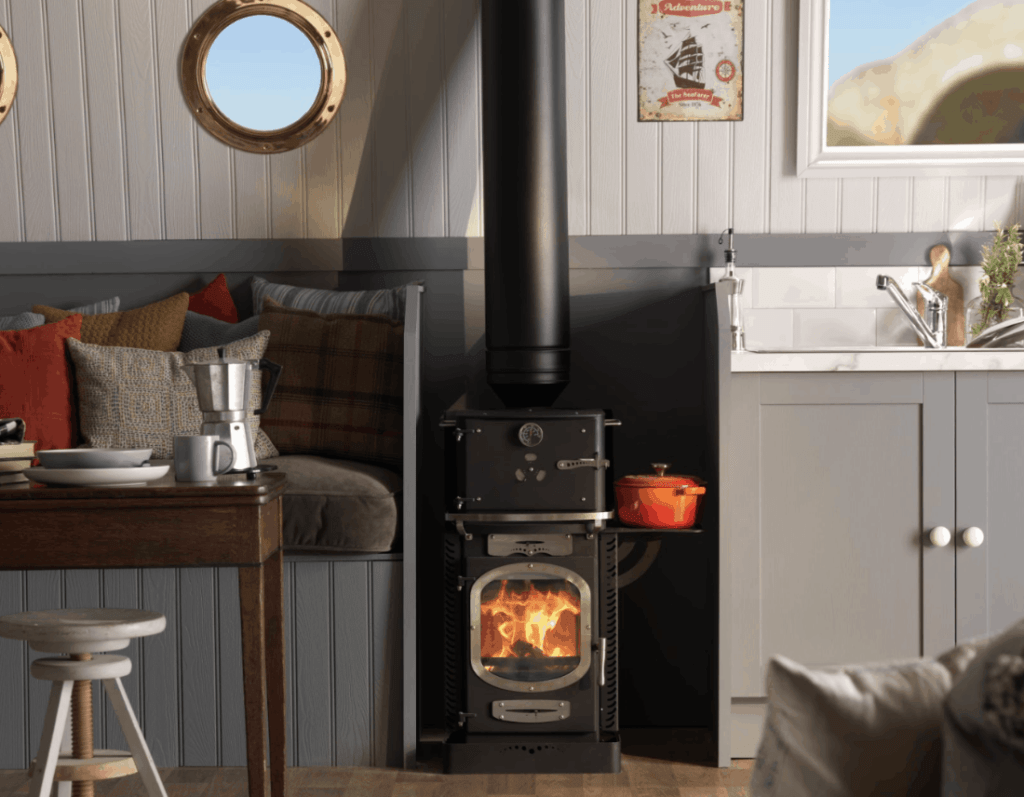
The Go Eco Adventurer 5 glamping stove was developed for compact leisure settings, including cabins, shepherd huts, yurts and canal boats. It provides a nominal 5kW output and can be personalised with purpose-designed heat shields, ovens, and log store options. Its compact design makes it a useful model to consider, but 5kW may still be more heat than some small, highly insulated cabins require. The output, distances to combustibles and complete flue arrangement must be assessed for the particular building.
If the cabin is used for overnight accommodation, glamping or holiday letting, additional fire-safety, licensing, insurance and risk-assessment requirements may apply.
Our Go Eco Adventurer 5 Stove
Can You Install a Stove in a Mobile Home?
It may be possible to install a stove in certain residential park homes, static holiday homes and transportable accommodation units, but this is a specialist installation rather than a standard domestic-stove project.
The term “mobile home” can describe very different structures, including:
* A residential park home
* A static caravan or holiday lodge
* A transportable cabin or shepherd hut
* A touring caravan
* A motorhome or campervan
An installation that is suitable for one of these is not automatically suitable for another.
The Relevant Standard Has Recently Changed
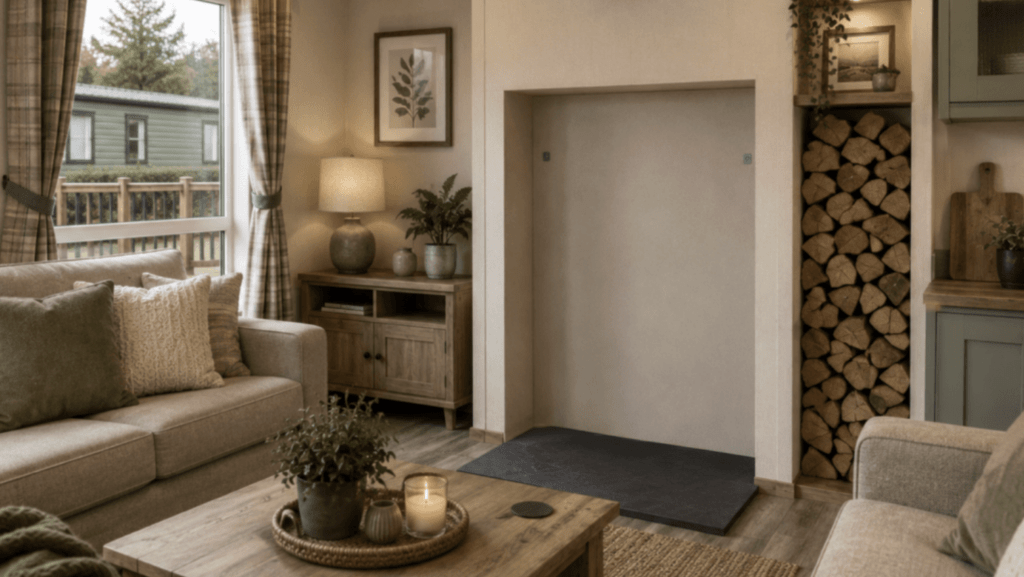
For new residential park homes, caravan holiday homes and transportable accommodation units, the current British Standard covering solid-fuel heating installations is BS 6762-2:2026. It was published in April 2026 and replaced the previous 1991 edition. The age and type of the unit, its construction, the intended use and the stove manufacturer’s permitted applications all need to be established. Do not assume that following ordinary domestic guidance alone is sufficient.
Why Mobile Homes Need a Bespoke Assessment
A park home or static caravan may contain lightweight wall panels, hidden timber framing, combustible insulation and relatively thin floor and roof assemblies. The structure may also move slightly during transport or in response to site conditions.
The installation may therefore need to address:
* A secure, appropriately supported hearth
* The loading imposed by the stove and chimney
* Clearances to walls, furniture and fitted units
* Purpose-designed heat protection
* A chimney system suitable for the unit and its roof construction
* Permanent combustion ventilation
* Safe chimney support during movement and thermal expansion
* Carbon monoxide detection
* The very low heat demand of a small, well-insulated interior
A touring caravan or motorhome presents further issues because it is regularly moved and may be subject to different construction, road-use, warranty and insurance requirements. No stove should be installed in one unless the appliance and complete installation system have been explicitly assessed and accepted for that application.
Obtain Permission Before Installation
Before considering a stove in a mobile or park home, contact the unit manufacturer where possible. You may also need written approval from the park or site operator and confirmation from the insurer that the proposed installation is acceptable. Although the Go Eco Adventurer 5 was designed with compact glamping settings such as shepherd huts, cabins and canal boats in mind, that does not automatically mean approval for every mobile home or caravan. Its suitability, heat shield arrangement, chimney, and hearth must all be confirmed for the specific unit.
Can You Install a Stove in a Flat?
A wood-burning stove can be installed in some flats, but flats are often the most complicated properties in which to obtain the necessary chimney route and permissions.
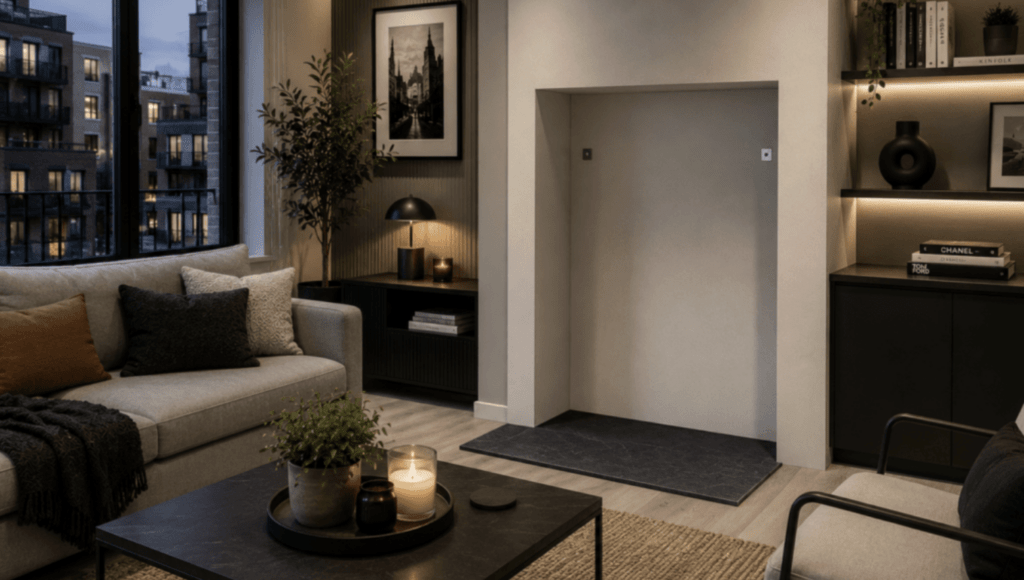
A top-floor flat with sole use of an existing, serviceable chimney is likely to present the most straightforward scenario. A middle-floor flat without a chimney may be much more difficult, as a conventional solid-fuel chimney typically needs to rise above roof level.
Start with the Lease and Building Ownership
Before purchasing a stove, check:
* The terms of the lease
* Whether the chimney belongs to the flat or forms part of the common structure
* Whether written freeholder or landlord consent is required
* Whether the managing agent has an alterations procedure
* Whether the building insurer must approve the work
Even where a fireplace appears to be inside the flat, the chimney stack, roof and external elevations may be maintained or controlled by the freeholder.
Planning Permission May Be Required
Permitted development allowances that can apply to external flues on houses generally do not apply in the same way to flats and maisonettes. Planning Portal specifically distinguishes flats from houses, so an external chimney or flue should not be assumed to be permitted development. The local planning authority should be consulted before work begins.
Listed building consent may also be required where the property is listed, and additional restrictions can apply in conservation areas.
The Chimney Route Is Often the Deciding Factor
A natural-draught solid-fuel chimney normally needs to terminate above the roof in a position that allows free discharge and adequate draught. A simple low-level wall terminal is not the standard solution for a wood-burning stove. In a middle-floor flat, taking a new chimney to roof level could involve common parts, other dwellings, external elevations or the roof itself. Any proposal must account for the building’s structure and fire separation as well as maintenance access. Consequently, the project may require input from Building Control, the freeholder and appropriately qualified designers in addition to the stove installer.
An existing chimney must also be professionally inspected and tested before reuse. It may require cleaning, repair or lining, but this can only be determined through a site survey.
Smoke-Control Areas Are Especially Relevant
Many flats in towns and cities are covered by smoke-control rules. In those areas, select a model that is DEFRA exempt for burning wood and follow the conditions attached to the exemption.
The Purevision stove range includes freestanding, inset, linear, classical and continental-style pedestal designs. All Purevision stoves are SIA Ecodesign certified, DEFRA exempt and clearSkies certified, with thermal efficiency of up to 87.2% across the range.
Our Purevision 8kW Inset Stove
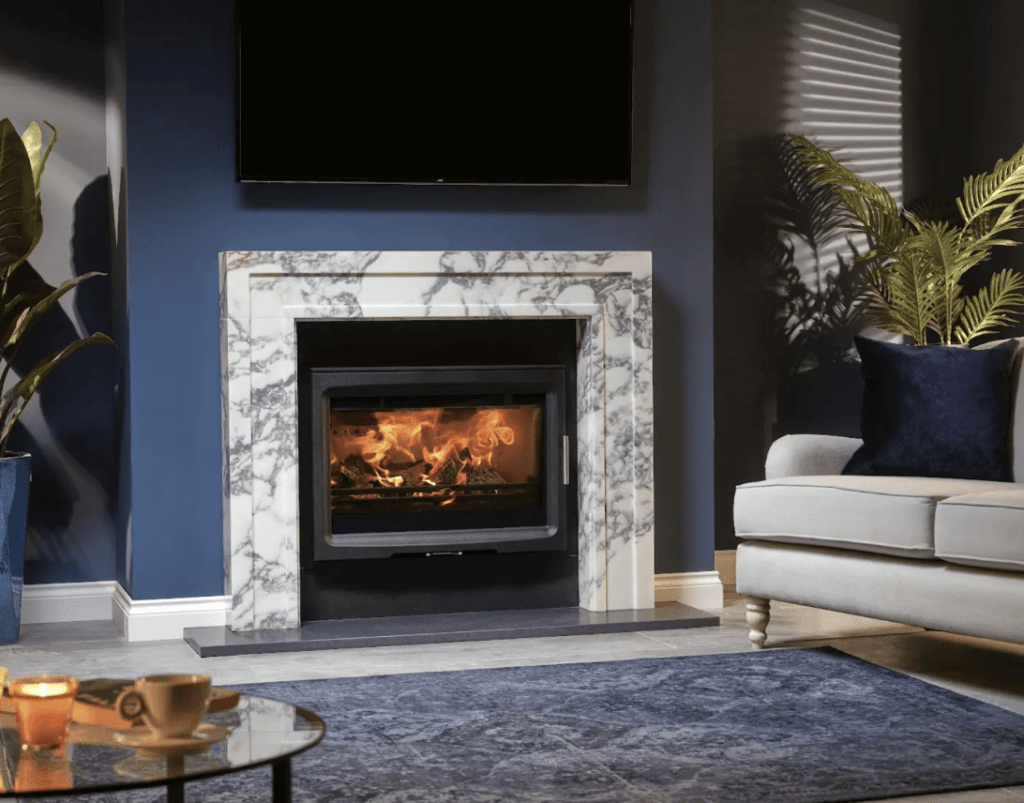
Inset or compact formats may help where internal space is restricted, but the chimney, permissions and safe installation distances should always be resolved before a particular model is ordered.
Which Charlton & Jenrick Stove Range Should You Consider?
The most suitable range depends on the calculated heat requirement, available space, chimney design and intended use. Fireline stoves offer outputs from compact 4kW models through to larger 8kW options. The range uses patented firebox combustion technology developed in our UK laboratory, with efficiencies from 78% to 82%.
Go Eco stoves offer a wide range of traditional, modern, circular, low-lintel, cooking, and off-grid options. Every model is SIA Ecodesign certified, DEFRA exempt and clearSkies certified.
The Go Eco Adventurer 5 was created for compact leisure environments such as cabins, yurts, shepherd huts and canal boats. It offers a 5kW output and a choice of purpose-designed accessories, including heatshields, ovens and log stores.
Purevision stoves cover freestanding, inset and statement designs, with patented technology and efficiencies reaching up to 87.2% across the range. All models are SIA Ecodesign certified, DEFRA exempt and clearSkies certified.
A compact stove is not automatically suitable for every compact building. The appliance and the complete installation must be assessed together.
So, Can You Install a Wood-Burning Stove in These Locations?
A wood-burning stove can potentially be installed in all five settings, but the level of complexity varies:
Conservatories: Often viable, provided the changing heat demand, roof penetration and regulatory status are considered.
Garden rooms: Commonly achievable, but output and timber construction need particular attention.
Log cabins: Possible with properly tested clearances, heat protection and a carefully designed chimney.
Mobile homes: A specialist project requiring an appliance and installation accepted for the exact type of unit.
Flats: Possible in some properties, but chimney access, planning permission and freeholder consent can be significant obstacles.
The best advice is to plan the chimney before purchasing the stove. A professional survey should establish the heating requirements, construction materials, hearth design, ventilation, chimney route, and permissions at the outset.
You can then visit a Charlton & Jenrick showroom to explore the most appropriate stove style and output for the proposed installation.
This article provides general guidance and primarily refers to the regulatory framework in England. Building standards, notification procedures and planning rules differ in Wales, Scotland and Northern Ireland. Local restrictions, leases, site rules, manufacturer requirements and insurance conditions may also apply. Always obtain advice from a suitably competent installer and the relevant authorities before work begins.