Open‑fronted gas fires remain a favourite in British homes because they deliver the most “open‑flame” look and feel of any gas appliance. You see and feel the fire directly, no glass in front of the flame, so the ambience is closer to a traditional coal fire, but with push‑button convenience and no ash bucket to empty.
Open-fronted vs Glass-fronted
Both open‑fronted and glass‑fronted inset gas fires slot into a fireplace back‑panel opening. With open‑fronted models, the flame is exposed to the room, behind a decorative fret/trim, which maximises visual realism and direct radiant warmth.
In glass‑fronted models, a sealed glass pane improves combustion control and heat capture, so efficiency is typically higher, around 75–90%. Whereas open‑fronted inset fires usually sit in the 50–65% range, depending on the burner and convector design.

What does that mean day‑to‑day? If ambience is your top priority and your central heating already is the main heating source, an open‑fronted fire can be a superb focal point.
If you want the lowest gas use per kW of heat, a modern glass‑fronted appliance generally wins. Many homeowners choose based on room role: open‑fronted for a living room, “feature fire” for atmosphere and top‑up heat, or glass‑fronted for higher seasonal efficiency.
Why 16″ Matters and What Inset Means:
The UK’s standard fireplace back‑panel aperture is 16″ wide, and most inset gas fires are designed to suit it. A good open‑fronted inset fire will drop into that opening and finish flush with a decorative trim and fret, or a one‑piece fascia, giving a neat, built‑in look without major building work.
Charlton & Jenrick Open Fires:
We have been building gas fires in the UK market since 1986, with UKCA/CE approvals and memberships including the Stove Industry Alliance (SIA) and HHIC. Our 16″ open‑fronted category sits under our Paragon range and currently includes four key models that address common installation scenarios. All models can be personalised with trims/frets and fascia options.
Paragon 2000 Plus — the versatile all‑rounder
Where it fits: designed for both chimneys and pre‑cast flues, so it covers a wide slice of UK housing stock.
Performance: up to 4.0 kW heat output; net efficiency up to 57%.
Controls & fuel: slide or remote control; Natural Gas or LPG; Natural Gas versions are 20% hydrogen‑blend ready for future fuel mix changes.
Styling: compatible with the full current C&J range of trims/frets/fascias.
These specs make the 2000 Plus the default choice when you want open‑fronted realism, broad flue compatibility, and simple installation paths.
Paragon 2000 Plus:
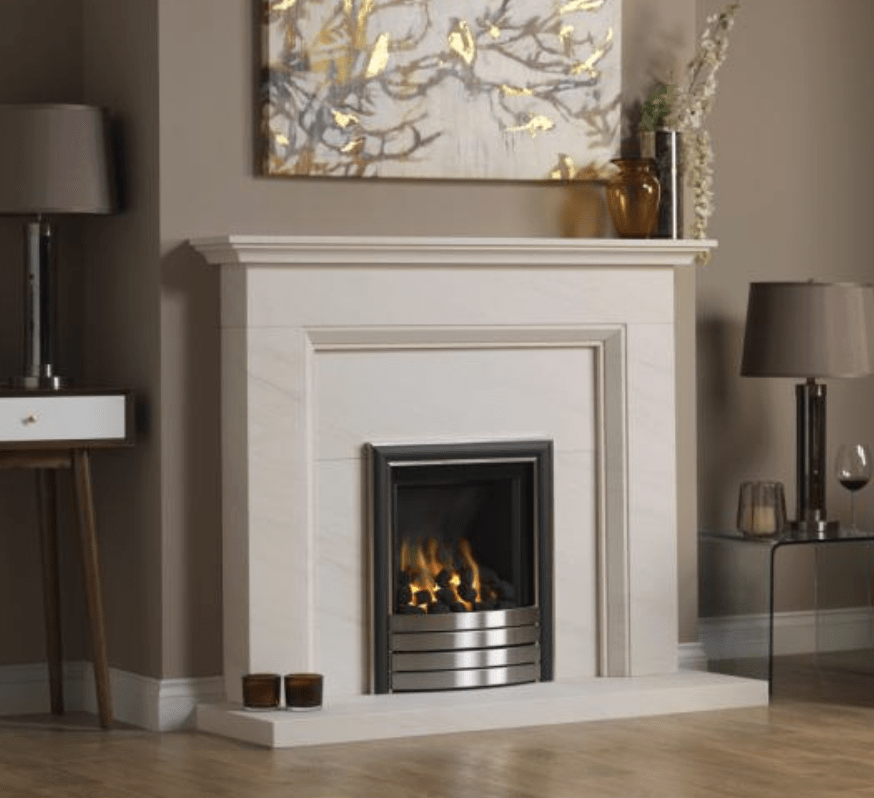
Paragon 2000 Low Lintel — for smaller openings
Where it fits: uses a reduced‑height firebox that’s engineered to suit 20″ openings, often found where a lintel restricts height.
Performance: 3.56 kW output; 56.6% net efficiency.
Controls & styling: slide control; black, brass, or chrome trims with a realistic coal bed.
Future‑proofing: 20% hydrogen‑blend ready (Natural Gas). Choose the Low Lintel when your fireplace height is tight, but you still want the look and feel of a full coal‑bed open fire.
Paragon 2000 Low Lintel:
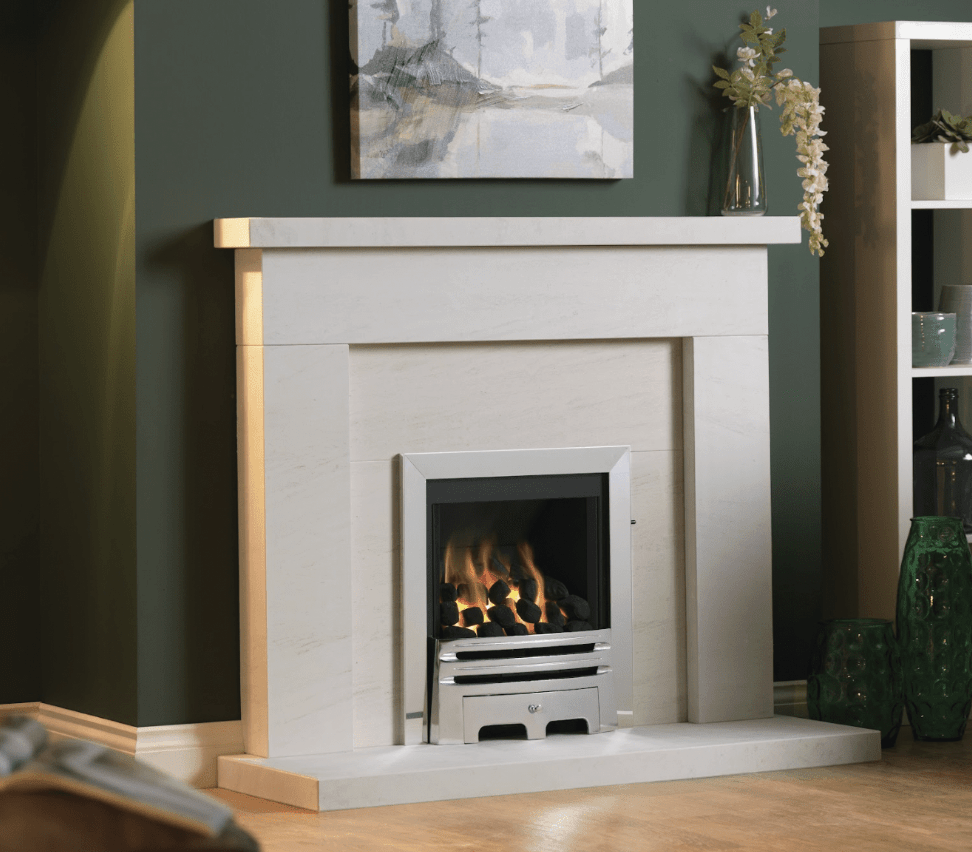
Paragon One Evolution (Conventional Flue) — hotter, with added convenience
Performance: up to 4.4 kW with a 63% net efficiency rating; coal or mixed log fuel beds.
Comfort & compliance: No ventilation required for this model (i.e., no additional permanent air vent in the room under its tested conditions; your installer will confirm for your property).
Controls & future‑proofing: slide or remote; 20% hydrogen‑blend ready.
If you like the open look but want the higher end of open‑fronted outputs/efficiency, the One Evolution is our step‑up option.
Paragone One Evolution:
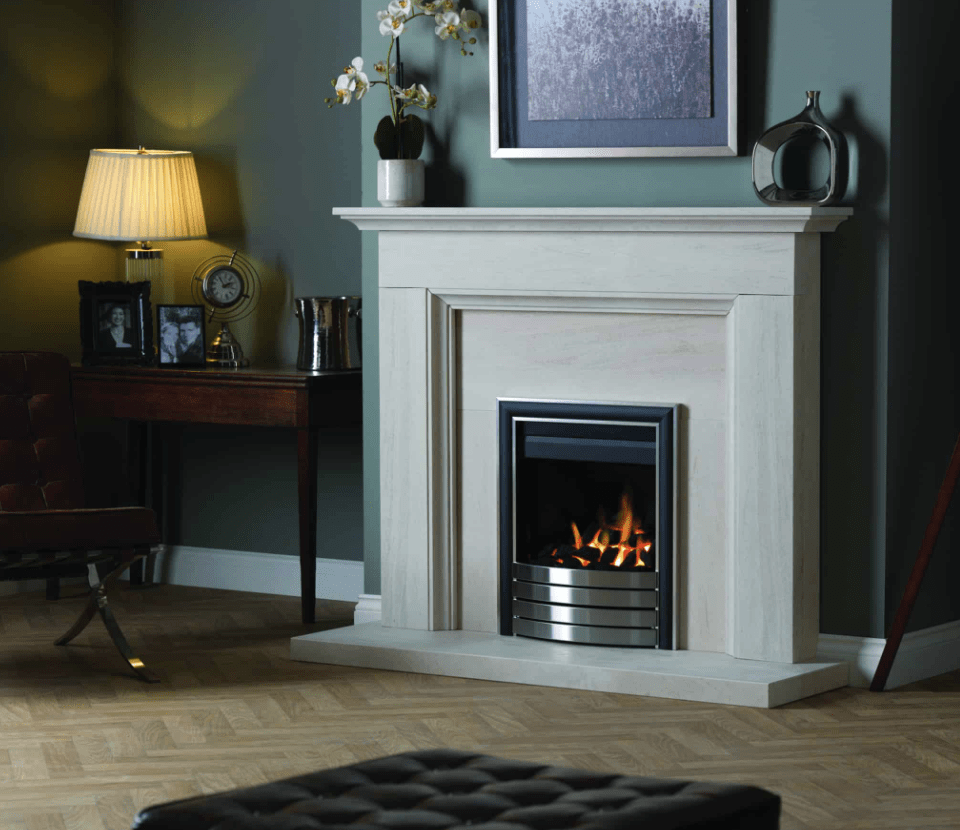
Paragon Slimline 3 (Slide Control) — for shallow flues & wider compatibility
Where it fits: a slimmer firebox to suit virtually any chimney or flue, including many Class 2/pre‑cast situations where depth is limited.
Performance: 4.1 kW output; 65% net efficiency (excellent for an open‑fronted slimline).
Controls & look: slide control; realistic coal bed with a distinctive front‑of‑fuel‑bed glow.
Future‑proofing: 20% hydrogen‑blend ready (Natural Gas). If you’re upgrading an older inset and your flue is shallow, the Slimline 3 is designed to solve that constraint while keeping an open flame aesthetic.
Paragone Slimline 3:
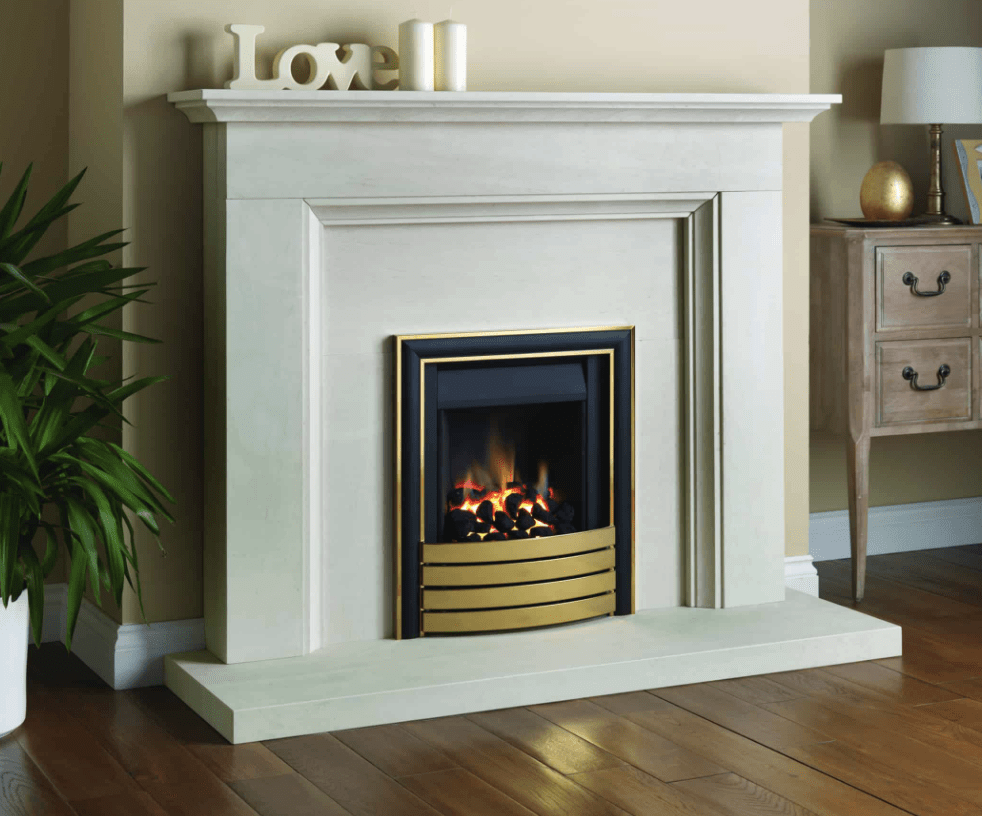
Open‑fronted insets heat by a blend of direct radiant warmth, from the flames and fuel bed, and convection, where cool room air is drawn in behind/around the firebox, warmed, and returned to the room through slots.
Convector versions can lift the efficiency of an open‑fronted design without adding a glass panel, which is why you’ll see some top‑tier open‑fronted insets quoting net efficiencies in the low‑to‑mid 60s, such as our Slimline 3 (65%) and One Evolution (63%). By contrast, glass‑fronted units, thanks to sealed combustion and heat exchange, can reach 80–90%.
Your priority, ambience vs. fuel economy, should be the main driver of choice here.
Flues and Chimneys:
Flue type dictates what you can install and where the heat will go:
Class 1 masonry chimneys (traditional brick) accept the full choice of 16″ inset gas fires.
Class 2 pre‑cast/prefabricated flues are shallower, so slimline open‑fronted insets (like our Slimline 3) or multi‑flue approved models are often chosen.
Balanced flue appliances are glass‑fronted only and sealed to the room; they’re not relevant to open‑fronted selections but useful if your property lacks a chimney.

The Paragon 2000 Plus specifically calls out suitability for chimneys or pre‑cast flues, which is handy if you’re unsure what’s behind your existing back panel. Always have your installer confirm the flue type and condition before ordering.
All four of our open-fronted gas fires above are available with slide control, which is a simple, reliable mechanism, and all offer remote control for ease of use, ideal if you prefer armchair ignition and flame height adjustment. All four models are 20% hydrogen‑blend ready. That means if the UK gas network increases hydrogen content (blends up to 20% are being explored), these appliances are already validated to run without modification.
If you want the closest experience to a real open coal fire, with modern safety systems, convenient controls, and a crisp 16″ inset fit, an open‑fronted gas fire remains hard to beat.
The Charlton & Jenrick 16″ lineup shows how far this category has come: better convector performance, clever model variants for tricky openings and shallow flues, and future‑ready credentials like 20% hydrogen blend compatibility.
Pair the right model to your flue and room, have it installed and serviced by Gas Safe professionals, and you’ll enjoy that timeless, living‑flame focal point with the practicality today’s homes demand.
View our range of open-fronted gas fires here.