Fires and fireplaces are a timeless focal point in many UK homes, providing warmth, ambience, and fabulous style. Whether you’re renovating a period cottage or designing a modern new build, there are so many types of fires and fireplaces to consider, ranging from the materials, such as limestone or marble surrounds, to the design styles, including inglenook hearths, neat hole-in-the-wall inserts, freestanding stoves, and futuristic media wall fires. You also have a choice of fuel types, including gas, electric, or wood-burning, each with its own requirements and benefits.
Limestone vs. Marble Fireplaces: Choosing Your Surround Material
Limestone Fireplaces: Limestone is a sedimentary rock known for its warm, soft, and natural look, often in neutral cream or beige tones. It’s highly versatile and works with many interior styles. A limestone fireplace can appear elegantly understated, perfect for cosy, classic rooms or even clean-lined modern interiors. Limestone surrounds often pair well with wood furnishings and can be kept simple and smooth for a contemporary feel, or carved with intricate details for a more traditional character. Because limestone is somewhat porous, it requires sealing to prevent stains, and the seal should be maintained over time. On the plus side, limestone is typically more cost-effective than marble and relatively durable if cared for. In design terms, limestone’s muted neutral colours suit a variety of palettes; it complements warm, earthy schemes and modern farmhouse or cottage styles, but can also be a quiet backdrop in a minimalist room.
At Charlton & Jenrick, we only use the finest limestone sourced from Portugal. Every limestone fireplace we produce has its own natural beauty and distinctive appearance. The veins, markings, and colour shade will constantly vary and never be the same as the surroundings you have seen in a showroom. During production, each piece of limestone is carefully matched to create a totally unique product. These imperfections are what make natural stone different from mass-produced surrounds.
Portugal has a global reputation for refining high-quality Limestone using highly specialised extraction methods. Portuguese limestone is often cut along the grain, which is the reason why you will see distinctive stripes in a fireplace.
You can learn more about limestone and marble here.
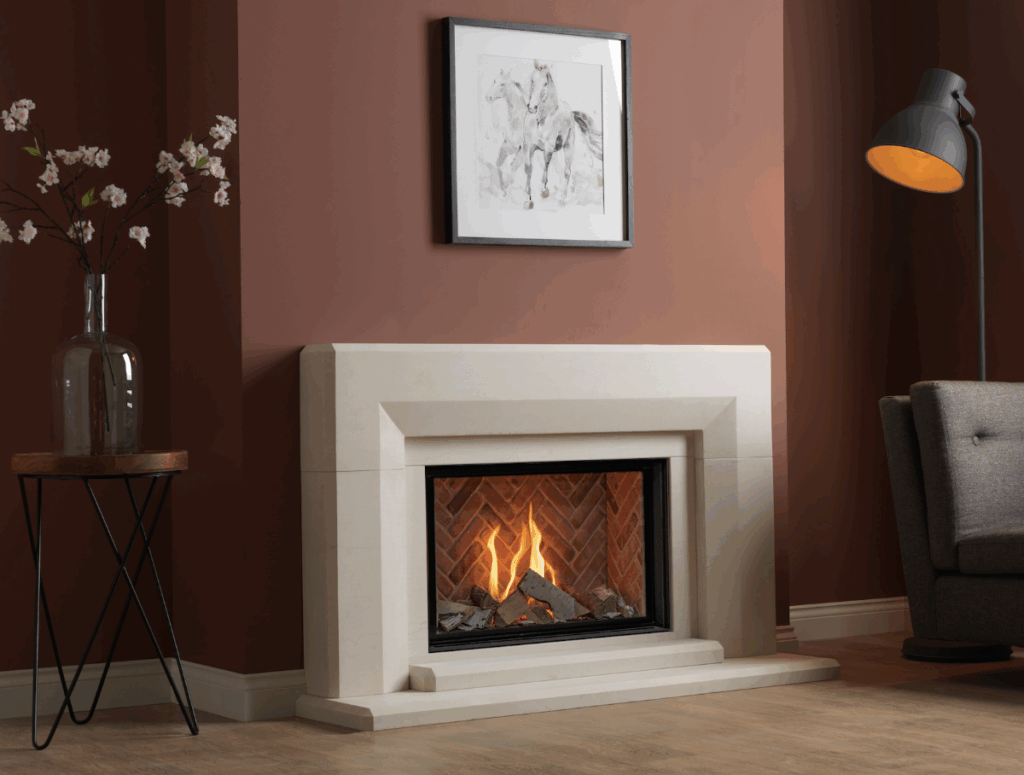
Below is our Infinity 780FL in an Edgemond Limestone Surround.
Marble Fireplaces: Marble is a metamorphic rock (meaning it’s undergone transformation by heat) known for its elegant and high-contrast veining. A marble fireplace surround makes a bold statement, it has long been associated with luxury and grandeur. With a wide variety of colours and striking veins, marble can become a focal point that evokes luxury and extravagance, giving a more formal and opulent feel than limestone. For example, a polished white marble mantel with grey veins adds instant classic sophistication, while black or green marble can create a dramatic contemporary feature.
Marble is extremely durable and also needs sealing; it’s less porous than limestone, but still benefits from protection. Bear in mind, marble surrounds are usually more expensive than limestone. In terms of style, marble suits homeowners looking for elegance or a statement piece. It’s at home in Georgian or Victorian-style interiors with ornate detailing, or conversely, a honed marble surround can be paired with modern simplicity for a luxury-modern look. If your design goal is a formal or “wow factor” fireplace, marble is a good choice, whereas limestone is ideal for a subtle, cosy charm.
Below is our Paragon P5 in the Kenilworth Micro Marble Suite.
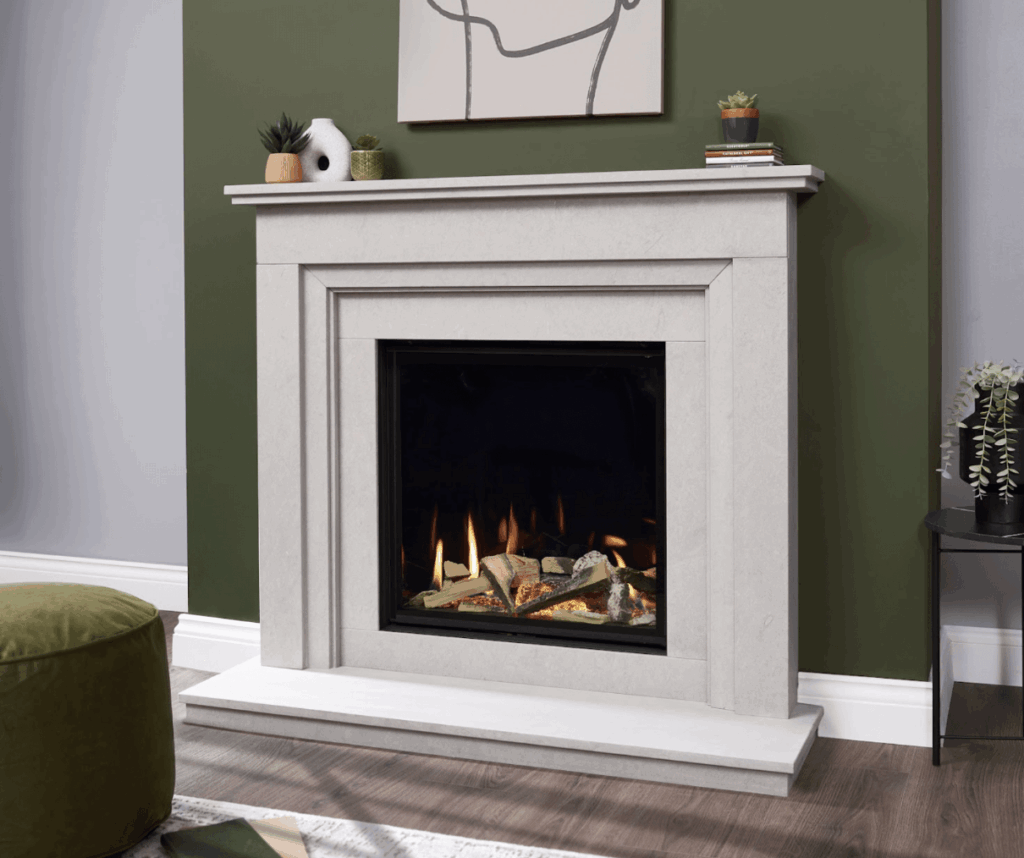
Interior Design Tip: When choosing between limestone and marble, consider the overall ambience of your room. Limestone’s neutral, matte texture complements warm, relaxed, or rustic decor, while marble’s glossy look fits chic, luxurious, or contemporary settings. Both stones are neutral enough to work with various colour schemes. Limestone often suits light, airy designs, while marble can work with modern spaces or vibrantly coloured classic styled rooms. Don’t forget to coordinate with other materials: e.g. limestone goes beautifully with timber beams or matte black metal inserts, and marble works well with polished brass or glossy tiles. Ultimately, the final choice is always yours. Always seal the stone and use a hearth rug or tools carefully to avoid scratches or stains on these natural materials.
Inglenook Fireplaces: Traditional Charm and Cosy Character
What is an Inglenook? A traditional inglenook fireplace refers to a large recessed fireplace, often found in historic cottages or manors. Historically, “inglenook” meant the little nook or seating area to the sides of a big fireplace, but today it describes the whole large chimney-breast recess designed to house a fire or stove. They have nostalgic charm and can become a stunning feature in both period and modern homes. Inglenooks no longer need to be enormous recesses, as they once were. They cover a range of sizes.
Fuel Options: Traditionally, inglenooks held an open wood or coal fire. In modern use, many homeowners install an Ecodesign wood-burning stove inside the inglenook to improve efficiency and reduce emissions while keeping the traditional look. This is popular because an enclosed stove provides much more heat and less draught, and of course, a lot less pollution than an open fire in that large space. It’s also possible to fit a gas stove or electric stove in an inglenook if you want the look without dealing with logs.
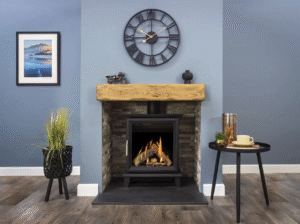
Below is our Paragon Edge 3S CF gas stove, sitting in an inglenook fireplace.
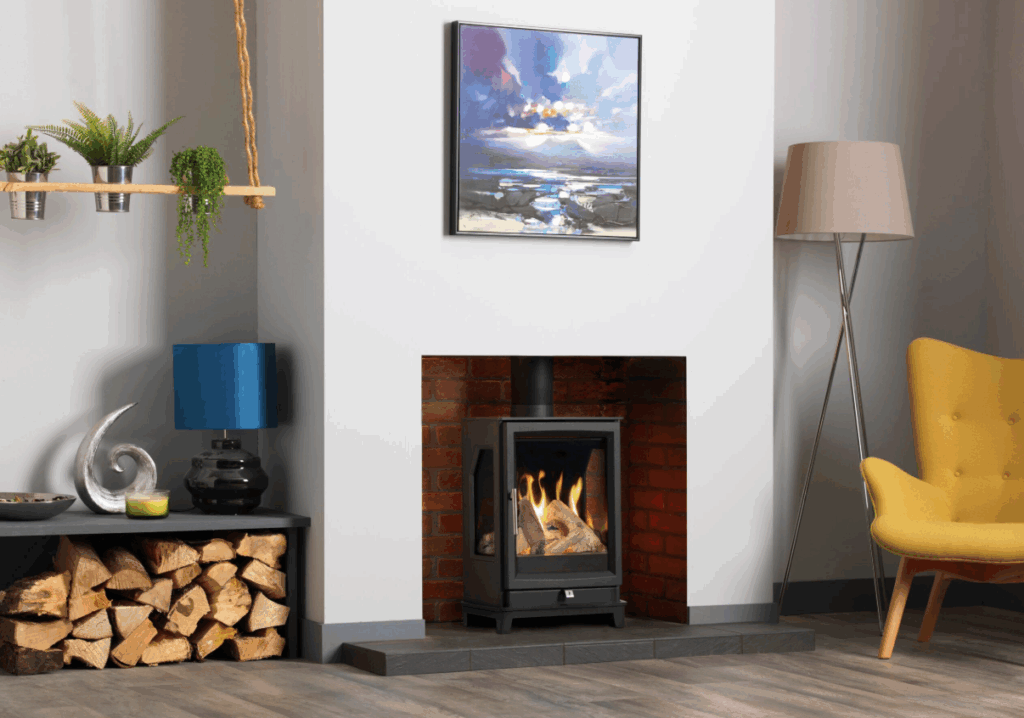
Design & Styling: Inglenooks are inherently eye-catching and set a very cosy tone in a room.
To enhance this feature:
Embrace the traditional vibe with materials. Many inglenooks, large or small, have brick or stone interior walls. You might clean and repoint exposed brick or stone to focus on the original structure. You can also add a rustic oak beam as a mantel across the opening, if one isn’t already there, to frame the space and display a few decorative items. A flagstone or quarry tile hearth on the floor will help produce a rustic look. If you prefer a cleaner look, you could plaster inside the inglenook and paint it a light neutral colour, creating contrast between a crisp interior and the original beam or surround.
Technical Tip (Efficiency): If you’re concerned about heat efficiency, installing an Ecodesign wood-burning stove is key if you have an inglenook. Ecodesign stoves are incredibly efficient, and if you use a flue liner in the old chimney, it will improve the draw and reduce heat loss. Make sure to size the stove appropriately; an overly small stove in a huge inglenook might not project enough heat out into the room, whereas a stove that’s too large could overwhelm and produce far more heat than needed.
Hole-in-the-Wall Fireplaces: Modern Minimalism
On the opposite end of the spectrum from an inglenook’s rustic presence is the hole-in-the-wall fireplace. As the name suggests, this is a style where the fire is set into the wall without a traditional hearth or mantel protruding. The effect is very clean and contemporary, the fireplace looks like a window or “hole” in the wall with flames inside, often surrounded by simple trim or frameless glass. Hole-in-the-wall designs have been popular for modern interiors aiming for minimalism and space-saving.
Fuel & Types: Many hole-in-the-wall fireplaces are gas fires, either open-fronted gas fires or glass-fronted (balanced flue) gas fires, specifically designed for in-wall installation. They can also be electric fires, especially LED inset fires that produce realistic flame effects without any chimney requirements. There are wood-burning stoves that fit flush into a wall, although these still require a proper chimney/flue system and are a little less common.
For most homeowners, gas or electric hole-in-the-wall fires are the go-to for ease. These come in various sizes and styles: from simple 16-18 inch inserts that fit in a standard chimney opening, to wide panoramic fires (4-6 feet wide ribbon flames) for a truly modern look.
Minimalist Finish: Often, less is more. The fireplace opening might have a simple trim or be entirely trimless, with the fire’s interior frameless glass visible. Surrounding wall finishes can be plain plaster painted in a subtle colour to let the flames stand out. For a real modern look, some designers use fire-resistant board or stone to create a flush surround. For example, a popular look is a hole-in-wall fire set in a plain white wall, or in a wall clad with slab materials like black granite or concrete-effect panels, for an industrial-chic feel.
Height and Viewing: Ensure you install it at a comfortable eye line when seated. Too high, and it may strain the neck; too low, and you lose the effect of a floating fire. Around 1.0 to 1.2 meters from the floor to the base of the opening is a common choice, but adjust it according to your seating layout. If mounting a TV above, be mindful of heat (many gas fires are too hot just below a TV unless specially insulated). Electric fires are much safer in that regard if you want a TV-fire combo on the wall.
Hearth or No Hearth: Traditionally, building regs required a hearth even for wall fires, to catch sparks or embers. However, many modern gas fires that are glass-fronted or have fixed guards can be installed without a hearth or with a minimal shelf, as long as they meet temperature safety criteria. Check the fire’s specifications, if no hearth is needed, you truly get that clean floating look. If a hearth is required or desired for aesthetic reasons, consider a slimline hearth that’s flush with the floor (e.g., a dark granite strip), which can delineate the fireplace area without protruding much.
Style Variations: Don’t think hole-in-the-wall is only ultra-modern; there are design variations. For instance, a hole-in-the-wall with a stone surround (a simple border of limestone or marble) can bridge contemporary and traditional looks. Or you might have a three-sided hole-in-wall, where the fire has glass on the front and sides, creating a more dynamic viewing angle in the room. These choices depend on budget and construction (custom builds are possible for a perfect fit).
Below is our Infinity 890 Hole in the Wall gas fire.
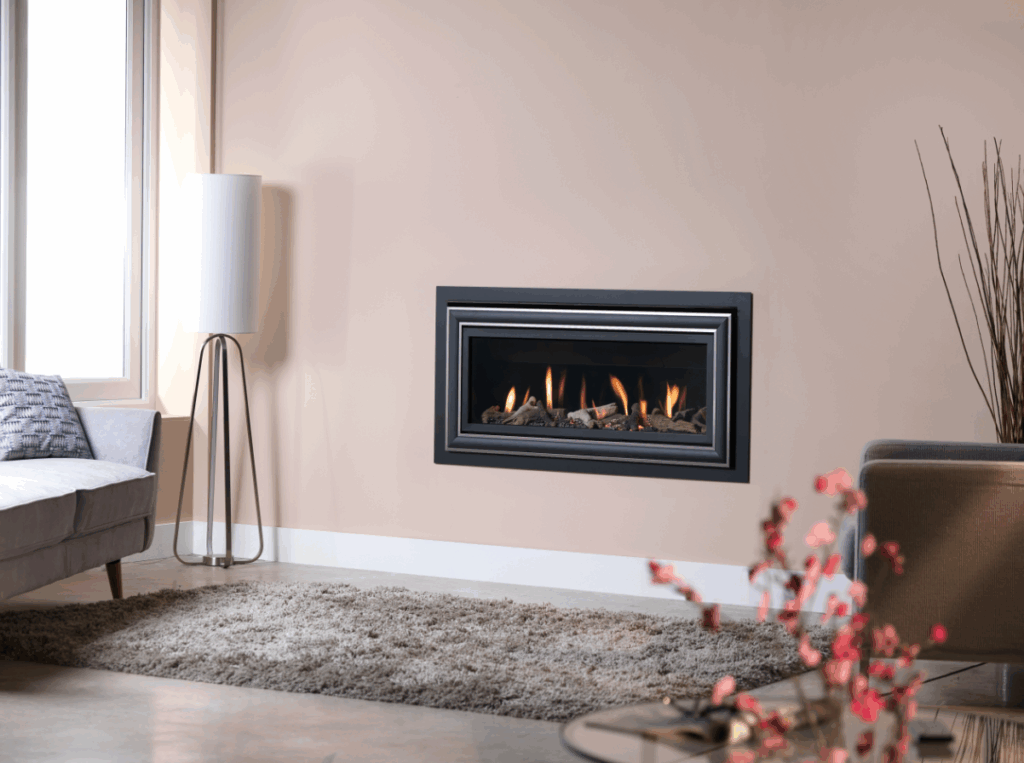
Interior Design Tip: Hole-in-the-wall fireplaces are fantastic for minimalist, modern interiors. In a minimalist living room with clean lines and uncluttered decor, a discreet hole-in-the-wall fire keeps the look seamless while still providing a flicker of flame for atmosphere. You can mount art or a flat-screen TV on the same wall (above or to the side, respecting clearances), and keep the floor clear for a spacious feel. For a glamorous contemporary look, a hole-in-wall fire with a polished marble or granite surround can look stunning.
Freestanding Fireplaces and Stoves: Flexibility and Focal Points
Freestanding fireplaces refer to units that are self-supporting and sit on the floor, on a base, as opposed to being built into a wall. This category includes wood-burning stoves, gas stoves, electric stoves, and electric fires. They have become very popular in the UK, especially wood-burning stoves for those who want the real fire look, or electric “stove effect” for convenience.
Wood-Burning & Multi-Fuel Stoves: These are the classic looking stoves that you might place inside an existing fireplace or leave free-standing in a room with a flue pipe going up. In a traditional sense, a wood stove often replaces an open fire in a hearth to provide greater efficiency. For example, you could install a wood stove on the hearth of an old fireplace, such as in an inglenook, as previously discussed. Alternatively, modern freestanding stoves can also be installed in open-plan rooms with a flue exposed as part of the industrial aesthetic.
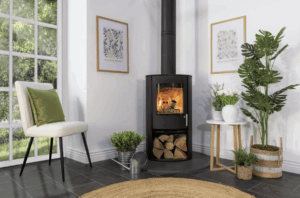
Below is our Purevision 5kW freestanding wood-burning stove.
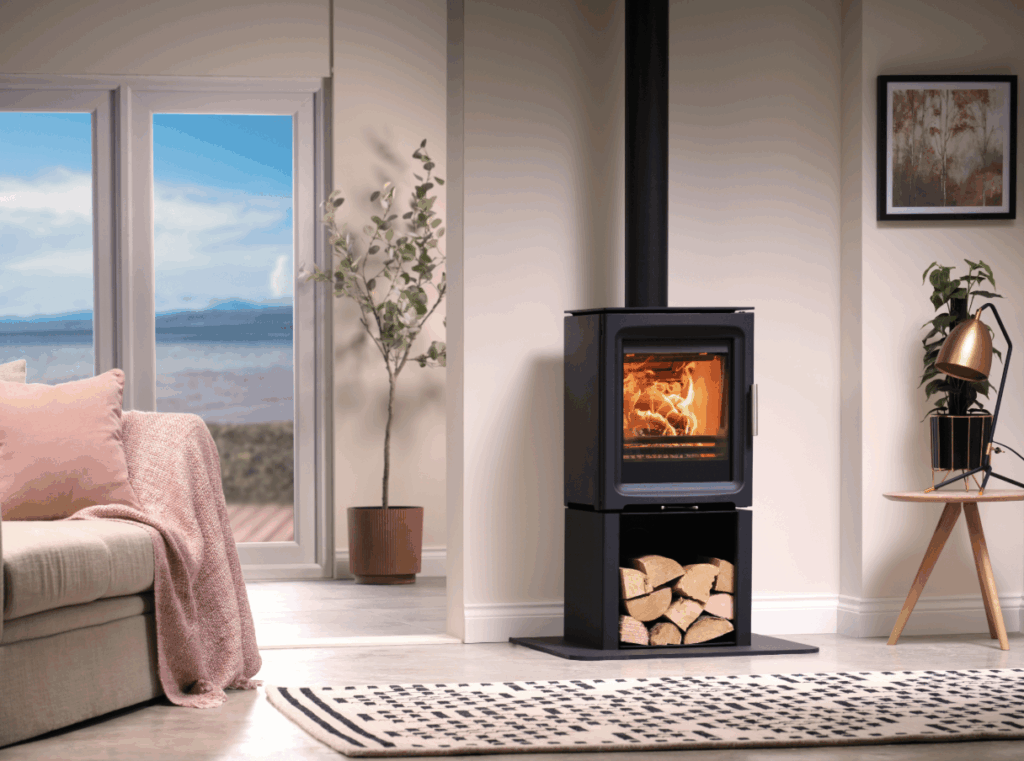
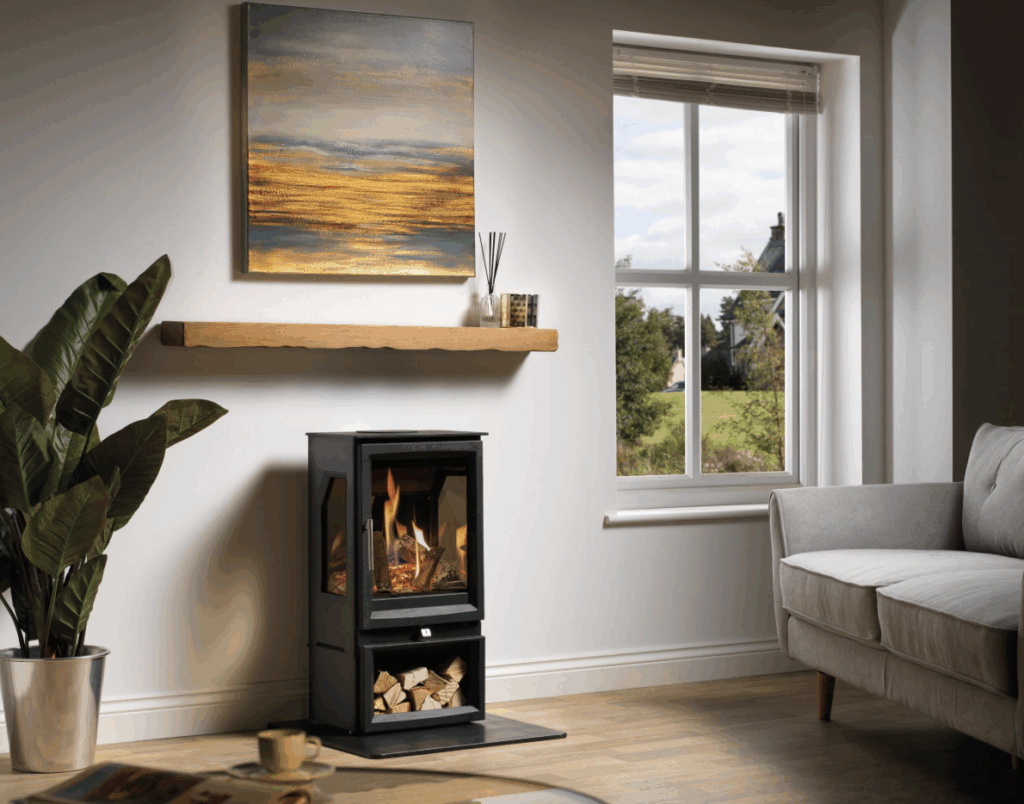
Freestanding Gas Stoves: These look similar to wood-burning stoves but are powered by gas. They need a gas supply and typically a flue, either using an existing chimney or a balanced flue through an external wall. Gas stoves are a great option if you love the stove aesthetic but want on-demand heat and don’t want the added work that comes with wood. These fires have realistic ceramic logs and a glass window with real flame. Heat output can be substantial, 3-5kW, enough to heat a small to medium room.
Below is our Paragon Edge 3S Freestanding Gas Stove
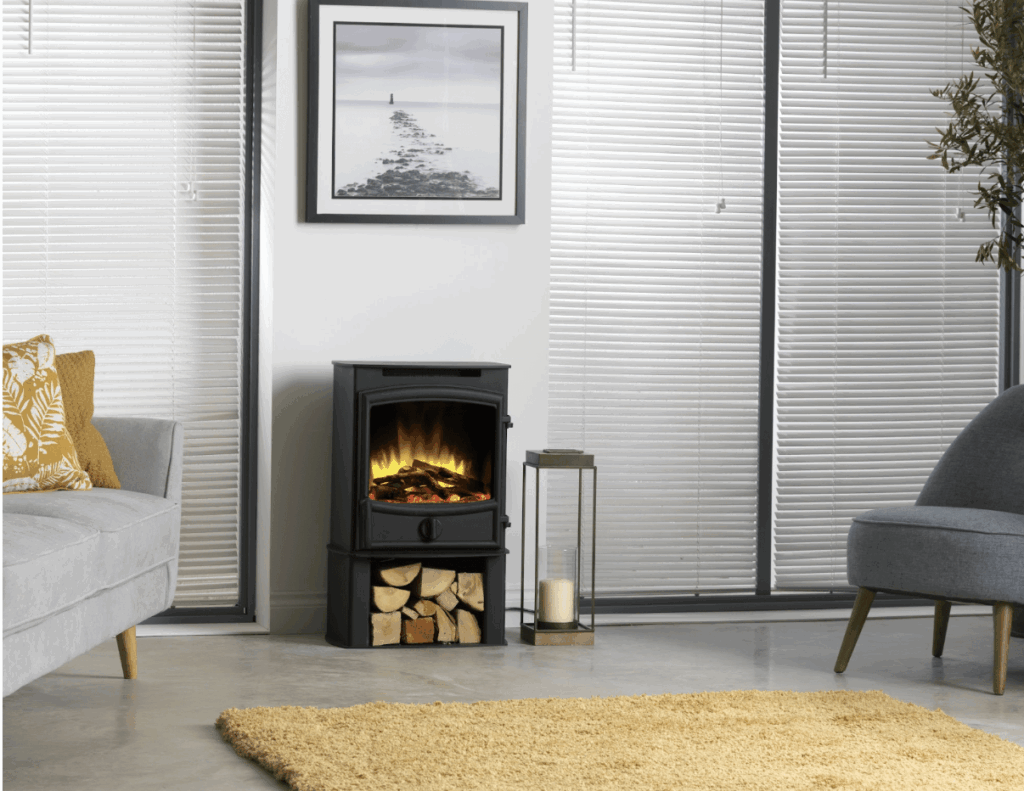
Freestanding Electric Stoves/Fireplaces: These are purely electric heaters made to look like stoves or complete fireplaces. They are the easiest of all, just plug in. Electric stoves are typically lightweight and can be placed anywhere. Some can even be moved from room to room.
Below is our 3D Ecoflame electric freestanding stove.
Media Wall Fireplaces: The Modern “Fire & TV” Focal Point
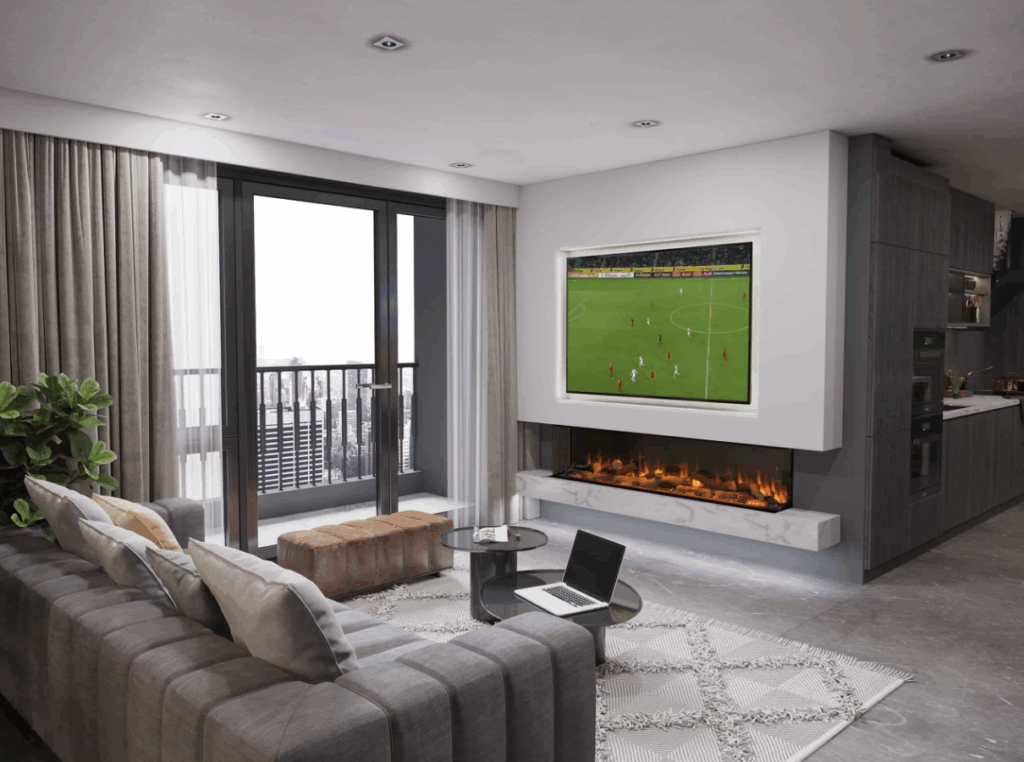
One of the biggest trends in UK interiors right now is the media wall fireplace. This concept integrates an electric fireplace into a wall that also houses your TV and media equipment, creating an entertainment centre that’s both functional and visually stunning. Essentially, you build a false wall or studwork where a flat-screen TV is mounted, and an elongated electric fireplace is installed below it (or offset to one side, depending on design). The result is a sleek feature wall that combines the cosy flames with your media, perfect for contemporary open-plan living rooms or even bedrooms.
Why Electric for Media Walls: Almost all media wall installations use electric fires, and for good reason. Electric fireplaces are low-heat (usually max 1.5-2kW) and can even run flame effects without any heat, meaning you can enjoy the ambience all year round without overheating your TV. They also require no flue, making them easy to build into a false wall structure. Electric units are lightweight compared to wood-burning stoves or gas fires, and safe to use in any location. With advances in technology, modern electric fires have very realistic flames and even crackling log sound effects – as found in our range.
Below is our iRange 1500 Deep Media Wall Electric Fire.
Interior Design Tip: When styling a media wall, aim for a contemporary, uncluttered look since the TV and flames already draw the eye. You can enhance the look by symmetry, e.g., if the media wall has empty space on either side of the TV, consider mounting two decorative wall lights or adding two alcove shelves for symmetry. However, avoid placing decor that competes with the TV or fire; usually, the fireplace itself is the ‘art’. If your style is modern-luxury, consider using finishes like a marble-look quartz slab around the fireplace opening or LED downlights to highlight the fire unit. For a more casual style, painting the media wall a neutral tone and adding a few plants or vases in the side recesses can soften the high-tech feel. Since media walls are bespoke, you have creative freedom, but always keep the overall room proportions in mind; a media wall should enhance, not overpower, the space.
What’s ideal for you?
Whether you dream of a crackling wood-burning stove nestled in a rustic inglenook or a sleek electric fire dancing beneath your flat-screen TV, there is a fire and fireplace for every style of home. Charlton & Jenrick offer an array of choices, limestone and marble surrounds for timeless elegance, hole-in-the-wall designs for modern minimalism, freestanding stoves for flexible charm, and innovative media walls for the tech-savvy decorator. By understanding the characteristics of each type, you can select a fire that not only provides warmth but also enhances your interior design vision.
Remember to balance creative ambitions with practical considerations: choose a fuel type that suits your lifestyle and ensure all safety and building regulations are met during installation.
In terms of interior design, use your fireplace as a launch pad to inspire the rest of your room. A fireplace isn’t just a heating appliance; it’s often the visual focal point in a room. A limestone fireplace might steer you toward natural textures and calm colours; a marble mantel could encourage luxury fabrics and classical decor; an inglenook could attract a collection of old copper pots or a stack of books for maximum effect. Always consider scale, proportion, and synergy with other elements in the room. Even when the fire is unlit, the fireplace should continue to add character to the room.
Lastly, don’t forget to enjoy the process! Adding or upgrading a fire can transform your home’s feel, not to mention potentially adding value to the property. Whether you’re a homeowner revamping your living room or an expert designing for a client, the goal is the same: create a safe, beautiful, and welcoming fire that suits the needs and tastes of its users.
Feeling Inspired? View our range of wood-burning stoves, gas and electric fires here.