Information checked on 28 September 2026. Prices, support schemes and forecasts may change. Ofgem price-cap figures apply to Great Britain; Northern Ireland has different energy-market arrangements.
As we head further into autumn, the date the heating goes on is increasingly driven by what people can afford. Research published by Citizens Advice in August found that more than a third of people surveyed across Great Britain were worried about paying their energy bills this winter. For households already managing debts or stretching a fixed income, another increase leaves difficult decisions ahead.
However, the picture is more complicated than headlines about rising energy bills. Gas and electricity prices are moving differently, while households using heating oil face a separate market, significant price volatility and the challenge of paying for deliveries.
We believe the conversation about heating should begin with comfort, suitability and control, not simply the purchase price of an appliance. Understanding where costs are rising, what assistance is available and how to use energy effectively can help households make more informed decisions.
Gas and electricity: what is changing this autumn?
Ofgem has confirmed that its price-cap benchmark will rise from £1,663 to £1,723 a year from 1 October 2026, an increase of approximately 4%. These are annualised figures for a household using the regulator’s specified typical amount of gas and electricity and paying by Direct Debit. They do not forecast what every household will spend.
The distinction is important to understand: the price cap limits eligible tariff rates, not the total amount a household can be charged. A home that uses more energy can pay considerably more than the headline figure. Standing charges also remain payable even when consumption is low.
The average rates illustrate how the changes differ between fuels:
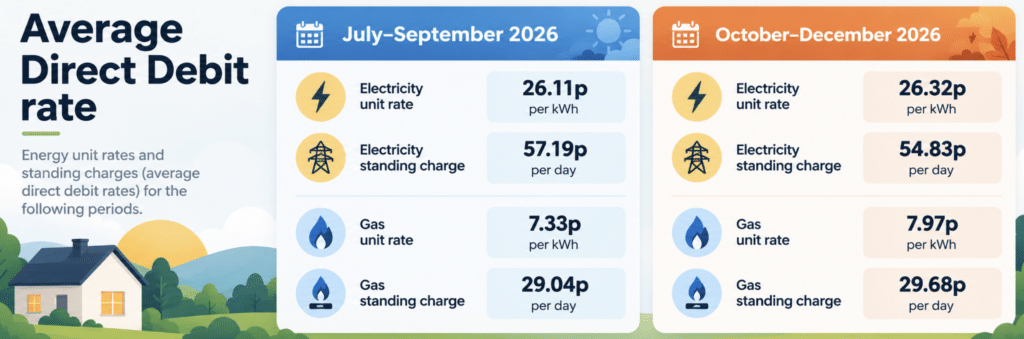
These are Ofgem’s Great Britain averages. Actual rates vary by region and payment method. October electricity rates reflect the temporary removal of VAT, while gas continues to include 5% VAT.
For gas-heated homes, the increase in the amount paid for each unit is particularly important. The October gas rate is approximately 8.7% higher than the July–September rate. Electricity’s payable unit rate rises by approximately 0.8%, although the different VAT treatment means these are not like-for-like comparisons of underlying pre-tax prices.
Looking further back, Ofgem’s average gas unit rate for April–June was 5.74p per kWh. October’s 7.97p is approximately 39% higher. For illustration, buying 1,000 kWh of gas at those respective rates costs £57.40 or £79.70, before standing charges. That is £22.30 more for exactly the same quantity of gas.
Consequently, a relatively modest-looking increase in the combined headline cap can conceal a more substantial change for a household that relies heavily on gas for heating.
Heating oil: a different and particularly difficult cost pressure
Heating-oil users do not have the same protection as households on gas and electricity tariffs covered by Ofgem’s cap. The Competition and Markets Authority estimates that around 1.5 million UK households use heating oil and has identified gaps in the protections available to these customers.
The market has been volatile during 2026. CMA figures show that the UK’s weighted average heating-oil price rose from approximately 64p per litre in February to 123p in April, before falling to around 104p in May. This was not a smooth, uninterrupted increase, but it demonstrates how quickly the cost of a delivery can change.
More recent figures provide a regional snapshot. On 28 September 2026, the Consumer Council recorded an average price of £555.77 for 500 litres in Northern Ireland. That was £248.39 more than on 26 February, an increase of approximately 81%. Its average for a 900-litre delivery was £986.85. These are Northern Ireland figures, not UK-wide averages, and should not be treated as a quotation for a property elsewhere.
For an oil-heated household, the problem is therefore about cash flow as well as annual expenditure. Finding several hundred pounds for a delivery can be difficult even where a family could, in principle, spread the same expense across a year.
That distinction helps explain why reducing wasted heat matters so much in an oil-heated property. Using less fuel can extend the time between deliveries. It cannot remove the need to buy oil, but it may make the timing and size of that expense more manageable.
Why are energy costs rising?
Ofgem attributes the latest increase mainly to higher wholesale gas costs linked to the ongoing conflict in the Middle East. Wholesale-market movements are therefore feeding through to household bills, although not every change reaches every customer at the same time.
Heating oil is also exposed to international fuel markets. The CMA’s investigation found that wholesale increases accounted for most of the rise in the typical cost of a 500-litre delivery between February and March. That does not mean every supplier’s conduct was acceptable, but it is important to distinguish wider market pressures from individual consumer-protection problems.
Household bills also include costs beyond the fuel itself. Network infrastructure and other supply costs contribute to standing charges, which vary geographically. Reducing consumption therefore reduces the usage-related part of a bill, but does not eliminate all charges.
For winter budgeting, the practical relationship is straightforward:
Heating costs depend on both the price of energy and how much energy the home needs. Households have limited influence over the first. Improving efficiency, controls, and how a property retains warmth can help with the second.
What is the government doing?
No single measure covers every fuel, every household, and every part of the UK. The current response combines changes to bills, targeted financial assistance, consumer-protection measures and longer-term investment in homes.
From April 2026, the government changed how certain energy-policy costs are funded, including ending bill funding for the Energy Company Obligation and removing 75% of Renewables Obligation costs from electricity bills. It described the combined effect as removing an average of £150 of costs from household energy bills.
A further measure applies this winter: qualifying domestic electricity in England, Scotland and Wales will be temporarily zero-rated for VAT from 1 October 2026 to 31 March 2027. Gas and other domestic heating fuels, including heating oil, remain subject to the reduced 5% rate. Domestic electricity in Northern Ireland also remains at 5%. The published October electricity-cap figures already reflect this change, so it should not be deducted from those figures again.

Help for eligible households
The Warm Home Discount reopens in October 2026 and provides eligible households with a £150 discount on their electricity bill. It is not a cash payment. Most qualifying households receive it automatically, although some Scottish households need to apply through their supplier. The scheme does not operate in Northern Ireland.
Eligible older people may receive a Winter Fuel Payment of £100–£300, depending on their circumstances. For winter 2026/27, payments are normally made in November or December. Where an individual’s income exceeds £35,000, HMRC will recover the payment. Scotland operates its separate Pension Age Winter Heating Payment arrangements.
Cold Weather Payments provide additional assistance to qualifying households when the relevant local temperature conditions are met. In England, Wales and Northern Ireland, the payment is £25 for each qualifying seven-day period during the scheme’s winter window. Scotland uses a different Winter Heating Payment system.
These schemes have different eligibility rules. Households should check their circumstances rather than assume that receiving, or not receiving, one form of support determines entitlement to another.
Targeted help for heating-oil users
In March, the UK government announced more than £50 million to help households struggling with heating-oil costs, with funding distributed across the four nations. In England, councils are delivering support through the Crisis and Resilience Fund, rather than as a universal payment to every oil-heated home.
The arrangements elsewhere are also targeted:
In Scotland, the government announced on 25 September that its Emergency Heating Oil Scheme would be extended into winter and beyond. It is intended to help eligible households experiencing fuel hardship and is administered through Advice Direct Scotland.
In Wales, the off-grid support scheme offers £200 to qualifying low-income households using oil or LPG. At the time of writing, participating councils state that applications close on 30 September 2026, making the deadline especially important. Separate help may be available through the Discretionary Assistance Fund.
In Northern Ireland, a Home Heating Oil Support Scheme offers eligible households a £100 voucher. Applications opened on 9 September 2026 and are scheduled to remain open until 31 March 2027, subject to the scheme’s requirements. None of these arrangements should be confused with a general cap on heating-oil prices.
Stronger consumer protection
The CMA’s July review recommended proportionate improvements to the heating-oil market, including clearer pricing, better cancellation protections and improved support for vulnerable customers. These were recommendations for stronger safeguards, not the introduction of an Ofgem-style oil price cap.
In August, the CMA also announced compensation arrangements with participating suppliers for certain customers whose orders had been cancelled and who subsequently faced higher prices. That action concerns affected orders; it is not compensation available to everyone who has paid more for oil this year.
Longer-term investment in warmer homes
The government’s Warm Homes Plan includes £15 billion of public investment and aims to upgrade up to five million homes by 2030. These are programme commitments and objectives, rather than improvements already delivered to all those properties.
In England, the Warm Homes: Local Grant can fund improvements to qualifying, less energy-efficient homes. Eligibility normally includes an EPC rating of D–G and household income of £36,000 or less, although there are alternative qualifying routes. Both owner-occupied and privately rented homes can be considered, with council assessment and scheme conditions applying.
For eligible properties in England and Wales, the Boiler Upgrade Scheme provides £7,500 towards qualifying air-to-water or ground-source heat pumps. An additional £1,500 is available through March 2027 for eligible off-gas-grid properties replacing oil or LPG heating. These grants relate to specified heating-system installations; they should not be assumed to cover an ordinary replacement room fire or stove.
Financial support can reduce an immediate burden. Improving the building and heating system addresses a different problem: how much energy the household will need in future.
How might households respond to higher costs?
Citizens Advice’s summer research found that 37% of respondents were worried about affording energy bills this winter. Among prepayment customers surveyed, 28% reported losing access to gas or electricity during the previous year because they could not afford to top up. These findings concern Great Britain and show that the pressure is not simply hypothetical.
As bills rise, households may respond by reducing spending elsewhere, delaying turning on the heating, shortening heating periods or concentrating warmth in the rooms they use most. Some may investigate alternative tariffs, postpone a heating-system replacement or look for a more controllable supplementary appliance.
These are possible responses, not evidence that every household will behave in the same way. Their consequences also differ.
Adjusting a timer to avoid heating an empty home improves efficiency. Sitting in an inadequately heated home because of no money is deprivation. The two should not be presented as equivalent energy-saving choices.
UK Health Security Agency guidance recommends heating frequently used rooms to at least 18°C, particularly where occupants are older, have health conditions or are less mobile. Some people need a warmer environment. Cold homes can create health risks, and efforts to cut bills should not compromise adequate warmth or encourage unsafe heating methods.
Households struggling to pay should contact their supplier early. Ofgem says suppliers must work with customers on affordable payment arrangements, with additional help available in relevant circumstances. Waiting until arrears become unmanageable can leave fewer practical options.
What could happen during autumn and winter 2026/27?
October’s rates are confirmed; January’s are not
The October–December cap is known. The next cap, covering January–March 2027, is due to be announced by 25 November 2026. Until then, any quoted January figure is a forecast rather than an official tariff benchmark.
One published Cornwall Insight forecast put the January benchmark at approximately £1,872, around 9% above October’s level. However, although its webpage was updated in September, that forecast was based on market data from 25 August. It is therefore a dated indication of possible upward pressure, not a confirmed outcome. Households considering a fixed tariff should consequently compare the offer against their own consumption and circumstances, rather than assume that any forecast will prove correct.
Weather will affect consumption as well as comfort
The Met Office’s 11 September long-range outlook favoured a warmer and wetter autumn than usual. Seasonal outlooks describe probabilities, not guaranteed conditions, and an autumn outlook cannot establish that the whole winter will be mild. For household planning, it is sensible to allow for cold periods rather than build a budget around the most favourable scenario. Even without another tariff increase, needing to run the heating for longer would increase expenditure.
Oil users should plan deliveries, not try to predict the market perfectly. Heating-oil prices may rise or fall as wholesale conditions change. It would be misleading to promise that buying on a particular date will secure the winter’s lowest price.
A more practical approach is to monitor the tank, obtain comparable quotations and understand delivery lead times before fuel runs low.
UKIFDA’s 2026/27 winter campaign specifically encourages households to check fuel levels and plan ahead. This is preparation advice, not evidence that a nationwide shortage is inevitable. For some households, the greatest winter risk may be the combination of a delivery becoming necessary at the same time as other bills, not simply the highest price per litre.
Energy efficiency means making purchased heat work harder
When fuel becomes more expensive, wasting it becomes more expensive too. However, “energy efficient” should mean more than a label on a box. A useful way to approach heating is to consider three things together: how much heat the building loses, how effectively the appliance supplies it, and how accurately the controls match that heat to the household’s needs.
Start by retaining warmth
Draught-proofing can reduce unwanted air leakage around windows, doors and other gaps. Insulation improvements can also reduce the amount of heat a property needs. Importantly, draught-proofing must not block ventilation that is required for a healthy building or the safe operation of combustion appliances. Air bricks, flues and purpose-provided vents should not simply be sealed to make a room feel warmer.
The principle is straightforward: there is limited value in paying for more heat while avoidable losses remain unaddressed.
For households with little spare money, modest improvements and checks may be more realistic than a major installation. Where larger work is necessary, checking grant eligibility before committing to expenditure is worthwhile.
Use controls to prevent unnecessary heating
Thermostats, programmers and thermostatic radiator valves can help match heating to occupancy and room requirements. Their value depends on correct settings and an understanding of the system. Different technologies also behave differently: advice appropriate to a conventional boiler should not automatically be applied to a heat pump or another system designed for longer, steadier operation.
The objective is not constant adjustment. It is a heating pattern that avoids unnecessary operation while maintaining suitable temperatures.
Understand what an efficiency improvement actually means
Consider a simplified example. An appliance converting 60% of its fuel’s energy into useful heat needs 100 units of fuel energy to deliver 60 units of warmth. At 85% efficiency, supplying the same warmth would require approximately 71 units, about 29% less fuel.
That is an illustration of the calculation, not a savings promise for any particular product. Real comparisons require consistent efficiency measures and allowance for installation, controls, heat distribution and how the appliance is used.
A more efficient appliance can reduce the energy needed for a given amount of warmth. It cannot guarantee a lower overall bill where fuel prices rise sharply, or the household chooses to heat more space.
Keep existing equipment properly maintained
Gas appliances should be checked and serviced as appropriate by a suitably qualified Gas Safe registered engineer. Oil-heated households should maintain their equipment and inspect tanks for signs of deterioration or leakage. Safety checks and servicing should not be treated as optional substitutes for buying fuel.
Where efficient room heating can fit
A room-heating appliance can form part of a considered heating plan, particularly where household routines mean one space needs warmth while others need less.
However, supplementary heating only creates a saving when it replaces more costly or unnecessary heating elsewhere. Running an additional appliance while leaving all other heating unchanged adds another energy demand. Direct electric room heating can be useful for limited, targeted use, while its unit costs make whole-home comparisons more complicated.
This is why we encourage customers to consider the room, their existing system and their routine together. The right solution for occasional evening warmth may not be the right solution for heating an entire property throughout the day.
Gas fires – efficiency and controllability
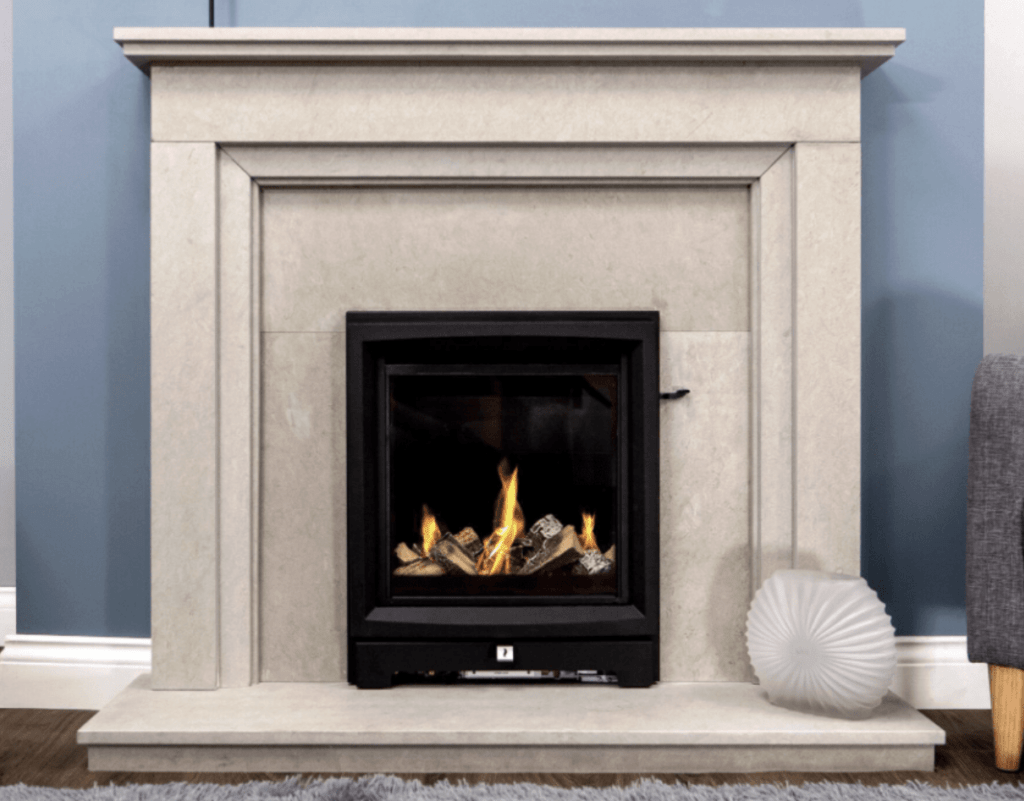
For homes where gas remains an appropriate option, a well-matched gas fire can provide controllable heat in the room being used.
Our Paragon Core BF balanced-flue gas fire – below, for example, has an efficiency of 89% net and a rated heat output of 3kW. The practical question in choosing the right fire is how it will operate in the home: what it will replace, how much heat the room needs, and whether its output and installation requirements suit the space.
Electric fires – distinguish efficiency from running costs
Direct electric heating converts almost all the electricity it uses into heat within the home. That is what point-of-use efficiency describes. It does not mean electricity is the cheapest way to heat every home. Heat pumps are also different from direct electric heaters because they transfer heat rather than relying solely on electrical resistance.
The useful benefits of an electric fire therefore include controllability and flexibility, rather than a claim that its electricity somehow costs less.
Our iRange i920e Slimline, for example, includes a digital thermostat, a seven-day timer and open-window detection, with a maximum heat setting of 1.5kW. These features let you match heating to your routine and avoid unnecessary operation.

At October’s average electricity unit rate, a 1.5kW heater running continuously for one hour would use approximately 39.5p of electricity for the heating element. Display functions and other components add some consumption; standing charges are excluded. Thermostatic cycling can change actual usage. This illustrates running cost rather than guaranteeing it for every tariff or room.
Our electric fires also offer flame effects without the heater operating. This lets you enjoy the visual atmosphere of a fire when extra warmth isn’t needed, without paying for the heating element to run. The flame effect itself still uses electricity.
Wood-burning stoves – appliance choice, fuel and responsible use
Where a wood-burning stove is appropriate, both the appliance and its operation deserve attention. Our Fireline Ecostar 5 range offers efficiencies of up to 82.7%. These credentials do not mean that wood burning is emission-free, however. We always recommend using suitable dry fuel, with logs at 20% moisture content or less, maintaining the appliance and chimney, and avoiding inappropriate materials such as treated or painted wood.

Preparing for winter without losing sight of comfort
No single appliance type or household habit can offset the effects of higher energy prices. However, it helps to separate decisions you can make now from those that need longer-term planning. Checking a tariff, understanding available support, correcting heating schedules and arranging necessary maintenance can help with the coming weeks. Improving insulation or replacing unsuitable equipment may require a more considered assessment of cost, disruption and likely benefit.
For households already struggling, the priority should be access to adequate warmth and assistance, not pressure to make an expensive purchase. For those planning an upgrade, the right questions are how much useful heat is needed, where it is needed, what it will cost to provide and how effectively it can be controlled.
We see an efficient heating appliance as part of that wider picture. Our showroom network can help customers explore suitable options and understand their operation, alongside the practical requirements of their home.
The aim is not simply to use less heat. It is to create a comfortable home while wasting less of the energy we pay for.
That remains a worthwhile principle whether winter prices rise, stabilise or fall.