The Government’s Environmental Improvement Plan (EIP) 2025, published on 1 December 2025, is a government roadmap for improving the environment in England up to 2043. It includes a stronger focus on air quality, especially PM2.5, the fine particulate pollution most closely linked with harm to human health. For homeowners, that matters because the plan explicitly highlights burning solid fuels as a major source of PM2.5 emissions and confirms the government will consult on further measures to reduce emissions from domestic burning.
So what does this mean in practice for heating your home in 2026? It doesn’t mean you need to replace your heating system tomorrow. But it does mean that policy is increasingly focused on reducing exposure to PM2.5, and household choices about the use of inefficient non-Ecodesign stoves, open fires, and poor-quality fuels are very much in focus.
What is the Environmental Improvement Plan 2025?
The EIP 2025 is the government’s plan for improving environmental quality and restoring nature, with ten goals spanning air, water, waste, chemicals, climate resilience and access to nature. It is explicitly labelled as applying to England, with many air-quality powers devolved elsewhere in the UK.
For home heating, the most relevant part is Goal 2: Air, where the plan links clean air to public health and sets out actions that government and local authorities will take to reduce pollution at source and the amount of pollution people are exposed to.
Why PM2.5 is the headline issue?
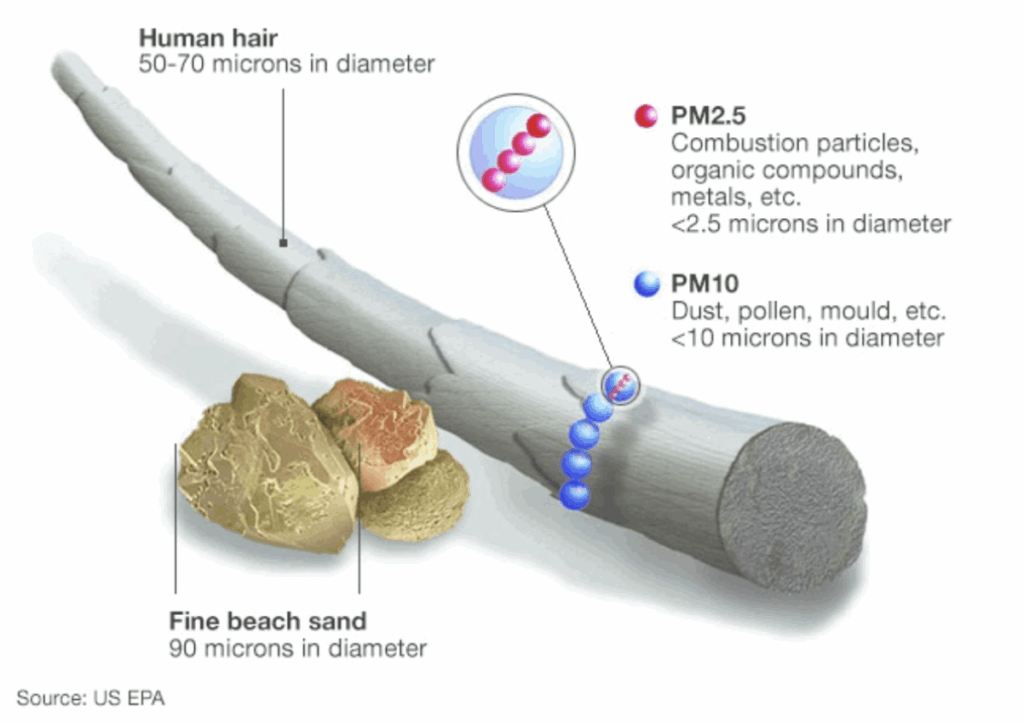
We have mentioned this many times in the articles we produce, and for good reason, PM2.5 refers to particulate matter with a diameter of less than 2.5 micrometres, which small enough to penetrate deep into the lungs and, in many cases, enter the bloodstream. In the EIP’s air chapter, the government mentions PM2.5 as a key health hazard and links it to inefficient domestic solid-fuel burning, especially in urban areas where old stoves and open fires are the main culprits.
The plan’s emphasis on PM2.5 is also reflected in the separate Air Quality Environment Act target delivery plan, published the same day as the EIP. This delivery plan explains the long-term legally binding targets and the new interim targets, and why additional measures may still be needed to meet them.
The targets that shape policy in 2026
1. The legally binding 2040 targets (Environment Act)
England’s statutory PM2.5 targets are:
a. Annual mean concentration: a maximum of 10 µg/m³ by 31 December 2040
b. Population exposure reduction: at least 35% reduction by 31 December 2040 compared with 2018
2. The new interim 2030 targets (what’s accelerating action)
The EIP 2025 sets updated interim targets for December 2030:
a. Annual mean concentration: 10 µg/m³ by December 2030
b. Population exposure reduction: 30% by December 2030 compared with 2018
µg/m³ = micrograms per cubic metre
These are significant numbers because they effectively bring the 10 µg/m³ milestone forward as an interim goal, which tends to increase policy focus and speed up consultations and local measures.
Why is domestic burning specifically mentioned?
In the EIP’s clean air chapter, the government states that burning solid fuels is a major contributor to national PM2.5 emissions and a major source of air pollution, particularly in urban areas, and confirms that it will consult on further measures to reduce emissions from domestic burning. The phasing out of open fires and old non-Ecodesign stoves will almost certainly be a key target point here.
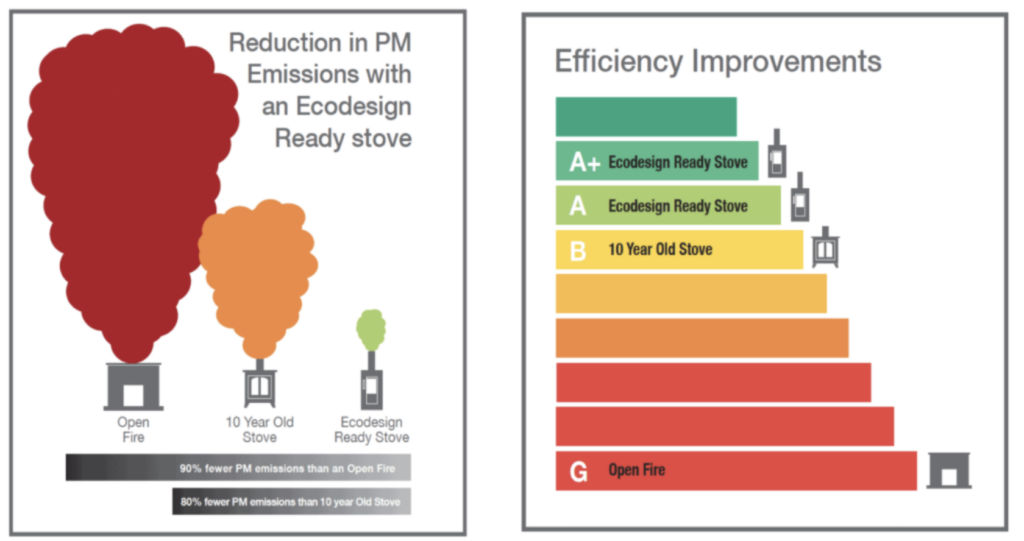
Even as overall emissions improve, domestic burning is increasingly in the spotlight because it remains a large, addressable source, particularly in neighbourhoods where emissions are concentrated. Unfortunately, misinformation and confusion still exist around environmentally friendly ways to burn solid fuels. For example, some media outlets repeatedly fail to highlight the vast differences in PM emissions between open fires and Ecodesign stoves, or between burning unseasoned and seasoned wood. The diagram below explains this:
What could change in 2026
1) A consultation on new domestic combustion measures
The EIP commits to consulting on measures to cut emissions from domestic combustion, while minimising the impact on those who need to burn, and recognising traditional festivals such as Bonfire Night and Diwali.
Because it’s framed as a consultation commitment, the detail is not locked in yet. In 2026, the most realistic expectation is that the government gathers evidence and views, proposes options, potentially around appliance standards, labelling, operation in smoke control areas, fuels, enforcement, and public guidance, and sets out next steps based on responses.
2) More local authority and planning-system attention
The EIP also sets out practical actions aimed at faster local delivery, including: refreshing guidance and support for local authority air quality officers during 2025–2026 and piloting a streamlined approach to PM2.5 assessment in planning.
For homeowners, this may show up indirectly, through tighter local planning expectations on developments, air quality conditions in certain areas, or stronger local messaging about domestic burning in pollution hot spots.
3) Improved public health messaging (starting early 2026)
The EIP includes near-term actions to strengthen air-quality communications, update the health advice accompanying the Daily Air Quality Index (DAQI) by March 2026, and launch a new air-quality alert system, also by March 2026.
This is important as clearer health guidance and alerts can influence behaviour during higher levels of pollution, especially for vulnerable groups, and can also increase awareness of pollution sources, including domestic burning in winter and poor burning practises such as burning wet, unseasoned wood, using an open fire, and failing to keep a chimney clear.
The EIP is a strategic plan and a set of commitments, not a single new law that changes what you can do in your home. This year, the biggest change for most households is likely to be increased scrutiny, more targeted local interventions, and clearer guidance, while any material regulatory change would typically follow consultation and lead-in time.
What this means if you already heat (or occasionally heat) with a non-Ecodesign stove or open fire
If you already have an inefficient non-Ecodesign stove or open fire, now is a good time to look at upgrading to an Ecodesign stove. Defra’s own guidance emphasises that using an open fire at home is a major contributor to PM2.5, and that small changes, maintenance, correct fuel, and correct operation, or better still, in our opinion, moving to Ecodesign will reduce pollution and improve efficiency.
What this means if you’re choosing a new electric fire or a stove in 2026
If you’re planning a renovation, building a media wall, or adding a feature fire, the EIP 2025 doesn’t dictate what you must buy, but it strongly suggests how to future‑proof your decision:
1) Understand whether you need heat, flame effect, or both
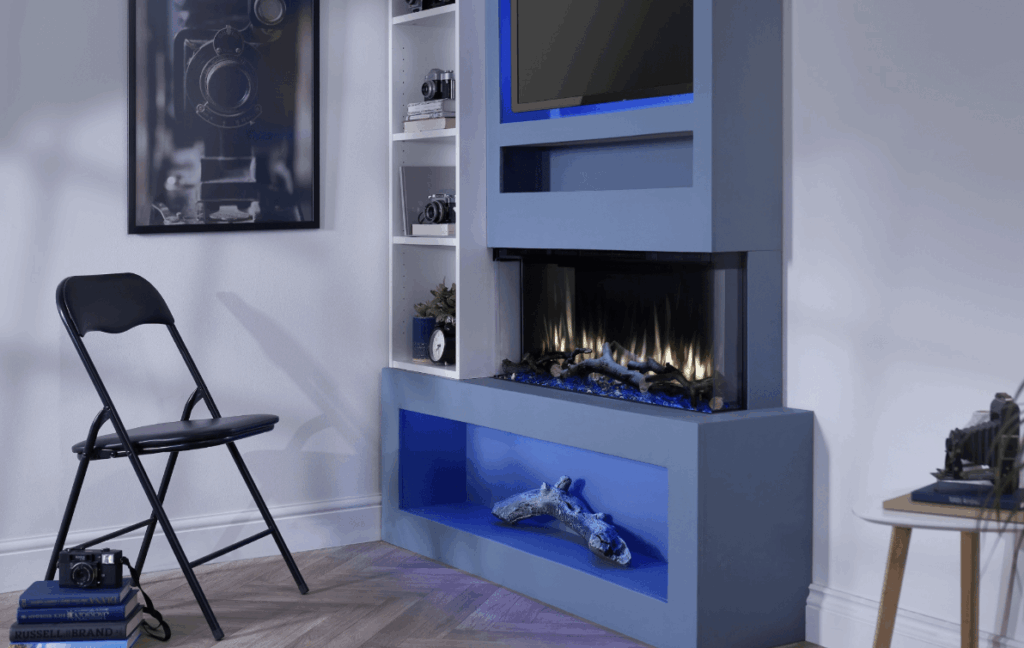
Many households want a fire primarily for ambience. If your main goal is visual impact, electric fires can deliver a strong feature effect without combustion emissions, which aligns well with the plan’s clean air focus. Below is our iRange Slimline i920e electric fire.
2) If you’re buying an Ecodesign stove: choose the right model and use it well
Defra’s public guidance notes that newer stoves entering the UK market have been subject to Ecodesign requirements since 2022, which, as mentioned, have significantly lower emissions compared to old non-Ecodesign stoves and open fires. Below is our Purevision 5kW Ecodesign stove.

3) Check local conditions (especially smoke control areas)
Rules and enforcement can vary locally. Government guidance for England makes clear that there are additional requirements in smoke control areas, and sellers must inform customers that wood must be used only in an appropriate exempt appliance in those areas – such as those found in our range.
How the EIP fits with the broader shift in home heating
The EIP notes that many sources of climate change emissions and air pollution overlap, and that decarbonising the economy offers opportunities to reduce air pollution, highlighting the co‑benefits of net zero actions for clean air.
The Environmental Improvement Plan 2025 doesn’t change home heating rules overnight, but it does give a clear direction for 2026: PM2.5 reduction is key, and domestic combustion is part of the solution.
For homeowners, the most future‑proof approach includes:
a. Follow existing England fuel rules (dry wood / Ready to Burn, no traditional house coal).
b. Keep appliances properly maintained
c. Burn responsibly to minimise smoke
Discover our range of high-efficiency gas, electric and wood-burning fires.
Gas
Electric
Wood